
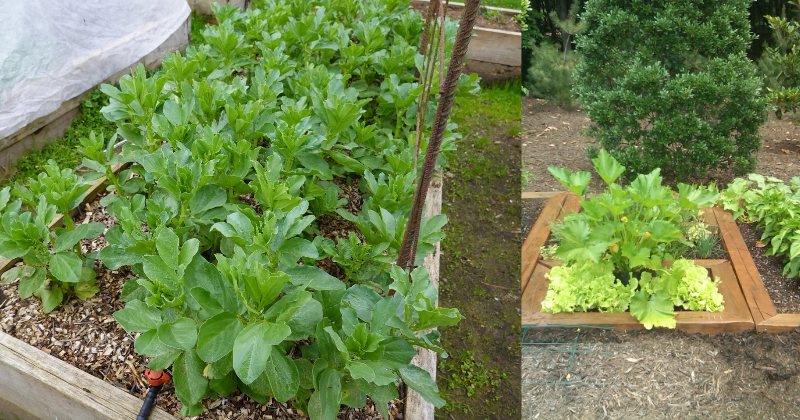
November gardening offers unexpected opportunities for extending your growing season with cold-hardy vegetables that thrive in cooler temperatures. Depending on your USDA hardiness zone, strategic planting can yield fresh harvests through winter and early spring, maximizing your garden’s productivity when most beds lie dormant.
Understanding November Planting Windows Across USDA Zones
The feasibility of November vegetable planting correlates directly with your geographic location and corresponding USDA hardiness zone. Zones 7-10 present the most favorable conditions for establishing new crops, while zones 5-6 require protective measures such as cold frames or row covers. The physiological adaptations of certain Brassicaceae and Amaranthaceae family members enable cellular function at temperatures that would damage warm-season crops.
Temperature regimes in November vary considerably across continental climates. Zone 9 gardeners may experience daytime highs around 70°F (21°C), permitting robust vegetative growth, while zone 6 gardeners contend with soil temperatures approaching 40°F (4°C), necessitating selection of extremely cold-tolerant cultivars. Soil temperature matters more than air temperature for germination—most cold-season vegetables require minimum soil temperatures of 40-45°F (4-7°C) for successful establishment.
Spinach: A Cold-Season Powerhouse
Spinach (Spinacia oleracea) demonstrates remarkable cold tolerance, with some cultivars surviving temperatures down to 15°F (-9°C) once established. November planting works exceptionally well in zones 7-9, where spinach develops slowly through winter and produces tender leaves for harvest in late winter through early spring.
The biochemical adaptation involves increased sugar concentration in leaf tissues, functioning as a natural antifreeze that protects cellular structures. Plant seeds directly in garden beds approximately 1 inch apart in rows spaced 12 inches apart. Germination occurs within 7-14 days when soil temperatures remain above 40°F (4°C). For zones 5-6, establish plantings under cloches or in cold frames to maintain adequate microclimate warmth.
Cultivar selection influences success rates. ‘Bloomsdale Long Standing’ and ‘Winter Giant’ exhibit superior cold hardiness compared to modern hybrid varieties bred for summer production. Interestingly, spinach planted in November often outperforms spring plantings because aphid populations remain minimal and bolting becomes unlikely until late spring when day length extends beyond 14 hours.
Lettuce Varieties for Winter Harvest
Lettuce (Lactuca sativa) encompasses numerous varieties with varying cold tolerance. Romaine and butterhead types generally surpass iceberg in cold hardiness. November planting succeeds in zones 7-10 without protection, while zones 5-6 benefit from row covers or cold frame cultivation.
Loose-leaf varieties like ‘Winter Density’ and ‘Arctic King’ contain higher concentrations of protective compounds that stabilize cell membranes during freeze-thaw cycles. Plant seeds 1/4 inch deep, spacing them 4-6 inches apart in rows or broadcasting in wide beds. Germination proceeds reliably when soil temperatures exceed 40°F (4°C), though seedling growth appears sluggish compared to spring conditions.
One advantage of November lettuce planting involves reduced tipburn—a physiological disorder caused by calcium deficiency during rapid growth. Slower winter growth rates allow more efficient nutrient transport to leaf margins. Additionally, many gardeners report superior flavor in cold-grown lettuce, possibly due to increased sugar accumulation as a cold-protection mechanism.
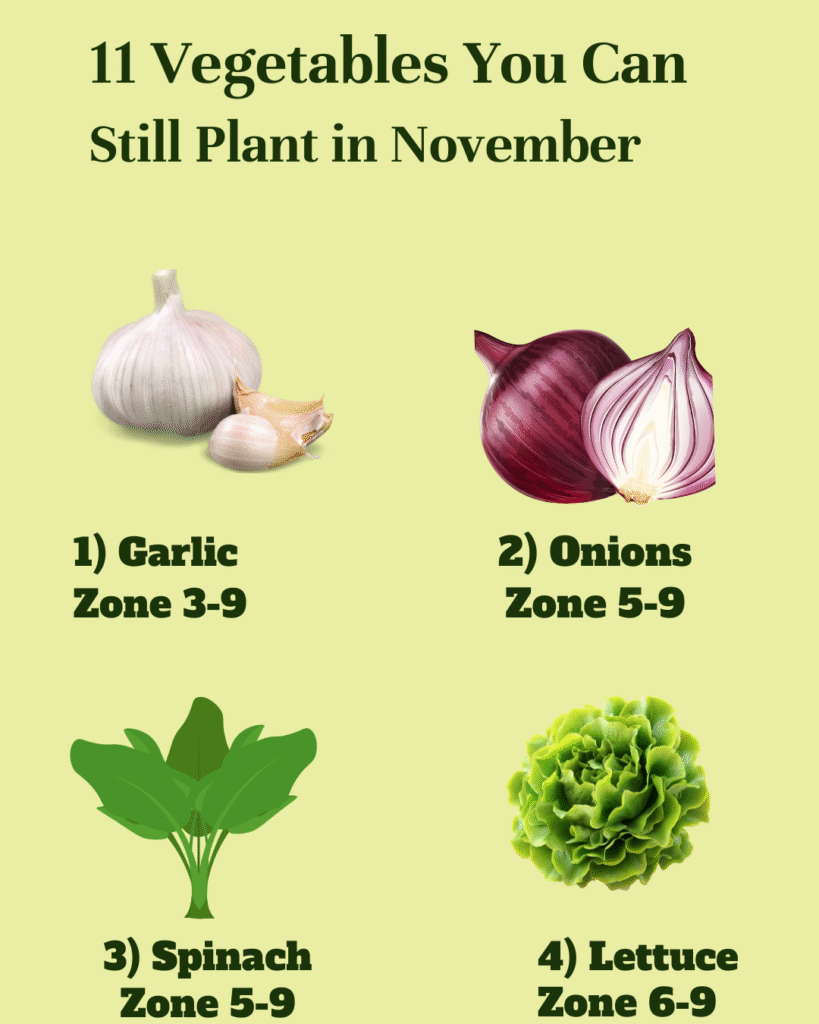
Kale: The Ultimate Cold-Hardy Brassica
Kale (Brassica oleracea var. acephala) stands out as perhaps the most cold-tolerant vegetable suitable for November planting. Mature plants withstand temperatures to 0°F (-18°C), and frost exposure actually improves flavor by converting starches to sugars. This crop succeeds across zones 5-10 when planted in November.
Direct seed or transplant seedlings into garden beds with 12-18 inches between plants. Kale’s taproot system requires deep soil preparation—loosening soil to 8-10 inches depth promotes strong establishment before winter dormancy. The plant’s waxy leaf coating (cuticle) provides waterproofing that prevents tissue damage from freezing precipitation.
‘Winterbor’ and ‘Lacinato’ (dinosaur kale) demonstrate exceptional cold performance. November-planted kale typically grows slowly until late winter, then accelerates in early spring before bolting. Some gardeners report harvesting from the same plants for 4-5 months, removing outer leaves while the central growing point produces new foliage. The slightly bitter edge on summer kale disappears after several hard frosts, making November plantings particularly appealing for culinary use.
Arugula for Peppery Winter Greens
Arugula (Eruca vesicaria) germinates readily in cool soil and tolerates light freezes once established. This fast-growing salad green suits zones 7-10 for November planting without protection. In zones 5-6, cold frames extend the viable planting window and protect emerging seedlings.
Scatter seeds thinly across prepared beds and cover with 1/4 inch of soil. Germination occurs within 5-7 days when soil temperatures range between 40-55°F (4-13°C). The peppery flavor intensifies in cold weather as glucosinolate concentrations increase—these sulfur-containing compounds serve defensive functions against herbivores while contributing the characteristic sharp taste.
Arugula’s rapid maturity (30-40 days from seed to harvest) means November plantings in mild climates provide fresh greens by late December. The plant’s relatively shallow root system makes it suitable for container cultivation on protected patios, and successive sowings every 2-3 weeks maintain continuous production. Wild arugula (Diplotaxis tenuifolia) exhibits even greater cold tolerance than cultivated types, though it develops more slowly.
Garlic: November Is Prime Planting Time
Garlic (Allium sativum) requires vernalization—a period of cold exposure—to form bulbs properly. November planting provides optimal timing across most temperate regions (zones 4-9), allowing cloves to establish roots before soil freezes while accumulating necessary cold hours for spring bulb development.
Plant individual cloves 2 inches deep with the pointed end up, spacing them 6 inches apart in rows 12 inches apart. The physiological process involves root development during fall and early winter, followed by shoot emergence in late winter, and finally bulb formation in late spring when day length exceeds 12-14 hours. Hardneck varieties like ‘German Extra Hardy’ and ‘Chesnok Red’ demonstrate superior cold tolerance compared to softneck types.
Mulching garlic beds with 4-6 inches of straw or shredded leaves moderates soil temperature fluctuations and reduces frost heaving that can push cloves to the surface. The crop requires minimal attention through winter—roots continue growing whenever soil temperatures rise above 40°F (4°C), establishing a robust foundation for vigorous spring growth.
Fava Beans: Nitrogen-Fixing Winter Legumes
Fava beans (Vicia faba), also called broad beans, tolerate frost and cold better than any other legume species. November planting works in zones 7-10, producing harvests in late spring. These plants fix atmospheric nitrogen through symbiotic relationships with Rhizobium bacteria, improving soil fertility for subsequent crops.
Sow seeds 1-2 inches deep, spacing plants 6-8 inches apart. The large seeds contain sufficient energy reserves for establishment even in cool soil conditions. Fava beans develop slowly through winter, typically reaching 6-12 inches before growth pauses during the coldest months. When temperatures moderate in late winter, growth accelerates dramatically.
‘Aquadulce Claudia’ represents a particularly cold-hardy cultivar bred specifically for autumn planting in maritime climates. The flowers appear in late winter or early spring, and pods mature 90-120 days after germination. Beyond the edible beans, young shoots and leaves are edible and nutritious, offering winter harvests while plants develop. Some gardeners grow favas primarily as a cover crop, incorporating plants into soil before flowering to maximize nitrogen contribution.
Mâche (Corn Salad): European Winter Delicacy
Mâche (Valerianella locusta), also called corn salad or lamb’s lettuce, represents one of the most cold-tolerant salad greens. This European native survives temperatures to 5°F (-15°C) and actually requires cool temperatures for optimal growth. November planting succeeds in zones 5-10, with colder zones benefiting from light mulch or row cover protection.
Broadcast tiny seeds across prepared beds and barely cover with soil—the seeds require light for germination. Spacing matters less with mâche since the rosettes remain compact (3-4 inches diameter). Germination proceeds slowly, taking 10-14 days when soil temperatures range between 45-65°F (7-18°C). The plant develops a low rosette of spoon-shaped leaves with mild, slightly nutty flavor.
Mâche’s growth pattern involves establishing a root system in fall, minimal vegetative growth during winter’s shortest days, then rapid leaf production in late winter as day length increases. Harvest entire rosettes or individual leaves. The crop’s unique advantage lies in its ability to photosynthesize efficiently under low light conditions common in winter, utilizing longer-wavelength red light that penetrates cloud cover more effectively than blue wavelengths.
Radishes: Quick Winter Harvests
Winter radish varieties differ substantially from familiar spring types. Daikon (Raphanus sativus var. longipinnatus) and black radish varieties develop slowly in cool conditions but tolerate frost after establishment. November planting works in zones 7-10 without protection, while zones 5-6 require cold frames or heavy mulch.
Plant seeds 1/2 inch deep, spacing them 2-4 inches apart depending on variety. Winter radishes develop larger roots than spring types, with some daikon cultivars reaching 12-18 inches in length. The extended growing period (60-90 days) allows gradual accumulation of complex flavors and dense, crisp texture. Lower growing temperatures reduce the sharp, pungent compounds that can make spring radishes overly hot.
‘Miyashige’ and ‘Watermelon’ (red-fleshed) radishes demonstrate excellent cold tolerance. These varieties store well in ground through winter in zones 7-8, allowing harvest as needed rather than requiring immediate processing. The taproot’s penetration into soil improves structure and breaks up compaction—a benefit for heavy clay soils that become increasingly workable after growing deep-rooted radishes.
Claytonia (Winter Purslane): Native Cold-Hardy Green
Claytonia (Claytonia perfoliata), sometimes called miner’s lettuce or winter purslane, native to western North America, thrives in cool, moist conditions. This annual establishes readily from seed in November across zones 6-10, self-sowing prolifically once introduced to garden beds.
Scatter small seeds on soil surface and water gently—seeds require light for germination and should not be covered. The plant develops distinctive round leaves that appear to be pierced by the flowering stem (hence « perfoliata »). Growth occurs primarily during cool months, with plants entering dormancy or dying back as temperatures rise in late spring.
Claytonia’s nutritional profile includes high vitamin C and omega-3 fatty acid content. The mild, slightly tangy leaves work well in salads or cooked as spinach. The plant’s tolerance of shade makes it suitable for interplanting beneath taller crops or in woodland garden edges. Germination and establishment proceed best when temperatures range between 40-60°F (4-16°C), with mature plants tolerating temperatures to 20°F (-7°C).
Asian Greens: Mustards and Bok Choy
Various Asian brassicas demonstrate exceptional cold tolerance while providing unique flavors and textures. Mizuna, komatsuna, and certain bok choy varieties succeed with November planting in zones 6-10. Cold frames or row covers extend the viable range to zone 5.
Plant seeds 1/4 to 1/2 inch deep, spacing according to variety—mizuna requires 6-inch spacing while large bok choy varieties need 12 inches. These crops share common ancestry with cabbage and kale, explaining their cold tolerance. The distinctive sawtooth leaves of mizuna and the smooth, spoon-shaped leaves of komatsuna add visual interest to winter gardens.
‘Red Giant’ mustard develops burgundy-tinged leaves with pronounced spicy flavor that mellows after frost. Komatsuna, sometimes called mustard spinach, offers a mild flavor intermediate between spinach and bok choy. These greens grow slowly through November and December, then accelerate in late winter. Most varieties reach harvestable size within 30-50 days, though winter planting extends this timeline to 60-90 days. The slow growth actually benefits flavor development, as rapid warm-season growth can produce overly sharp, sulfurous flavors.
Peas: Fall Planting for Early Spring Harvest
While typically associated with spring planting, certain pea (Pisum sativum) varieties tolerate fall establishment in zones 7-9. November planting allows root development and limited vegetative growth before winter dormancy, resulting in earlier harvest than spring-planted crops.
Plant seeds 1-2 inches deep, spacing them 2-3 inches apart along supports or trellises. ‘Oregon Sugar Pod II’ and ‘Wando’ demonstrate superior cold tolerance compared to standard garden peas. The plants develop 3-6 inches of growth before cold weather halts development. Root systems continue expanding whenever soil temperatures exceed 40°F (4°C), establishing a strong foundation for rapid spring growth.
This strategy works best in regions with mild winters where soil rarely freezes solid. Zone 7 represents the approximate northern limit for reliable success. The physiological advantage involves accumulated growth degree days—by starting in November, plants reach maturity 2-3 weeks earlier than spring plantings, capturing the narrow window between adequate warmth and excessive heat that causes pea vines to decline rapidly.
Implementation Strategies for Success
Successful November vegetable planting requires attention to specific environmental and soil conditions. Soil preparation remains critical—incorporating compost improves structure and water retention while providing moderate nutrient supplementation. Avoid excessive nitrogen, which promotes tender growth susceptible to cold damage. Phosphorus and potassium support root development and cold hardiness.
Soil temperature monitoring guides planting decisions more accurately than calendar dates. An inexpensive soil thermometer inserted 2-3 inches deep provides actionable data. Most cold-hardy vegetables germinate when soil reaches 40-50°F (4-10°C), though germination speed decreases as temperatures approach these minimums.
Row covers or cold frames create microclimates 5-10°F warmer than ambient conditions, effectively shifting your growing zone southward by one half-zone. These structures also reduce wind desiccation, which damages plants as severely as cold temperatures. In zones 5-6, cold frames transform November planting from marginal to reliable for many cold-hardy species.
Mulching strategies differ for November plantings compared to summer crops. Apply mulch after soil temperatures drop below 45°F (7°C) to lock in moderate temperatures while preventing premature spring warming that triggers growth before frost danger passes. Straw, shredded leaves, or evergreen boughs work effectively. The insulation moderates temperature fluctuations that cause frost heaving—a primary cause of winter planting failure.
Water management requires adjusting expectations. While summer gardens demand frequent irrigation, fall and winter plantings need far less water. Soil moisture evaporates slowly in cool conditions, and overwatering promotes fungal diseases like damping off. Water newly planted seeds adequately for germination, then reduce frequency to once every 7-14 days depending on rainfall and temperature.