

Drought-tolerant plants offer an elegant solution for gardeners seeking low-maintenance landscapes that conserve water while maintaining visual appeal. These resilient species have evolved sophisticated physiological adaptations to thrive in arid conditions, making them ideal choices for water-wise gardening and xeriscaping projects across diverse climatic zones.
Understanding Drought Adaptation Mechanisms
Plants that require minimal watering have developed remarkable biological strategies to survive extended periods without irrigation. These adaptations include specialized cellular structures, modified leaf morphology, and unique metabolic pathways that optimize water retention and utilization.
Succulents and xerophytes store water in their tissues through specialized parenchyma cells with large vacuoles. The cuticle—a waxy layer covering leaf surfaces—reduces transpiration rates significantly. Some species employ crassulacean acid metabolism (CAM), opening stomata exclusively at night to minimize water loss while still enabling gas exchange necessary for photosynthesis.
Root systems in drought-adapted plants often extend deeply into soil profiles, accessing moisture reserves unavailable to shallow-rooted species. This architectural adaptation, combined with reduced leaf surface area and reflective trichomes (plant hairs), creates a comprehensive defense against dehydration stress.
Agave Species: Architectural Specimens for Arid Landscapes
Agave americana and related species represent quintessential drought-tolerant specimens, requiring water only during establishment phases. These monocarpic perennials can survive on annual rainfall alone once their root systems mature, typically within six to twelve months of planting.
The thick, fleshy leaves of agaves contain mucilaginous compounds that retain moisture efficiently. Their rosette growth pattern channels precipitation directly toward the root crown, maximizing water capture. In Mediterranean and desert climates, established agaves may require supplemental irrigation only during unprecedented drought conditions lasting several months.
Agave parryi and Agave victoriae-reginae offer compact alternatives for smaller gardens, maintaining the same water-efficient characteristics while occupying less space. These species tolerate temperatures down to -15°C, making them viable options for USDA hardiness zones 7-11.
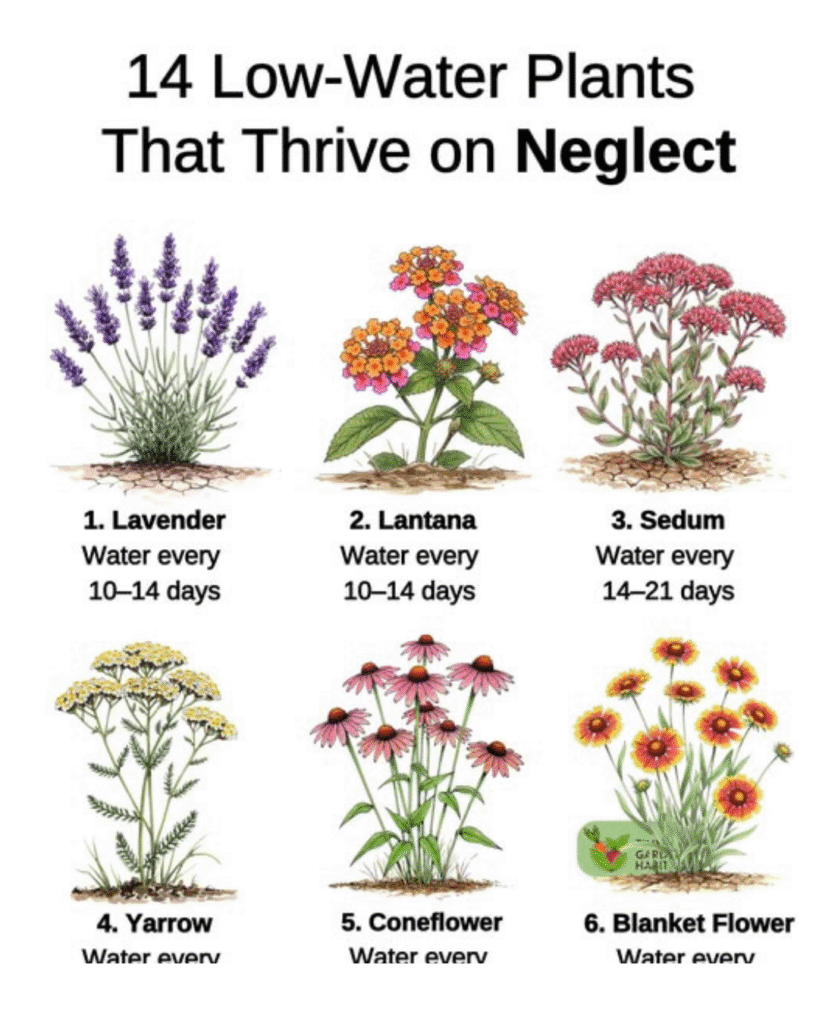
Sedum and Stonecrop Varieties
Sedum species demonstrate exceptional drought tolerance across hundreds of cultivars, from ground-covering Sedum acre to upright Sedum spectabile. These succulents store water in their plump leaves, allowing them to endure weeks without irrigation during summer months.
The cellular structure of sedums includes large water-storage vacuoles and thick cell walls reinforced with pectin compounds. This architecture enables cells to maintain turgor pressure even when soil moisture approaches the permanent wilting point. Sedum album ‘Coral Carpet’ and Sedum rupestre ‘Angelina’ thrive in rocky, well-draining substrates where conventional plants struggle.
Established sedum plantings in temperate climates typically require no supplemental watering beyond natural precipitation. In containers or during extreme heat waves exceeding 38°C for consecutive days, occasional deep watering supports optimal growth, though survival remains unaffected by temporary neglect.
Lavandula: Aromatic Mediterranean Survivors
Lavender species, particularly Lavandula angustifolia and Lavandula x intermedia, evolved in the calcareous, arid soils of Mediterranean basin ecosystems. These woody perennials possess deep taproots that access subsoil moisture while their aromatic oils reduce herbivory and minimize water loss.
The gray-green foliage of lavender reflects solar radiation, reducing leaf temperature and transpiration demands. Trichomes covering leaf surfaces create a boundary layer that traps humidity, further decreasing water stress. Once established, lavender plants can survive on 25-30 cm of annual rainfall, making them suitable for regions with seasonal drought patterns.
Overwatering represents a greater risk than underwatering for lavender, as excessive moisture promotes root rot caused by Phytophthora and Armillaria fungi. In clay soils, amending with coarse sand or gravel improves drainage and supports the xeric conditions these plants prefer.
Yucca Species: Structural Focal Points
Yucca filamentosa, Yucca gloriosa, and Yucca rostrata provide architectural interest while demanding minimal water resources. These monocots develop extensive root networks that stabilize soil while accessing deep moisture reserves inaccessible to fibrous-rooted species.
The sword-like leaves of yuccas feature a thick cuticle and sunken stomata—adaptations that dramatically reduce transpirational water loss. Some species, including Yucca brevifolia (Joshua tree), survive in environments receiving less than 15 cm of annual precipitation. In cultivation, yuccas require watering only during the first growing season, after which they become essentially self-sufficient.
Yucca propagation through offsets or stem cuttings produces drought-tolerant specimens identical to parent plants. This vegetative reproduction strategy ensures adaptation consistency across generations, unlike seed-grown specimens that may exhibit variable water requirements.
Portulaca and Moss Rose
Portulaca grandiflora produces vibrant, papery flowers while subsisting on minimal water resources. This low-growing annual thrives in sandy, nutrient-poor soils where other ornamentals fail. The succulent leaves and stems store sufficient water to sustain the plant through multiple days of intense heat and sun exposure.
Portulaca employs CAM photosynthesis, a metabolic adaptation shared with cacti and other extreme xerophytes. This physiological strategy allows the plant to fix carbon dioxide at night when temperatures drop and humidity rises, reducing daytime water requirements by up to 80% compared to C3 plants.
In coastal gardens, portulaca tolerates salt spray and reflected heat from pavement, making it ideal for challenging microclimates. The plant self-seeds readily, creating naturalized colonies that return annually without intervention. During establishment, weekly watering supports initial growth, but mature specimens require irrigation only during prolonged drought exceeding three weeks.
Echinacea: Native Prairie Resilience
Purple coneflower (Echinacea purpurea) and related species evolved in the tallgrass prairie ecosystem, where seasonal drought represents a normal environmental stress. These herbaceous perennials develop thick, woody taproots extending 1-2 meters deep, accessing groundwater unavailable to shallow-rooted competitors.
The coarse leaves of echinacea feature minimal surface area relative to plant biomass, reducing transpiration while maintaining adequate photosynthetic capacity. Established plants withstand extended dry periods without wilting, though flowering may diminish during extreme water stress. In most temperate climates, natural rainfall provides sufficient moisture for vigorous growth and abundant blooms.
Echinacea species demonstrate allelopathic properties, releasing biochemical compounds that suppress competing vegetation. This competitive advantage reduces water competition from adjacent plants, further enhancing drought tolerance in mixed plantings.
Santolina: Silver-Foliaged Mediterranean Shrub
Santolina chamaecyparissus displays distinctive silvery-gray foliage created by dense trichome coverage. This structural adaptation reflects solar radiation while creating a microclimate around leaves that reduces transpirational demand. The aromatic compounds in santolina foliage serve dual functions: deterring herbivores and reducing water loss through their hydrophobic properties.
Native to rocky Mediterranean hillsides with minimal organic matter, santolina thrives in lean, well-draining soils. Excessive fertility or irrigation promotes leggy growth susceptible to lodging and fungal diseases. Established plants require no supplemental water in regions receiving at least 40 cm of annual precipitation distributed across growing seasons.
The compact, mounding form of santolina makes it suitable for xeriscaping borders and rock gardens. Pruning after flowering maintains dense growth while removing spent blooms prevents self-seeding in regions where the plant might become invasive.
Delosperma: Hardy Ice Plant
Delosperma cooperi and related species bring vivid color to drought-tolerant landscapes through prolific flowering despite minimal water availability. These succulent groundcovers spread rapidly through prostrate stems that root at nodes, creating dense mats that suppress weeds while conserving soil moisture.
The fleshy leaves of delosperma contain specialized cells called idioblasts that store water and crystalline structures that refract light, creating the characteristic « ice » appearance that gives the plant its common name. This cellular architecture enables the plant to maintain photosynthetic function even when soil moisture drops to levels that would cause permanent wilting in conventional plants.
Winter hardiness varies among delosperma species, with D. cooperi surviving temperatures to -20°C in well-drained soils. Poor drainage during winter dormancy causes more mortality than cold temperatures, emphasizing the importance of soil structure over irrigation in cultivation success.
Salvia Species: Diverse Drought-Tolerant Sages
The genus Salvia encompasses hundreds of species adapted to arid environments across multiple continents. Salvia officinalis (culinary sage), Salvia greggii (autumn sage), and Salvia leucantha (Mexican bush sage) demonstrate varying degrees of drought tolerance, all requiring significantly less water than conventional garden perennials.
Aromatic oils concentrated in glandular trichomes serve multiple functions in water conservation. These volatile compounds create a vapor layer around leaves that reduces air movement and humidity loss. Additionally, the bitter taste and potential toxicity of these compounds deter browsing animals, preventing water loss through damaged tissues.
Salvias exhibit phenotypic plasticity, adjusting leaf size, stem length, and flowering intensity based on water availability. During drought, plants produce smaller leaves with increased cuticle thickness, optimizing water use efficiency while maintaining metabolic function. This adaptability allows salvias to persist through variable rainfall patterns without irrigation supplementation.
Achillea: Yarrow for Dry Conditions
Achillea millefolium demonstrates remarkable drought tolerance through a combination of deeply penetrating rhizomatous roots and finely divided foliage that reduces leaf area exposed to drying winds. Native to steppes and meadows across Eurasia and North America, yarrow persists in disturbed, compacted soils where water percolation is limited.
The feathery leaves of achillea possess a high surface area-to-volume ratio, facilitating efficient gas exchange while minimizing water loss per unit of photosynthetic tissue. This architectural solution represents an alternative strategy to the thick, waxy leaves of succulents, achieving similar water conservation through different morphological approaches.
Established yarrow plantings spread gradually through underground rhizomes, creating naturalized colonies that stabilize soil and prevent erosion on slopes. In permaculture systems, yarrow functions as a dynamic accumulator, mining nutrients from deep soil layers while requiring no supplemental irrigation after establishment.
Sempervivum: Hens and Chicks
Sempervivum tectorum and related species form tight rosettes of succulent leaves arranged in geometric patterns that channel precipitation directly to roots while minimizing evaporative surface area. These alpine natives tolerate extreme temperature fluctuations, from winter lows of -30°C to summer highs exceeding 35°C, without supplemental watering.
The leaves of sempervivum contain mucilage compounds similar to those found in aloe vera, providing internal water storage that sustains the plant through extended drought. As outer leaves desiccate during extreme water stress, the plant reabsorbs mobile nutrients and moisture, sacrificing peripheral tissues to protect the growing point.
Sempervivum reproduces vegetatively through offsets (chicks) that remain attached to the mother plant (hen) until roots establish. This clonal propagation creates expanding colonies that cover rocky, inhospitable substrates unsuitable for conventional ground covers. In green roof applications, sempervivum survives in substrate depths as shallow as 5-8 cm, demonstrating exceptional adaptation to restricted root zones and limited water retention.
Thymus: Creeping Thyme for Ground Cover
Thymus serpyllum and Thymus praecox form dense, aromatic mats that withstand foot traffic while requiring minimal water. These Mediterranean natives thrive in rocky, alkaline soils with excellent drainage, conditions that stress most ornamental ground covers.
The small leaves of thyme minimize transpirational surface area while still providing adequate photosynthetic capacity. Essential oils concentrated in specialized glands serve antimicrobial and antifungal functions, protecting tissues from pathogens that might exploit water stress-related vulnerabilities. These aromatic compounds also reduce palatability to herbivores, preventing water loss through browsing damage.
In pathway plantings, creeping thyme releases fragrance when crushed underfoot, creating sensory interest while performing functional roles. Established thyme carpets suppress weeds through dense growth and allelopathic effects, reducing competition for limited water resources in xeric landscapes.
Penstemon Species: Native Beauty
Penstemon strictus, Penstemon eatonii, and dozens of other species provide vertical interest and tubular flowers that attract pollinators while demonstrating excellent drought tolerance. These North American natives occupy ecological niches ranging from alpine scree to desert washes, reflecting diverse adaptations to water-limited environments.
The tubular flower structure of penstemons reduces evaporative surface area compared to open-faced blooms, conserving moisture during the flowering period when reproductive demands stress plant resources. Many species feature glaucous foliage with waxy coatings that reflect solar radiation and reduce leaf temperatures, minimizing transpirational demand during peak heat.
Penstemons develop woody caudexes—enlarged stem bases that store carbohydrates and water—enabling plants to regenerate vigorously after drought-induced dormancy. This perennating structure allows penstemons to persist for decades in harsh environments where annual precipitation falls below 30 cm, thriving without irrigation once root systems mature.
Selecting Appropriate Species for Regional Conditions
Successful drought-tolerant gardening requires matching plant selections to specific climatic conditions, soil types, and hardiness zones. While all species discussed demonstrate exceptional water efficiency, individual performance varies based on temperature extremes, humidity levels, and seasonal precipitation patterns.
In Mediterranean climates with winter rainfall and summer drought, lavender, santolina, and salvias perform optimally. Continental climates with cold winters and variable precipitation favor echinacea, achillea, and sempervivum. Desert regions with extreme heat and minimal rainfall support agaves, yuccas, and delosperma most successfully.
Soil texture profoundly influences drought tolerance, with sandy or gravelly substrates providing the excellent drainage these plants require. Clay soils retain moisture longer but risk waterlogging during wet periods, potentially causing root rot. Amending heavy soils with coarse materials improves conditions for xerophytic species while reducing long-term irrigation demands.
Establishment and Long-Term Maintenance Strategies
Even drought-tolerant plants require regular watering during establishment, typically spanning one full growing season. This initial irrigation supports root development into deeper soil layers where moisture remains available during subsequent dry periods. Applying water deeply but infrequently encourages vertical root growth rather than shallow, drought-susceptible root systems.
Mulching around newly planted specimens conserves soil moisture while suppressing competing vegetation. Organic mulches decompose over time, adding minimal nutrients appropriate for plants adapted to lean soils. Inorganic mulches like gravel or crushed rock provide permanent coverage without altering soil chemistry, better matching the native conditions of many xerophytic species.
Once established, these plants typically require no supplemental irrigation in regions receiving adequate annual precipitation. During extreme drought lasting multiple weeks beyond normal patterns, deep watering every 2-3 weeks maintains plant health without encouraging dependency on regular irrigation. This approach preserves the drought-adapted characteristics that make these species valuable for water-wise landscapes.