

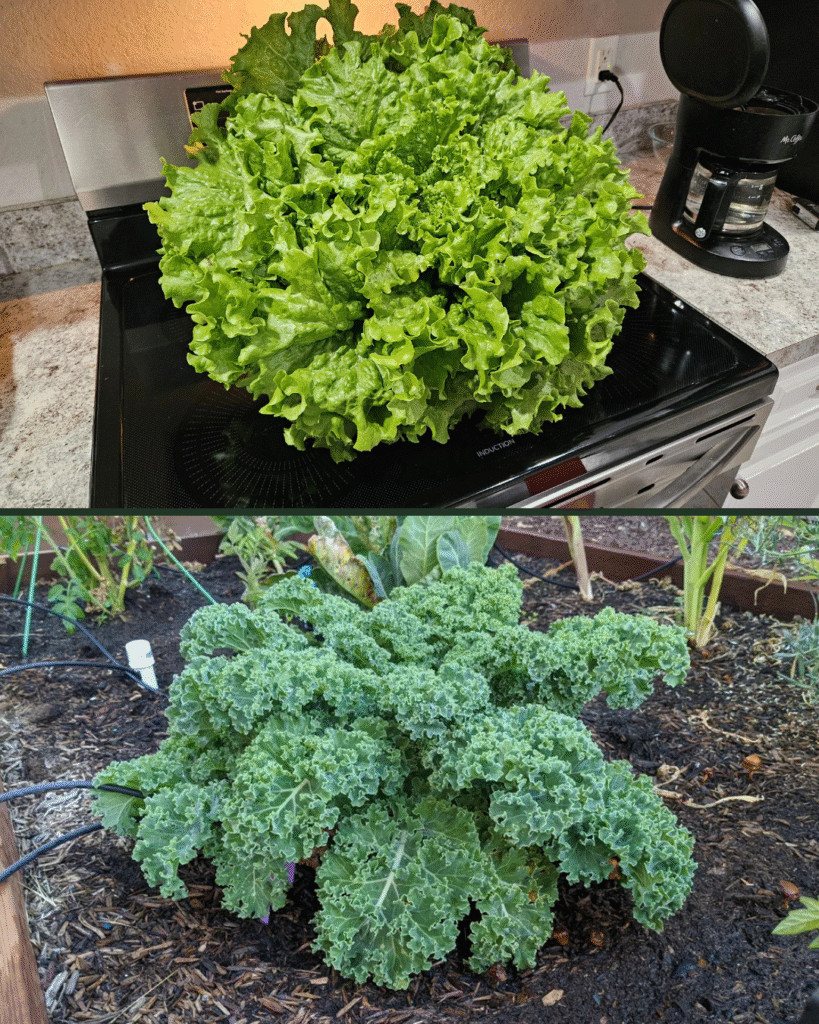
Discover how kale and lettuce can regenerate indefinitely through strategic cutting techniques, transforming a single plant into a continuous food source. These leafy greens possess remarkable vegetative regrowth capabilities that allow home gardeners to harvest fresh produce for months without replanting.
Physiological Mechanisms of Perpetual Regeneration
Kale and lettuce belong to plant species that exhibit indeterminate growth patterns, meaning their apical meristems continue producing new tissue throughout their lifecycle. When you harvest outer leaves while preserving the central growing point, you trigger a compensatory response where the plant redirects energy toward generating replacement foliage. This process relies on stored carbohydrates in the root system and stem base, which fuel the production of new leaf primordia from dormant meristematic tissue.
The cut-and-come-again method exploits this natural regeneration capacity. In kale, the terminal bud remains protected within younger inner leaves, maintaining its ability to produce new growth nodes. Lettuce varieties, particularly loose-leaf types, regenerate from the crown—a compressed stem structure where leaf bases connect to the root system. Each successful harvest stimulates auxin redistribution, promoting lateral bud development and creating multiple growth points.
Species-Specific Regeneration Capacities
Not all cultivars demonstrate equal regenerative potential. Lacinato kale, also called dinosaur kale, typically supports 4-6 major harvest cycles before vigor declines noticeably. Curly kale varieties often produce slightly fewer cycles but compensate with denser leaf formation. The cell division rate in kale’s cambial tissue maintains productivity for 6-8 months under optimal conditions, though individual leaves become tougher and more fibrous in later harvests.
Loose-leaf lettuce varieties like Red Sails and Salad Bowl outperform head-forming types in regeneration frequency. These cultivars can sustain 3-5 complete regrowth cycles, producing harvestable leaves every 10-14 days during peak growing season. Butterhead and romaine lettuces regrow more slowly, typically offering 2-3 productive cycles before bolting becomes inevitable. The photoperiod sensitivity of lettuce means regeneration rates accelerate during spring and fall, when temperatures remain between 15-20°C.
Optimal Harvesting Protocols for Sustained Production
Successful perpetual harvesting requires precise technique. For kale, remove only the lowest 3-4 leaves per plant during each harvest session, cutting cleanly at the leaf base where the petiole meets the main stem. Leave at least 6-8 younger leaves intact to maintain photosynthetic capacity sufficient for continued growth. The remaining foliage must generate enough energy to support both plant maintenance and new leaf production.
Lettuce demands even more conservative harvesting. Cut outer leaves 2-3 centimeters above the crown, never removing more than one-third of total leaf mass in a single harvest. This preservation threshold ensures adequate leaf surface area for photosynthesis while protecting the crown from desiccation and pathogen entry. Using a sharp blade rather than tearing leaves prevents tissue damage that could introduce bacterial soft rot or fungal infections.
Timing influences regeneration success significantly. Harvest during morning hours when leaf turgor pressure peaks and plants have maximum carbohydrate reserves from overnight respiration. Avoid harvesting during heat stress periods, as plants divert resources toward thermoregulation rather than growth. In Mediterranean climates, this typically means harvesting before 10:00 or after 18:00 during summer months.
Nutritional Management for Continuous Production
Perpetual harvesting depletes soil nutrients faster than traditional single-harvest cultivation. Kale requires particularly high nitrogen levels to maintain leaf production—approximately 120-150 kg nitrogen per hectare throughout the growing season. Apply liquid fertilizer every 2-3 weeks at half the recommended concentration rather than occasional heavy applications. This steady nutrient availability matches the plant’s continuous metabolic demands.
Calcium and magnesium deficiencies commonly emerge in repeatedly harvested plants, manifesting as tip burn in lettuce or marginal leaf necrosis in kale. These symptoms indicate that rapid cell expansion outpaces calcium translocation through xylem tissue. Foliar calcium sprays bypass this limitation, delivering nutrients directly to developing leaves. A solution containing 0.5% calcium chloride applied weekly prevents most deficiency symptoms.
Phosphorus supports root system maintenance, which becomes critical as plants age. Root hairs deteriorate after 60-90 days, reducing nutrient uptake efficiency. Supplementing with rock phosphate or bone meal at monthly intervals maintains root vitality. Organic matter incorporation improves soil structure and water retention, both essential for supporting plants through multiple harvest cycles.
Environmental Factors Affecting Regeneration Longevity
Temperature extremes limit regeneration capacity more severely than most other factors. Kale tolerates frost and continues growing at temperatures down to -6°C, though regeneration slows considerably below 10°C. Lettuce suffers cold damage at -2°C and triggers bolting responses when daytime temperatures consistently exceed 24°C. The thermal stress response diverts resources from leaf production toward flowering, effectively ending the harvest cycle.
Light intensity directly correlates with regeneration speed. Plants receiving 6-8 hours of direct sunlight produce new leaves 30-40% faster than those in partial shade. However, excessive light combined with high temperatures accelerates bolting in lettuce. Strategic shade cloth use during peak summer months extends the productive period by maintaining moderate leaf temperatures while providing adequate photosynthetic photon flux density.
Water stress severely compromises regeneration. Plants experiencing drought close stomata to conserve water, simultaneously reducing carbon dioxide uptake and photosynthetic rate. Maintain consistent soil moisture at 60-70% field capacity through drip irrigation or frequent shallow watering. Deep, infrequent watering encourages root growth but allows fluctuating moisture levels that stress plants between irrigation events.
Common Regeneration Failures and Diagnostic Approaches
Plants sometimes cease regenerating despite apparently favorable conditions. Premature bolting represents the most frequent failure mode, triggered by stress factors beyond simple temperature. Root-bound conditions in container plantings, nutrient imbalances favoring phosphorus over nitrogen, or aphid infestations producing stress hormones can all initiate flowering. Once reproductive development begins, vegetative growth declines irreversibly.
Fungal diseases accumulate in aging plants, particularly Alternaria leaf spot in kale and downy mildew in lettuce. These pathogens establish systemic infections that progressively reduce functional leaf area. Removing heavily infected lower leaves slows disease progression but cannot eliminate established infections. Preventive copper-based fungicide applications or biological control agents like Bacillus subtilis maintain plant health more effectively than reactive treatments.
Some plants simply exhaust their regenerative capacity. The cellular senescence process gradually reduces meristematic activity, even when environmental conditions remain optimal. Kale plants older than eight months typically show declining vigor, producing smaller leaves with increased secondary compound concentrations that create bitter flavors. Lettuce rarely maintains quality beyond four months. Recognizing natural senescence prevents wasted inputs on plants unlikely to resume productive growth.
Comparative Performance Across Growing Systems
Container cultivation offers flexibility but limits regeneration potential compared to in-ground planting. Root restriction in pots constrains nutrient and water reserves, requiring more intensive management. A 20-liter container supports approximately 3-4 kale harvest cycles, while equivalent in-ground plants often produce 5-6 cycles. Lettuce shows less dramatic differences, partly due to its naturally shallow root system.
Hydroponic systems maximize regeneration frequency when properly managed. Continuous nutrient availability and optimal root zone oxygenation accelerate leaf production by 20-30% compared to soil cultivation. However, system failures—pump malfunctions, pH drift, or pathogen introduction—affect plants more rapidly than soil-buffered growing systems. The technical knowledge required for successful hydroponic regeneration exceeds that needed for soil-based approaches.
Intensive succession planting, starting new plants every 2-3 weeks, often produces higher total yields than maximizing regeneration from individual plants. This strategy maintains consistently young, vigorous plants while allowing older plants to naturally senesce. The increased planting labor balances against reduced per-plant management intensity and more predictable harvest quality.Réessayer