
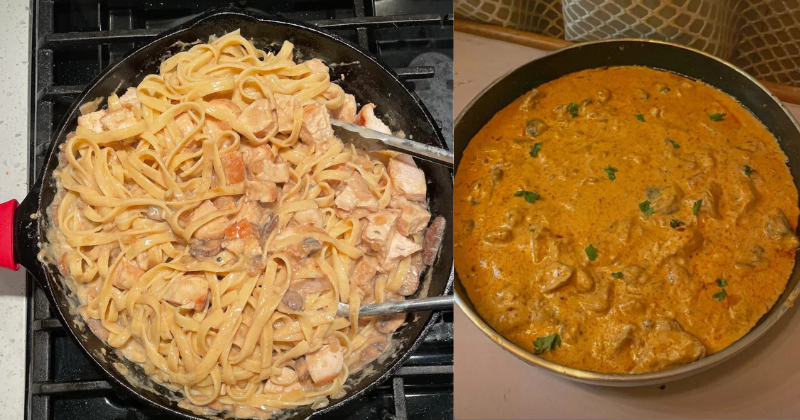
Chicken Stroganoff transforms humble ingredients into an extraordinarily satisfying dish that speaks to the soul. This creamy, tangy preparation borrows from the legendary Russian beef stroganoff tradition, offering a lighter yet equally indulgent alternative that has captured hearts across kitchens worldwide. The marriage of tender chicken, earthy mushrooms, and velvety sour cream sauce creates a symphony of flavors that feels both luxurious and comforting. Whether you’re seeking a weeknight dinner solution or planning an intimate gathering, this chicken stroganoff delivers restaurant-quality results without demanding professional culinary expertise. The beauty lies in its accessibility—simple techniques yield spectacular outcomes that will have your guests convinced you’ve spent hours laboring over a complex creation.
What Makes This Chicken Stroganoff Exceptional
This particular approach to chicken stroganoff honors traditional techniques while incorporating modern sensibilities. The recipe balances richness with brightness, ensuring each bite remains interesting rather than heavy. What sets this version apart is the careful layering of flavors—golden sautéed chicken, caramelized mushrooms and onions, a splash of white wine for acidity, and that signature sour cream finish that transforms ordinary pan drippings into liquid gold.
The difficulty level sits comfortably at intermediate, though beginners with patience will find success. From start to finish, expect to invest approximately 40 minutes—20 minutes for preparation and 20 minutes for cooking. This makes chicken stroganoff ideal for weeknight dinners when time matters but quality cannot be compromised. The dish also shines at casual dinner parties, paired elegantly with egg noodles, rice, or crusty bread to capture every drop of that magnificent sauce.
The technique itself becomes meditative. There’s something profoundly satisfying about watching ingredients transform under your guidance—the way chicken develops its golden crust, how mushrooms release their moisture then concentrate into umami-rich morsels, the moment cream meets pan juices and thickens into silk.
Ingredients
For the Chicken:
- 1.5 lbs (680g) boneless, skinless chicken breasts, cut into 1-inch strips
- 1 teaspoon salt
- ½ teaspoon freshly ground black pepper
- 2 tablespoons all-purpose flour
- 2 tablespoons olive oil or unsalted butter
For the Sauce:
- 2 tablespoons unsalted butter
- 1 medium yellow onion, thinly sliced
- 12 oz (340g) cremini or button mushrooms, sliced
- 3 garlic cloves, minced
- ½ cup dry white wine (such as Sauvignon Blanc or Pinot Grigio)
- 1½ cups chicken stock, preferably low-sodium
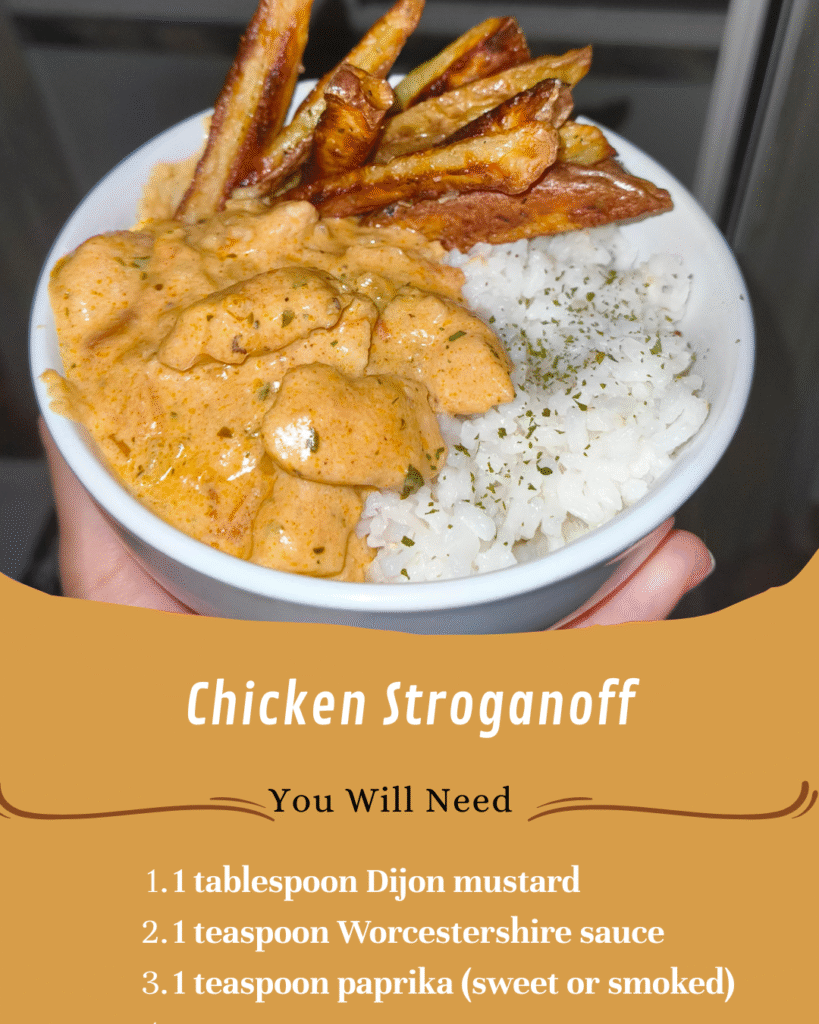
- 1 tablespoon Dijon mustard
- 1 teaspoon Worcestershire sauce
- 1 teaspoon paprika (sweet or smoked)
- ¾ cup full-fat sour cream, at room temperature
- 2 tablespoons fresh parsley, finely chopped
- Salt and pepper to taste
For Serving:
- 12 oz egg noodles, rice, or mashed potatoes
- Additional fresh parsley for garnish
Step-by-Step Instructions
- Prepare the chicken: Pat chicken strips thoroughly dry with paper towels—moisture is the enemy of proper browning. Season generously with salt and pepper, then dust lightly with flour, shaking off any excess. This creates a delicate coating that helps achieve golden color and slightly thickens the sauce later.
- Sear the chicken: Heat olive oil in a large, heavy-bottomed skillet over medium-high heat until shimmering. Add chicken strips in a single layer, working in batches to avoid crowding. Cook undisturbed for 3-4 minutes until golden brown, then flip and cook another 2-3 minutes. The chicken needn’t be completely cooked through—it will finish later. Transfer to a plate and set aside.
- Build the aromatic base: Reduce heat to medium and add butter to the same skillet. Once melted and foaming, add sliced onions. Cook for 4-5 minutes, stirring occasionally, until softened and translucent. The fond (those delicious browned bits) left from the chicken will begin incorporating into the onions.
- Develop the mushrooms: Add mushrooms to the skillet, stirring to combine with onions. Initially, mushrooms will release considerable moisture—this is natural. Continue cooking for 6-8 minutes until the liquid evaporates and mushrooms develop golden-brown edges. Add minced garlic during the final minute, stirring constantly to prevent burning.
- Deglaze with wine: Pour white wine into the skillet, using a wooden spoon to scrape up all those flavorful browned bits from the bottom. Allow the wine to bubble vigorously for 2-3 minutes, reducing by approximately half. This concentrates flavors while burning off the alcohol’s harsh edge.
- Create the sauce: Add chicken stock, Dijon mustard, Worcestershire sauce, and paprika. Stir to combine thoroughly. Bring to a gentle simmer, then return the chicken strips (along with any accumulated juices) to the skillet. Reduce heat to low and simmer for 5-7 minutes until chicken cooks through completely and sauce reduces slightly.
- Finish with sour cream: Remove skillet from heat—this crucial step prevents the sour cream from curdling. Stir in room-temperature sour cream until the sauce becomes uniformly creamy and pale. Taste and adjust seasoning with additional salt and pepper as needed. Stir in fresh parsley.
- Serve immediately: Spoon the chicken stroganoff over cooked egg noodles, rice, or mashed potatoes. Garnish with additional parsley and serve while steaming hot.
Tips and Tricks for Chicken Stroganoff Perfection
Ingredient substitutions: Greek yogurt can replace sour cream for a tangier, slightly lighter result—just ensure it’s full-fat and at room temperature. For the wine, substitute with additional chicken stock plus one tablespoon of lemon juice to maintain acidity. If chicken breasts seem too lean, chicken thighs offer richer flavor and remain more forgiving during cooking.
The temperature secret: Room-temperature sour cream is non-negotiable. Cold dairy added to hot liquid inevitably separates, creating an unappetizing grainy texture. Remove sour cream from refrigeration 30 minutes before cooking, or warm it gently by stirring in a few spoonfuls of the hot sauce before adding to the skillet.
Storage wisdom: Chicken stroganoff keeps refrigerated in an airtight container for 3-4 days. The flavors actually deepen overnight, making leftovers particularly delicious. Reheat gently over low heat, adding a splash of stock or water to restore the sauce’s consistency. Avoid microwaving at high power, which can cause the cream to separate.
Make-ahead strategy: Prepare the dish through step 6, stopping before adding sour cream. Cool completely, then refrigerate. When ready to serve, reheat gently, remove from heat, and stir in fresh sour cream. This approach works beautifully for dinner parties when timing matters.
Common mistakes to avoid: Overcrowding the pan during chicken searing creates steam instead of the desirable golden crust. Work in batches, exercising patience. Additionally, resist the temptation to use low-fat or fat-free sour cream—the fat content stabilizes the cream, preventing separation and providing that characteristic luxurious mouthfeel.
Elevating the dish: A splash of brandy or cognac added with the wine introduces sophisticated depth. For those who appreciate heat, a pinch of cayenne pepper balances the richness beautifully. Fresh dill makes an excellent alternative to parsley, nodding toward the recipe’s Eastern European heritage.
Wine pairing considerations: The dish’s creamy, savory profile pairs wonderfully with medium-bodied white wines like Chardonnay or Viognier. For red wine enthusiasts, choose something light and fruity such as Pinot Noir, which won’t overwhelm the delicate sauce.
Nutritional Information
Per serving (based on 4 servings, not including noodles or rice):
- Calories: 420
- Protein: 42g
- Total Fat: 22g
- Saturated Fat: 11g
- Carbohydrates: 12g
- Fiber: 2g
- Sugar: 5g
- Sodium: 680mg
These values are approximate and will vary based on specific ingredients used and portion sizes. The addition of egg noodles or rice will increase the carbohydrate and calorie content accordingly.
Frequently Asked Questions
Can I use frozen chicken for this stroganoff recipe?
Absolutely, though proper thawing is essential for food safety and optimal results. Thaw chicken completely in the refrigerator overnight, never at room temperature. Once thawed, pat exceptionally dry before seasoning and cooking—frozen chicken retains extra moisture that inhibits browning. The texture and flavor will be virtually indistinguishable from fresh chicken when handled correctly.
What’s the best type of mushroom for chicken stroganoff?
Cremini mushrooms (baby bellas) offer the ideal balance of flavor, texture, and availability. Their earthy, slightly nutty profile complements the creamy sauce beautifully. Button mushrooms work perfectly well as a more economical option. For elevated occasions, combine cremini with shiitake or oyster mushrooms for complex, layered umami notes. Avoid portobello mushrooms in this application—their large size and intense flavor can overwhelm the dish.
Why does my sauce sometimes separate or look curdled?
Sauce separation typically results from temperature shock. When cold sour cream meets hot liquid, the rapid temperature change causes proteins to contract and separate from the fat. The solution involves two critical steps: bring sour cream to room temperature before use, and remove the skillet from heat entirely before stirring in the cream. If separation does occur, vigorously whisking in a tablespoon of cold water can sometimes re-emulsify the sauce.
Can I make chicken stroganoff dairy-free?
Yes, though the character changes slightly. Full-fat coconut cream provides richness and body similar to sour cream, though it introduces subtle coconut notes. Cashew cream offers a more neutral alternative—blend soaked raw cashews with water until silky smooth, then add lemon juice for tanginess. Some commercial dairy-free sour creams work reasonably well, though results vary by brand.
How do I prevent the chicken from becoming tough or dry?
Several factors ensure tender chicken. First, avoid overcooking during the initial sear—the chicken finishes cooking in the sauce. Second, cut chicken into evenly-sized strips so pieces cook uniformly. Third, consider pounding chicken breasts to even thickness before slicing. Finally, chicken thighs contain more fat and connective tissue, making them virtually impossible to dry out and worthy of consideration for foolproof results.
What side dishes complement chicken stroganoff best?
The traditional pairing involves egg noodles, which cradle the sauce perfectly in their grooves and curves. Rice pilaf offers a lighter alternative, while creamy mashed potatoes create an indulgent feast. For textural contrast, serve with steamed green beans, roasted asparagus, or a crisp cucumber salad dressed simply with vinegar and dill. Crusty bread is essential for capturing every last drop of that magnificent sauce.
Conclusion
Chicken stroganoff represents everything beautiful about home cooking—accessible ingredients transformed through technique and care into something truly memorable. This recipe honors tradition while remaining flexible enough to accommodate your personal touches and available ingredients. The creamy, tangy sauce clinging to tender chicken and earthy mushrooms creates comfort in its purest form.
I encourage you to make this dish your own. Perhaps you’ll discover that a touch more garlic speaks to your palate, or that fresh thyme elevates the earthy notes you crave. Cooking is conversation between recipe and cook, each preparation teaching something new.
Prepare this chicken stroganoff for your family this week, and don’t hesitate to share your experiences, modifications, and triumphs. The beauty of classic recipes lies in their ability to evolve while maintaining their essential soul—each cook adding their unique perspective to a beloved tradition.