
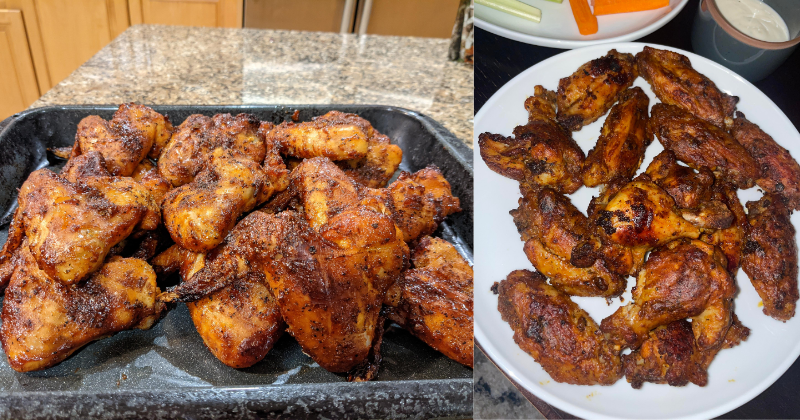
Baked chicken wings deliver the perfect combination of crispy skin and tender, juicy meat without the hassle of deep frying. This recipe transforms simple chicken wings into a golden, flavorful masterpiece that rivals any restaurant version. Whether you’re preparing for game day, hosting a casual dinner party, or simply craving a satisfying protein-rich meal, these oven-baked chicken wings will become your go-to recipe. The beauty of this method lies in its simplicity—with just a handful of ingredients and a straightforward technique, you’ll achieve wings with shatteringly crisp skin and succulent meat every single time. What makes this recipe truly special is the dry-baking method that renders the fat and creates that coveted crunch, along with a versatile seasoning blend that serves as the foundation for endless flavor variations.
Why This Recipe Works
This baked chicken wings recipe stands apart because it addresses the main challenge of oven-roasted wings: achieving genuinely crispy skin without frying. The secret lies in a two-fold approach—first, coating the wings with baking powder (not baking soda), which raises the pH level of the skin and promotes browning and crisping. Second, baking at a high temperature ensures the fat renders properly while the skin crisps to perfection.
The difficulty level is beginner-friendly, requiring no special culinary skills beyond basic kitchen techniques. From start to finish, you’ll need approximately 50-60 minutes, with most of that time being hands-off oven work. These wings are ideal for casual gatherings, sports viewing parties, weeknight dinners, or meal prep sessions. The recipe scales beautifully, making it equally suitable for feeding two people or a crowd of twenty.
Prep Time: 10 minutes
Cook Time: 45-50 minutes
Total Time: 55-60 minutes
Yield: 4-6 servings (about 24 wing pieces)
Ingredients
For the Wings:
- 3 pounds chicken wings, separated into drumettes and flats (tips removed or saved for stock)
- 1½ tablespoons baking powder (aluminum-free preferred)
- 1 tablespoon kosher salt
- 1 teaspoon freshly ground black pepper
- 1 teaspoon garlic powder
- 1 teaspoon smoked paprika
- ½ teaspoon onion powder
- ¼ teaspoon cayenne pepper (optional, for heat)
For Serving (Optional):
- Your choice of sauce (buffalo, barbecue, honey garlic, teriyaki)
- Ranch or blue cheese dressing
- Celery and carrot sticks
- Fresh herbs for garnish
Equipment Needed:
- Large rimmed baking sheet
- Wire cooling rack
- Large mixing bowl
- Paper towels
- Aluminum foil (optional, for easier cleanup)
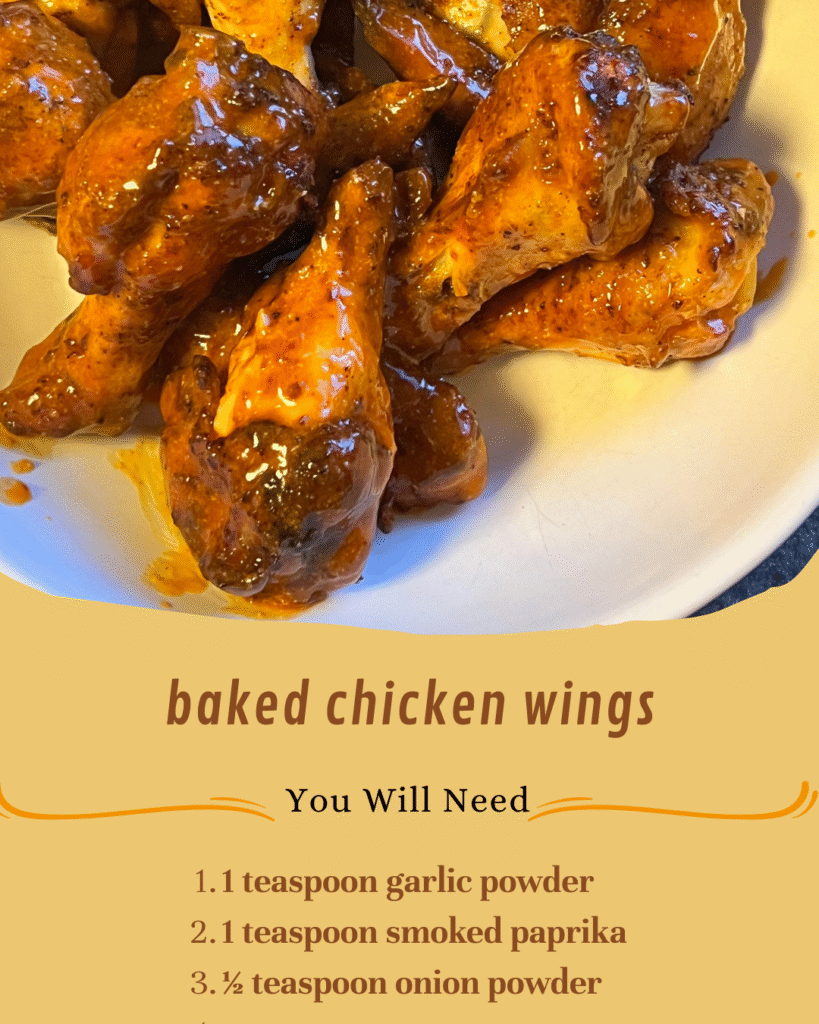
Step-by-Step Instructions
- Prepare the wings for optimal crispiness. Pat the chicken wings completely dry with paper towels—this step is crucial and non-negotiable. Any moisture on the skin will create steam during cooking, preventing that desired crispy texture. Take your time here; the drier the wings, the crispier the final result.
- Set up your baking station. Position a wire cooling rack on top of a large rimmed baking sheet. If desired, line the baking sheet with aluminum foil for easier cleanup. The elevated rack allows hot air to circulate around the wings, ensuring even cooking and maximum crispiness on all sides.
- Create the seasoning mixture. In a large mixing bowl, combine the baking powder, kosher salt, black pepper, garlic powder, smoked paprika, onion powder, and cayenne pepper. Whisk these ingredients together thoroughly to ensure even distribution of the baking powder, which is your secret weapon for crispy skin.
- Coat the wings evenly. Add the dried chicken wings to the bowl with the seasoning mixture. Toss thoroughly, using your hands to ensure every wing piece is evenly coated with the seasoning blend. The coating should look uniform across all pieces—no bare spots or clumps.
- Arrange wings on the rack. Place the seasoned wings on the wire rack in a single layer, leaving space between each piece. Proper spacing allows air circulation and prevents steaming. The wings should not touch or overlap; if necessary, use a second baking sheet.
- Preheat and position. Preheat your oven to 425°F (220°C). Position the oven rack in the upper third of the oven, which provides more direct heat for better browning and crisping.
- Begin the baking process. Place the baking sheet with wings in the preheated oven. Bake for 25 minutes without opening the oven door. Resist the temptation to check—maintaining consistent temperature is essential.
- Flip for even cooking. After 25 minutes, remove the baking sheet and carefully flip each wing piece using tongs. This ensures both sides achieve that beautiful golden-brown color and crispy texture. Return to the oven immediately.
- Complete the cooking process. Continue baking for an additional 20-25 minutes until the wings are deeply golden brown, crispy, and cooked through. The internal temperature should reach 165°F (74°C) when measured with a meat thermometer inserted into the thickest part without touching bone.
- Rest and sauce (optional). Remove the wings from the oven and let them rest on the rack for 3-5 minutes. This brief resting period allows the juices to redistribute and the skin to set further. If using sauce, toss the wings in your chosen sauce now, or serve the sauce on the side for dipping.
Tips and Tricks for Perfect Baked Chicken Wings
Achieving maximum crispiness: The single most important factor is ensuring your wings are completely dry before seasoning. After patting with paper towels, consider letting them air-dry in the refrigerator, uncovered, for 1-2 hours or overnight. This additional drying time draws out surface moisture, resulting in even crispier skin.
Understanding the baking powder technique: Baking powder (not baking soda) is essential for crispy wings. It contains both an acid and a base that react during cooking, creating tiny bubbles that dry out the skin and promote browning. Always use aluminum-free baking powder, as the aluminum variety can sometimes impart a metallic taste. This technique is supported by food science research on pH and protein denaturation in poultry skin.
Storage and reheating instructions: Store cooled, leftover wings in an airtight container in the refrigerator for up to 4 days. To reheat while maintaining crispiness, place wings on a wire rack over a baking sheet and warm in a 400°F oven for 10-12 minutes. Avoid microwaving, which makes the skin soggy. For longer storage, freeze unsauced wings in a single layer on a baking sheet, then transfer to freezer bags for up to 3 months.
Make-ahead options: For meal planning efficiency, you can season the wings up to 24 hours in advance. In fact, seasoning ahead and refrigerating uncovered helps dry the skin further while allowing the seasonings to penetrate. You can also fully cook the wings, refrigerate them, and crisp them up in a hot oven just before serving.
Ingredient substitutions and variations: If you don’t have baking powder, you can still make good wings, though they won’t be quite as crispy—increase the oven temperature to 450°F and extend cooking time by 5-10 minutes. For different flavor profiles, customize the spice blend: try Italian herbs and parmesan, curry powder and garam masala, or Chinese five-spice and ginger. The base technique remains the same regardless of seasonings.
Common mistakes to avoid: Don’t overcrowd the baking sheet, as this creates steam and prevents crisping. Don’t skip the wire rack—baking wings directly on the pan leaves the bottom soggy. Don’t sauce the wings before baking if you want crispy skin; always add wet sauces after cooking. Don’t open the oven repeatedly during cooking, as temperature fluctuations extend cooking time and reduce crispiness.
Serving suggestions: These baked chicken wings shine when served with classic accompaniments like ranch or blue cheese dressing and fresh vegetable sticks. They’re also excellent tossed in buffalo sauce, honey garlic glaze, or Korean gochujang sauce. For a complete meal, pair them with coleslaw, potato wedges, or a fresh green salad. Consider offering multiple sauce options for variety at gatherings.
Nutritional Information
Per serving (approximately 4 wing pieces, without sauce):
- Calories: 285
- Protein: 26g
- Fat: 19g
- Saturated Fat: 5g
- Carbohydrates: 1g
- Fiber: 0g
- Sugar: 0g
- Cholesterol: 95mg
- Sodium: 780mg
Note: Nutritional values are approximate and will vary based on the actual size of wings used and any additional sauces or accompaniments. These values are for wings prepared with the basic seasoning blend only.
Frequently Asked Questions
Can I use frozen chicken wings for this recipe?
Yes, you can use frozen chicken wings, but they must be completely thawed and thoroughly dried first. Thaw wings in the refrigerator overnight, never at room temperature. Once thawed, the most critical step is removing all excess moisture—frozen wings tend to retain more water, so be extra diligent with the drying process. Pat them dry multiple times with paper towels, and if possible, let them air-dry in the refrigerator for a few hours before seasoning. Starting with wet wings will result in steaming rather than crisping, regardless of your cooking method.
Why do my wings never get as crispy as restaurant wings?
The main culprits are moisture and inadequate air circulation. Restaurant wings are typically fried at very high temperatures in professional fryers, but you can achieve similar results in your oven by following these guidelines: ensure wings are bone-dry before cooking, use a wire rack so air circulates underneath, don’t overcrowd the pan, use baking powder in your seasoning, and bake at a high enough temperature (425°F or above). Additionally, some restaurants double-fry their wings—you can mimic this by baking, then broiling for the last 2-3 minutes while watching carefully to prevent burning.
What’s the difference between baking powder and baking soda for chicken wings?
Baking powder and baking soda are not interchangeable for this recipe. Baking powder contains both an acid and a base, which creates a neutral pH-raising effect perfect for browning skin without adding a soapy taste. Baking soda is purely alkaline and, while it does promote browning, it can impart an unpleasant, metallic flavor if used in the same quantities. If you must substitute, use only 1 teaspoon of baking soda instead of the 1½ tablespoons of baking powder called for, though results won’t be identical.
How do I know when the chicken wings are fully cooked?
The most reliable method is using an instant-read meat thermometer inserted into the thickest part of the wing meat without touching bone. The internal temperature should reach 165°F (74°C) for food safety. Visually, fully cooked wings will have deeply golden-brown, crispy skin, and the meat will have shrunk back slightly from the bone ends. The juices should run clear, not pink, when pierced. If you’re uncertain, it’s always better to cook slightly longer—overcooked wings may be slightly drier but are safer than undercooked poultry.
Can I cook different quantities of wings using this method?
Absolutely, this recipe scales easily. The key is maintaining proper spacing on the baking sheet. For smaller batches (1-2 pounds), reduce cooking time by about 5-10 minutes and watch for visual cues of doneness. For larger batches, use multiple baking sheets and rotate their positions in the oven halfway through cooking to ensure even browning. Never pile wings on top of each other—if you need to cook more than one baking sheet can hold properly spaced, use two sheets on different oven racks and swap their positions during cooking.
What are the best sauces for baked chicken wings?
The beauty of perfectly baked wings is their versatility as a canvas for countless sauces. Classic buffalo sauce (butter and hot sauce) remains the gold standard, but consider branching out: honey garlic (honey, soy sauce, garlic, and butter), Korean gochujang glaze, teriyaki, sweet and spicy sriracha-honey, lemon pepper butter, or dry rubs like Cajun, jerk, or barbecue spice blends. For the crispiest results, toss wings in sauce just before serving rather than baking them in sauce, or serve sauces on the side for dipping. This preserves the crispy texture you’ve worked to achieve.
Conclusion
Mastering baked chicken wings opens up a world of delicious possibilities for home cooks seeking restaurant-quality results without the mess and hassle of deep frying. This recipe delivers consistently crispy, flavorful wings through a combination of proper preparation, the strategic use of baking powder, and optimal cooking techniques. The versatility of this base recipe means you can customize flavors to suit any preference or occasion, from classic buffalo to creative international-inspired variations.
I encourage you to try this recipe and experience the satisfaction of pulling perfectly crispy wings from your own oven. Pay special attention to the drying step and resist the urge to overcrowd your baking sheet—these two factors make the difference between good wings and truly exceptional ones. Once you’ve mastered this technique, share your results and favorite flavor combinations. The joy of cooking lies not just in following recipes, but in making them your own and sharing that experience with others around your table.