
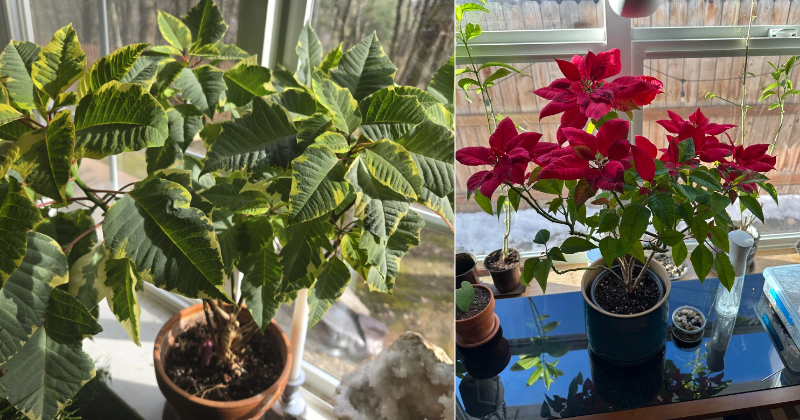
If your poinsettia has lost its vibrant red color, you can trigger the reblooming process through controlled light exposure. This guide explains the photoperiodic treatment needed to restore those festive bracts in time for the holidays.
Understanding Poinsettia Color Change: The Science Behind the Red Bracts
Poinsettias (Euphorbia pulcherrima) don’t actually produce red flowers—what we perceive as the colorful bloom consists of modified leaves called bracts. The actual flowers are the small yellow structures (cyathia) clustered at the center. The red coloration develops through a photoperiodic response, meaning the plant’s physiology is controlled by day length.
During shorter days, poinsettias undergo a biochemical transformation where anthocyanin pigments accumulate in the bracts while chlorophyll production decreases. This process is regulated by phytochrome photoreceptors that detect the ratio of daylight to darkness. When nights extend beyond a critical threshold of approximately 12-14 hours, the plant interprets this as a signal to initiate reproductive development and bract coloration.
The color change isn’t instantaneous. It requires consistent environmental conditions over 8-10 weeks, which is why timing your intervention correctly matters if you want red bracts by Christmas.
Timing Your Poinsettia Recoloring Schedule
To achieve colorful bracts by late December, you need to begin the darkness treatment in early October—specifically around the first or second week. This gives the plant the full duration needed to complete its physiological transformation.
Mark your calendar for October 1st as the ideal starting date. If you’re reading this later in the season, you can still attempt the process, but your poinsettia may not reach peak coloration by Christmas. The plant will eventually develop colored bracts with proper treatment, just on a delayed schedule.
Before starting the light restriction regimen, ensure your poinsettia has been maintained as a healthy houseplant throughout the year. This means regular watering, adequate indirect light during normal growing season, and temperatures between 65-75°F during the day.
The 14-Hour Darkness Protocol
The recoloring process centers on providing complete, uninterrupted darkness for 14 consecutive hours each night. This isn’t negotiable—even brief exposure to light during the dark period can reset the plant’s photoperiodic clock and delay or prevent bract coloration.
Starting at 5 or 6 PM each evening, place your poinsettia in a location with absolute darkness. Options include a closet, a basement room without windows, or covering the plant with a light-proof box or black garbage bag. The covering must block all light sources, including street lamps, indoor lighting from other rooms, and even the glow from electronic devices.
At 7 or 8 AM the following morning, return the plant to its normal location with bright, indirect light. During these daylight hours, the poinsettia should receive at least 6 hours of good quality light. A location near an east or west-facing window works well, though you need to avoid intense direct sunlight that could stress the plant.
This daily cycle must continue without interruption for 8-10 weeks. Missing even a few nights can significantly impact the outcome, as the biochemical processes are cumulative and require sustained signaling.
Maintaining Optimal Conditions During Treatment
Temperature stability plays a secondary but important role in successful bract development. Keep your poinsettia in an environment where temperatures remain between 60-70°F at night and don’t exceed 75°F during the day. Temperature fluctuations outside this range can interfere with pigment synthesis even when darkness requirements are met.
Watering needs to be adjusted during the recoloring period. The plant should be watered when the soil surface feels dry to the touch, but avoid keeping the soil constantly saturated. Overwatering during this phase can lead to root problems that compromise the plant’s ability to develop colored bracts. The container must have drainage holes—poinsettias sitting in waterlogged soil often drop leaves before completing the color transformation.
Fertilization should be reduced during the darkness treatment period. Apply a diluted, balanced houseplant fertilizer at half the recommended strength every 2-3 weeks. Excessive nitrogen during bract development can promote green leaf growth at the expense of red pigmentation.
Common Mistakes That Prevent Recoloring
Light leaks represent the most frequent cause of failure. People often underestimate how little light can disrupt the darkness requirement. The glow from a clock radio, light seeping under a door, or even brief exposure when checking on the plant can be problematic. If using a closet, ensure it’s in a part of the house where no one needs to access it during the dark period.
Inconsistent timing also sabotages the process. The poinsettia’s internal rhythms respond to regular patterns. Starting the dark period at 5 PM one day and 8 PM the next creates confusion in the plant’s photoperiodic responses. Set a phone reminder if needed to maintain consistency.
Some people give up too early when they don’t see immediate results. The first visible signs of color change typically appear after 3-4 weeks, starting as a slight pinkish tinge at the bract edges. Full, vibrant coloration doesn’t develop until weeks 6-8. Patience is essential.
What to Expect During the Transformation
Around week 3-4, you’ll notice the newest, youngest leaves at the growing tips begin to look different from the mature green foliage below. They may appear lighter or take on a subtle pink or cream coloration. This is your first indication that the process is working.
By week 5-6, the color intensifies. The bracts expand in size while the chlorophyll continues to degrade and anthocyanins accumulate. During this phase, some of the older green leaves lower on the plant may yellow and drop—this is normal and doesn’t indicate a problem as long as the plant isn’t losing large quantities of foliage.
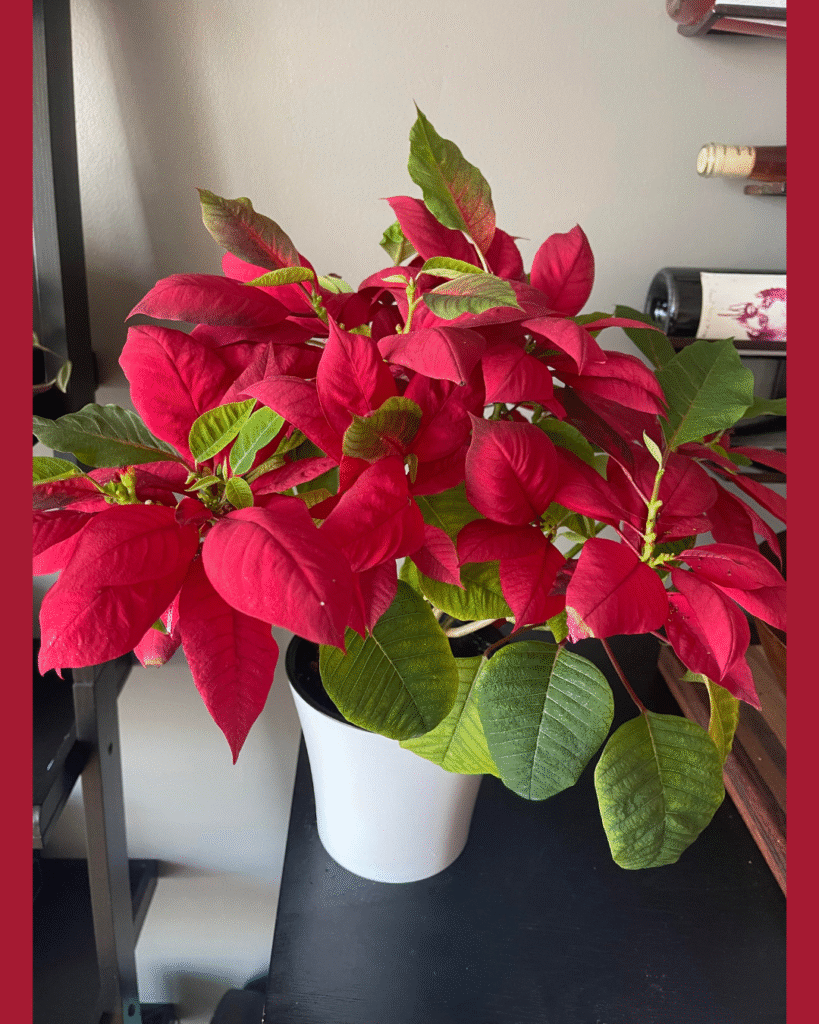
Between weeks 7-9, the bracts reach their characteristic deep red color (or white, pink, or marbled patterns depending on your variety). The small yellow true flowers in the center develop shortly after peak bract coloration. Once the bracts have achieved full color and the cyathia are visible, you can discontinue the darkness treatment and enjoy your poinsettia as a normal houseplant.
After Successful Recoloring: Maintenance and Display
Once your poinsettia has developed colored bracts, it no longer requires the darkness treatment. Place it in a location with bright, indirect light and temperatures between 65-75°F. The bracts will remain colorful for several weeks to months if conditions are favorable.
Avoid placing the plant near drafts, heating vents, or fireplaces, as temperature extremes and dry air shorten the display period. Continue watering when the soil surface dries out, and maintain moderate humidity if possible. In dry indoor environments, the plant benefits from being grouped with other houseplants or placed on a pebble tray with water (ensuring the pot sits above the water level, not in it).
The colored bracts will eventually fade, typically after 2-4 months of display. This is a natural senescence process and doesn’t reflect poor care. After the bracts fade and drop, you can either maintain the plant as green foliage until the next recoloring cycle or take cuttings to propagate new plants.
Troubleshooting: When Recoloring Doesn’t Work
If your poinsettia remains entirely green after 8 weeks of darkness treatment, several factors could be responsible. First, verify that darkness was truly complete and consistent. Even minor light exposure can prevent the response.
Plant health issues can also interfere with bract development. A poinsettia suffering from root rot, pest infestation, or severe nutrient deficiency may lack the resources to produce the biochemical compounds needed for coloration. Address any underlying health problems before attempting recoloring.
Some poinsettias, particularly those that have been forced to bloom multiple times or are several years old, may lose their vigor and become less responsive to photoperiodic treatment. In these cases, you might see partial coloration or weaker color intensity compared to previous years.
Temperature stress during the treatment period can also disrupt the process. If your plant experienced temperatures below 55°F or above 80°F for extended periods during the darkness regimen, this could explain poor results.
Alternative Approaches and Varieties
While the 14-hour darkness method represents the standard approach, some growers experiment with slight variations. A 13-hour dark period may work but extends the total time needed to around 10-12 weeks. Conversely, 15 hours of darkness can accelerate the process slightly but increases the risk of scheduling difficulties.
Different poinsettia cultivars exhibit varying ease of recoloring. Traditional red varieties typically respond most reliably. White, pink, and novelty varieties (marbled, speckled, or multicolored) can be more finicky and may require more precise conditions. Some of the heavily hybridized modern varieties have been bred primarily for commercial forcing and may not recolor well under home conditions.
If you’re considering purchasing a new poinsettia with the intention of recoloring it annually, ask about the variety. Some cultivars are marketed specifically for their rebloom potential.
The Reality of Multi-Year Poinsettia Care
Successfully recoloring a poinsettia requires dedication, but it’s an achievable project for patient gardeners. The process demonstrates the fascinating intersection of plant physiology and environmental manipulation that underpins much of commercial horticulture.
That said, many people choose not to attempt recoloring after experiencing the daily commitment required. Commercial poinsettias are relatively inexpensive and bred for optimal display, making annual replacement a practical choice for those who want festive color without the multi-week intensive care protocol.
For those who enjoy the challenge and find satisfaction in coaxing plants through their natural cycles, recoloring provides a hands-on lesson in photoperiodism and plant hormone responses. The red bracts you achieve will be more rewarding precisely because you understand the biological mechanisms and consistent care that produced them.