
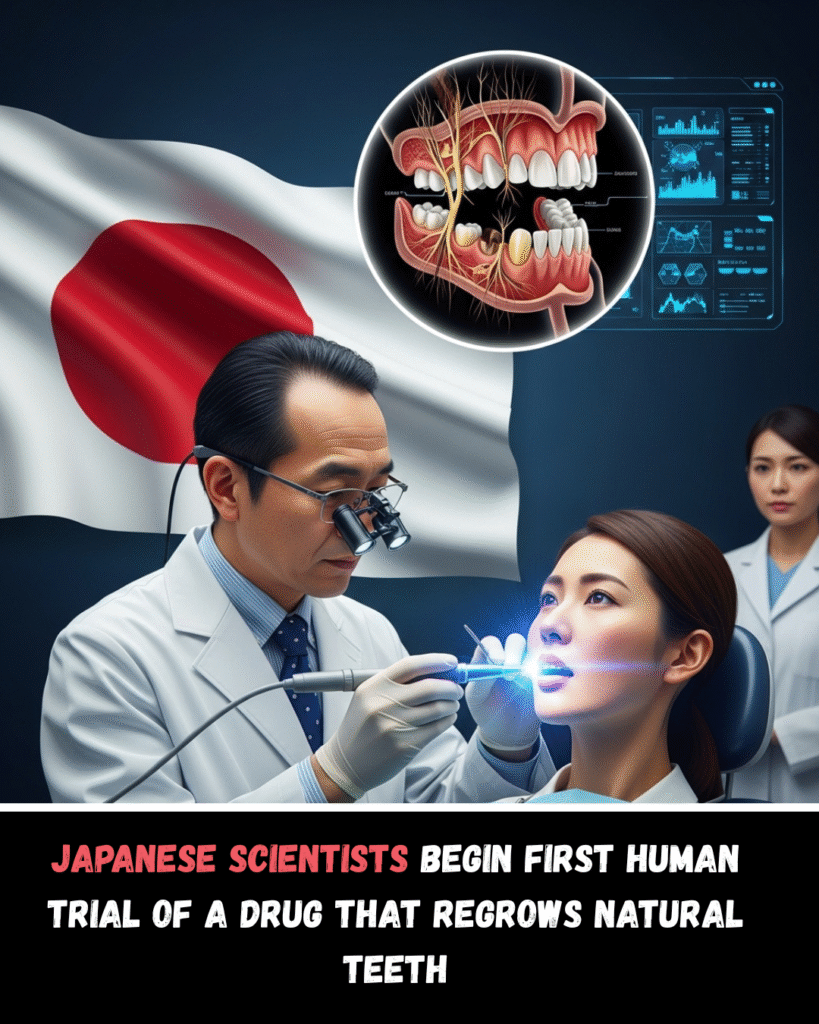
Japanese researchers have launched the world’s first clinical trial testing a drug capable of regrowing naturally lost teeth in humans, marking a paradigm shift in regenerative dentistry that could eliminate the need for dental implants and prosthetics within the next decade. This groundbreaking study at Kyoto University Hospital represents the culmination of nearly two decades of molecular research into tooth morphogenesis and the pharmacological manipulation of developmental pathways that remain dormant in adult humans.
Understanding the Molecular Foundation of Tooth Regeneration
The human dentition represents a biological paradox: while most mammals develop only two sets of teeth throughout their lifetime—deciduous and permanent—certain vertebrates such as sharks and some reptiles possess continuous tooth replacement capabilities. This polyphyodont characteristic has long fascinated researchers investigating the molecular mechanisms underlying odontogenesis, the complex developmental process of tooth formation.
The Japanese research team, led by Dr. Katsu Takahashi at the Research Institute for Microbial Diseases at Osaka University, identified a critical protein called USAG-1 (uterine sensitization-associated gene-1) that functions as a negative regulator of tooth development. This protein inhibits the activity of bone morphogenetic protein (BMP) and Wnt signaling pathways, two fundamental molecular cascades essential for organogenesis and tissue regeneration. By blocking USAG-1, researchers discovered they could reactivate the dormant tooth buds that exist within the human jaw, stimulating the growth of additional teeth beyond the standard 32 permanent teeth.
Initial studies conducted on mice and ferrets demonstrated remarkable success. Animals administered the USAG-1 neutralizing antibody developed supernumerary teeth—additional functional teeth that grew naturally from reactivated tooth germs. These experimental teeth exhibited normal structural characteristics, including proper enamel formation, dentin composition, and pulp vascularization. The ferret model proved particularly valuable because their dental formula more closely resembles human dentition compared to rodents, providing translatable insights into human applications.
Clinical Trial Design and Patient Selection Criteria
The Phase I clinical trial, which commenced in September 2024, enrolled its first cohort of adult male participants between ages 30 and 64 who congenitally lack at least one permanent tooth due to genetic tooth agenesis. This condition, affecting approximately 1% of the global population, results from mutations in genes governing tooth development, leaving individuals with fewer than the standard complement of teeth. These patients represent an ideal initial testing population because they possess theoretical tooth bud remnants that could respond to pharmacological stimulation without the complicating factor of tooth loss due to decay or trauma.
The trial protocol involves intravenous administration of the monoclonal antibody designed to neutralize USAG-1 activity. Participants receive a single infusion and undergo comprehensive monitoring for safety markers, including immunological responses, systemic inflammatory indicators, and potential off-target effects on other BMP-regulated tissues such as bone, cartilage, and kidney structures. The study incorporates advanced imaging technologies including cone-beam computed tomography and high-resolution magnetic resonance imaging to track any morphological changes in the alveolar bone and detect early signs of tooth bud activation.
Researchers established stringent exclusion criteria to minimize confounding variables and safety risks. Individuals with autoimmune conditions, active malignancies, severe cardiovascular disease, or those taking immunosuppressive medications were excluded from participation. This conservative approach reflects the novelty of the intervention and the need to establish baseline safety data before expanding to broader patient populations.
Mechanistic Insights into Pharmacological Tooth Induction
The therapeutic strategy exploits fundamental principles of developmental biology that govern organ formation during embryogenesis. Tooth development progresses through precisely orchestrated stages: initiation, morphogenesis, and cytodifferentiation. These processes depend on reciprocal signaling between oral epithelium and underlying mesenchyme, mediated by evolutionarily conserved molecular pathways including BMP, Wnt, fibroblast growth factor (FGF), and sonic hedgehog (SHH) cascades.
USAG-1 normally functions as a competitive inhibitor, binding to BMP receptors and preventing downstream signal transduction necessary for tooth bud progression. During natural development, this regulatory mechanism helps determine the precise number and positioning of teeth by limiting the spatial and temporal extent of odontogenic signals. The therapeutic antibody employed in this trial specifically targets USAG-1, effectively removing this molecular brake and permitting residual tooth primordia to respond to existing growth factors within the oral environment.
Animal studies revealed that the timing of intervention proves critical. Administration during specific developmental windows yielded optimal results, suggesting that even in adults, certain molecular competencies persist within dental tissues. The regenerated teeth in experimental models demonstrated appropriate anatomical positioning, proper occlusal relationships with opposing teeth, and functional integration with surrounding periodontal structures including the periodontal ligament, cementum, and alveolar bone.
Comparative Analysis with Existing Dental Restoration Technologies
Contemporary dental practice relies predominantly on prosthetic solutions for tooth replacement, each with inherent limitations and complications. Dental implants, considered the gold standard for single-tooth replacement, require surgical placement of titanium fixtures into the jawbone, followed by months of osseointegration before final crown placement. Despite success rates exceeding 95% over ten years, implants present challenges including surgical risks, bone resorption requirements, potential peri-implantitis, and substantial financial costs often exceeding several thousand dollars per tooth.
Traditional removable prosthetics such as partial and complete dentures offer more economical alternatives but suffer from reduced masticatory efficiency, decreased patient satisfaction, and progressive alveolar bone resorption due to lack of physiological loading. Fixed dental bridges necessitate irreversible preparation of adjacent healthy teeth to serve as abutments, sacrificing sound tooth structure for the sake of replacing a missing tooth—a compromise many patients and clinicians find problematic.
Biological tooth regeneration would fundamentally transform this treatment landscape by providing an authentic replacement indistinguishable from naturally developed teeth. A regenerated tooth would possess innate periodontal proprioception through mechanoreceptors in the periodontal ligament, enabling subtle tactile discrimination and protective reflexes absent in osseointegrated implants. The presence of vital pulp tissue would maintain dentin vitality and adaptive capacity, while natural enamel would provide superior wear characteristics compared to ceramic or composite restorative materials.
Broader Implications for Regenerative Medicine
This clinical trial represents more than an isolated advancement in dentistry; it exemplifies a broader paradigm shift toward pharmacological regeneration of complex organs through targeted modulation of developmental pathways. The success of this approach could establish proof-of-concept for similar strategies addressing other regenerative challenges in medicine. Researchers have already identified analogous inhibitory molecules regulating hair follicle development, limb regeneration in amphibians, and cardiac tissue repair, suggesting potential translational applications across multiple organ systems.
The teeth serve as an accessible model for studying organogenesis in adult humans due to their relative structural simplicity, clear functional endpoints, and straightforward clinical assessment methods. Unlike internal organs requiring invasive procedures for evaluation, teeth can be readily examined through non-invasive imaging and direct visualization. This accessibility facilitates iterative refinement of regenerative protocols with immediate clinical feedback.
From a molecular perspective, the ability to pharmacologically reactivate dormant developmental programs challenges previous assumptions about the irreversibility of cellular differentiation and the strict temporal limits of morphogenetic competence. While embryonic stem cells and induced pluripotent stem cells have dominated regenerative medicine discussions, this approach demonstrates that tissue-resident progenitor populations may retain greater plasticity than previously recognized, requiring only appropriate molecular signals to resume developmental trajectories.
Anticipated Timeline and Future Clinical Development
The current Phase I trial focuses exclusively on safety assessment and preliminary efficacy signals, with results expected by mid-2025. Assuming favorable safety profiles and detection of tooth bud activation, the research team plans to initiate Phase II studies involving larger patient cohorts with expanded eligibility criteria. These subsequent trials would include individuals who lost teeth due to periodontal disease, dental caries, or trauma—conditions affecting substantially larger populations than congenital tooth agenesis.
Researchers anticipate that achieving consistent, predictable tooth regeneration in humans will require refinement of dosing regimens, potentially incorporating localized delivery methods rather than systemic administration to minimize off-target effects. Novel drug delivery systems such as injectable hydrogels containing sustained-release formulations could concentrate the therapeutic antibody within the alveolar bone surrounding the target site, enhancing local efficacy while reducing systemic exposure.
The path from initial clinical trials to widespread clinical availability typically spans 7-15 years, accounting for the extended evaluation periods required for rare but serious adverse events, long-term efficacy monitoring, and regulatory approval processes. However, the relatively straightforward mechanism of action and clear clinical endpoints may expedite development compared to more complex biological interventions. If the therapy demonstrates robust safety and efficacy, it could receive accelerated approval pathways given the substantial unmet clinical need and absence of adequate alternatives for true tooth regeneration.
Technical Challenges and Scientific Considerations
Despite promising preclinical data, several substantial challenges must be addressed before tooth regeneration becomes clinically viable. The precise control of tooth morphology represents a critical concern—regenerated teeth must develop with appropriate crown anatomy, root configuration, and dimensional characteristics to establish proper occlusion and aesthetic integration. Uncontrolled growth could result in malformed teeth requiring subsequent reshaping or extraction, negating therapeutic benefits.
The spatial positioning of regenerated teeth requires careful consideration. Tooth buds must develop in precise anatomical locations to avoid interference with adjacent teeth, maintain proper arch form, and establish correct vertical and horizontal relationships with the opposing dentition. The molecular signals guiding tooth positioning during natural development involve complex interactions between multiple tissue layers and may prove difficult to recapitulate pharmacologically in the altered tissue environment of the adult jaw.
Another consideration involves the potential for supernumerary teeth—additional unwanted teeth developing in unintended locations. While this represents the fundamental mechanism being exploited therapeutically, it also poses risks if activation of tooth buds occurs beyond the intended target site. Developing targeted delivery methods that confine drug activity to specific anatomical regions will be essential for preventing such complications.
The immunological implications of introducing a neutralizing antibody warrant thorough investigation. While monoclonal antibodies have become commonplace in medical practice for treating conditions ranging from autoimmune diseases to cancers, each new target presents unique immunogenic considerations. The research team must carefully monitor for both immediate hypersensitivity reactions and delayed immune responses that could affect treatment safety or durability.
Economic and Healthcare System Implications
The potential economic impact of successful tooth regeneration extends beyond individual patient benefits to encompass broader healthcare system considerations. Dental disease represents one of the most prevalent chronic conditions globally, with tooth loss affecting billions of individuals and generating substantial healthcare expenditures. In the United States alone, dental services account for approximately $140 billion in annual spending, with significant portions devoted to prosthetic replacements.
A commercially available tooth regeneration therapy would likely command premium pricing initially, given development costs and limited competition. However, even at elevated price points, the intervention could prove cost-effective compared to lifetime expenses associated with implants, which require periodic maintenance, occasional component replacement, and management of complications. Additionally, regenerated natural teeth would eliminate ongoing costs associated with removable prosthetics, including relines, repairs, and periodic replacement.
Access equity represents an important consideration, as advanced medical technologies often demonstrate delayed adoption in underserved populations and developing nations. The research team and future commercial developers will need to consider pricing strategies, manufacturing scalability, and distribution models that promote broad accessibility rather than limiting availability to affluent populations in developed countries.
Ethical Dimensions and Societal Perspectives
The prospect of regrowing human teeth raises subtle ethical questions surrounding the boundaries of medical intervention versus enhancement. While replacing congenitally missing or lost teeth clearly falls within therapeutic medicine, the potential for generating additional teeth beyond normal anatomical numbers enters ambiguous territory. Society will need to deliberate whether elective tooth regeneration for non-medical purposes constitutes acceptable medical practice or crosses into enhancement territory with implications for resource allocation and healthcare priorities.
Cultural attitudes toward dental aesthetics and modification vary considerably across societies, with some cultures embracing dental modifications as expressions of identity or beauty, while others prioritize preservation of natural dentition. The availability of biological tooth regeneration may influence these cultural practices and reshape societal norms surrounding dental appearance and intervention.
The environmental sustainability of regenerative therapies compared to traditional prosthetics deserves consideration. Manufacturing dental implants, crowns, and prosthetics involves substantial material resources, energy consumption, and waste generation. Biological regeneration, while requiring pharmaceutical manufacturing infrastructure, could potentially reduce the long-term environmental footprint of dental care by eliminating the need for repeated prosthetic fabrication throughout a patient’s lifetime.
Integration with Contemporary Dental Practice Paradigms
Successful translation of tooth regeneration into clinical practice will necessitate substantial adaptations in dental education, clinical workflows, and professional competencies. Contemporary dental training emphasizes prosthetic restoration and surgical techniques for implant placement. The shift toward regenerative approaches would require incorporating molecular medicine concepts, pharmacological management principles, and interdisciplinary collaboration with medical specialists managing systemic drug administration.
Diagnostic protocols would need refinement to identify suitable candidates for regenerative therapy, potentially incorporating genetic screening to assess tooth bud presence and developmental potential. Advanced imaging modalities would become standard practice for treatment planning and outcome monitoring, requiring capital investments in technology and training for proper utilization and interpretation.
The regulatory landscape surrounding regenerative dental therapies remains underdeveloped, as existing frameworks primarily address medical devices and traditional pharmaceuticals rather than biological interventions targeting organ regeneration. Regulatory agencies worldwide will need to establish appropriate oversight mechanisms that ensure patient safety while facilitating innovation in this emerging field. The precedent established by this Japanese trial may influence global regulatory approaches to similar regenerative therapies across multiple medical specialties.
This scientific milestone in Japan represents a convergence of decades of basic research in developmental biology, molecular medicine, and translational therapeutics. While substantial work remains before tooth regeneration becomes routinely available, the initiation of human trials marks a definitive transition from theoretical possibility to tangible clinical reality, potentially heralding a new era in dental medicine where biological restoration supplants artificial replacement as the standard of care.
Disclaimer: This article is for informational purposes only and is not a substitute for professional advice.
Source: Research findings published in Science Advances and clinical trial protocols registered with the Japan Registry of Clinical Trials (jRCT), overseen by the Japan Agency for Medical Research and Development (AMED).