
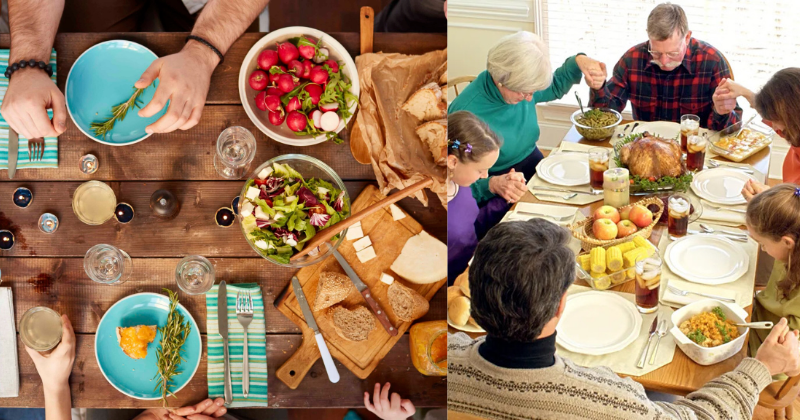
Regular family dinners create measurable improvements in children’s academic achievement, emotional regulation, and social competence through consistent communication patterns, reduced stress exposure, and enhanced vocabulary development during shared mealtime conversations.
Neurobiological Foundations of Shared Mealtimes
The practice of gathering for family dinners activates specific neurological pathways associated with attachment security and cognitive development. During conversation-rich meals, children experience increased oxytocin release, which strengthens neural networks responsible for emotional bonding and stress regulation. This neurochemical response creates a physiological foundation for improved learning capacity.
Research demonstrates that children exposed to regular family conversations during meals develop larger vocabularies compared to peers with irregular dining patterns. The linguistic diversity encountered during these interactions surpasses typical parent-child exchanges throughout the day. Parents naturally introduce complex sentence structures, abstract concepts, and domain-specific terminology while discussing daily events, current affairs, or family planning.
The prefrontal cortex, responsible for executive functions including planning, decision-making, and impulse control, shows enhanced development in children who participate in structured family mealtimes. This neural region benefits from the predictable routines and social expectations inherent in shared dining experiences.
Academic Performance Metrics and Cognitive Outcomes
Children who eat with their families five or more times weekly demonstrate significantly higher grade point averages across elementary and secondary education levels. This correlation persists across socioeconomic boundaries, suggesting that the practice itself carries intrinsic educational value independent of family income or parental education levels.
The academic benefits manifest through multiple mechanisms. During dinner conversations, children practice narrative construction, learn to organize thoughts sequentially, and develop argumentation skills. These linguistic competencies directly translate to improved writing abilities and reading comprehension scores on standardized assessments.
Mathematics performance also shows enhancement among regular family dinner participants. The everyday problem-solving discussions that occur naturally during meals—calculating recipe proportions, discussing time management, or planning budgets—provide practical applications for abstract mathematical concepts. This contextualized learning reinforces classroom instruction through real-world relevance.
Science literacy benefits particularly from dinner table discussions about health, nutrition, environmental topics, or technology. Parents who explain food origins, cooking chemistry, or seasonal agricultural patterns introduce scientific thinking methods without formal instruction. Children learn to ask questions, evaluate evidence, and understand cause-effect relationships through these organic exchanges.

Social Competence and Emotional Intelligence Development
Family dinners function as daily training sessions for social skill acquisition. Children observe and practice turn-taking in conversation, active listening, empathy expression, and conflict resolution within a supportive environment. These competencies form the foundation for successful peer relationships and collaborative learning in academic settings.
The emotional regulation skills developed during family meals prove particularly valuable for academic success. Children who regularly participate in family dinners demonstrate lower rates of anxiety and depression, conditions that significantly impair learning capacity and school attendance. The consistent emotional support and validation received during these gatherings creates psychological resilience.
Adolescents who maintain regular family dinner participation show reduced engagement in high-risk behaviors including substance use, early sexual activity, and delinquent conduct. This protective effect operates through multiple pathways: increased parental awareness of adolescent activities, stronger family bonds that motivate positive behavior, and enhanced self-esteem that reduces vulnerability to negative peer influence.
The conversational skills honed during family meals directly support classroom participation. Students accustomed to expressing opinions, asking clarifying questions, and engaging in respectful debate contribute more effectively to academic discussions and group projects. Teachers consistently note that children from families with regular dinner routines demonstrate superior communication abilities.
Structural Elements of Effective Family Dinners
The benefits described above do not arise automatically from merely eating together. Specific characteristics distinguish developmentally enriching family dinners from simple co-located eating. The presence of engaged conversation represents the most critical element. Meals consumed in silence or with constant television or device distraction fail to produce the documented cognitive and social benefits.
Duration matters less than quality of interaction. A focused twenty-minute dinner with active conversation provides greater developmental value than a forty-minute meal dominated by screen time or parallel individual activities. Parents who ask open-ended questions, share their own experiences, and demonstrate genuine interest in children’s perspectives create the most beneficial dining environments.
Consistency of practice amplifies outcomes. Families who establish dinner as a protected routine—occurring at predictable times with minimal schedule conflicts—provide children with a stable social anchor. This predictability allows children to anticipate and mentally prepare for social engagement, reducing the cognitive load associated with interaction.
The absence of hierarchical communication patterns enhances benefits. When families create egalitarian conversational spaces where children’s contributions receive equivalent attention and respect as adult input, children develop stronger self-efficacy and more sophisticated reasoning abilities. Parents who ask for children’s opinions on family decisions or current events signal that young perspectives carry value.
Practical Implementation Across Diverse Family Structures
Single-parent households can achieve similar outcomes through adapted practices. The essential elements—consistent timing, engaged conversation, device-free attention—remain achievable regardless of family composition. Single parents who prioritize meal quality over elaborate preparation often successfully maintain regular dinner routines despite time constraints.
Families with complex schedules benefit from flexible definitions of « dinner. » The critical components transfer to breakfast or weekend brunches when evening meals prove impractical. Shift workers, divorced parents with custody arrangements, and families with demanding extracurricular commitments can preserve the developmental benefits by establishing alternative consistent mealtimes.
Cultural variations in family dining practices do not diminish effectiveness. The core mechanism—regular, conversation-rich family gatherings around food—operates across diverse cultural contexts. Families who maintain traditional cultural dining customs often report particularly strong outcomes, as these practices carry additional cultural identity benefits that enhance self-concept and family cohesion.
Longitudinal Developmental Trajectories
The advantages of regular family dinners compound over time. Adolescents who experienced consistent family meals throughout childhood enter young adulthood with superior academic credentials, stronger interpersonal skills, and better mental health outcomes compared to peers with irregular family dining histories. These benefits persist into career performance and relationship satisfaction in later life.
College attendance rates and graduation rates show positive correlations with childhood family dinner frequency. The combination of enhanced academic preparation, stronger family support systems, and better developed self-regulation skills contributes to higher education success. Young adults from families with regular dinner traditions report feeling more prepared for independent living and decision-making.
The intergenerational transmission of family dinner practices represents another long-term benefit. Adults who experienced regular family meals during childhood demonstrate greater likelihood of establishing similar routines with their own children, perpetuating the developmental advantages across generations. This cultural transmission occurs even when individuals consciously recognize they’re replicating their parents’ practices.
Contemporary Challenges and Adaptive Strategies
Modern family life presents substantial obstacles to regular shared meals. Work schedules, extracurricular activities, and digital distractions compete for time and attention. However, families who prioritize dinner routines typically succeed by implementing specific strategies: scheduling meals as non-negotiable appointments, preparing simpler menus that reduce cooking time, and establishing clear technology boundaries during mealtimes.
The research on family meals reveals something somewhat imperfect about modern recommendations: while five weekly dinners shows the strongest correlations with positive outcomes, even three consistent weekly family meals produce measurable benefits. Families struggling with schedule coordination can achieve meaningful results without perfect adherence to ideal frequency.
Food quality and preparation complexity show minimal correlation with outcomes. The nutritional content and culinary sophistication of meals matter far less than the social interaction quality they facilitate. Families serving simple, inexpensive meals while engaging in rich conversations achieve superior developmental outcomes compared to families serving elaborate cuisine while distracted by devices or interpersonal tension.
Disclaimer: This article is for informational purposes only and is not a substitute for professional advice.
Source: American Academy of Pediatrics – « The Importance of Family Dinners » and Harvard T.H. Chan School of Public Health – « The Family Dinner Project Research »Réessayer