
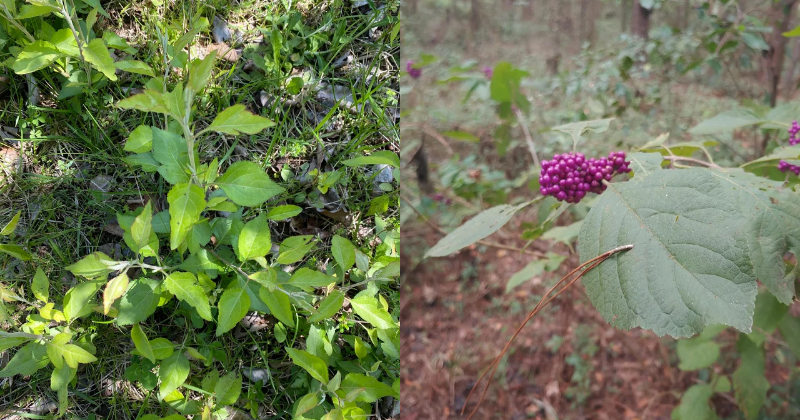
The American Beautyberry, a native shrub producing distinctive purple berries, offers remarkable insect-repelling properties and traditional medicinal applications rooted in Indigenous knowledge systems.
Botanical Characterization and Natural Distribution
Callicarpa americana represents a deciduous shrub belonging to the Lamiaceae family, native to the southeastern United States. This species demonstrates distinctive morphological features, including arching branches reaching 1.5 to 2.5 meters in height and producing clusters of iridescent magenta-to-purple drupes arranged in dense whorls around the stem. The berries appear in late summer through autumn, persisting after leaf abscission and providing crucial food resources for avian species during winter months.
The plant’s natural habitat encompasses woodland edges, coastal plains, and riparian zones from Maryland southward through Florida and westward to Texas and Arkansas. Its distribution correlates strongly with areas receiving 1,000 to 1,500 millimeters of annual precipitation and experiencing minimal frost periods. The species exhibits remarkable adaptability to various soil pH levels, though it demonstrates optimal growth in slightly acidic conditions with adequate organic matter content.
Phytochemical Composition and Bioactive Compounds
The distinctive insect-repelling properties of American Beautyberry derive from specific terpenoid compounds concentrated in leaf tissues. Research conducted by the United States Department of Agriculture identified callicarpenal, intermedeol, and spathulenol as primary bioactive constituents responsible for the plant’s remarkable efficacy against mosquitoes and ticks. These sesquiterpene compounds function by interfering with olfactory receptor proteins in arthropod sensory systems, effectively masking host detection mechanisms.
The berries themselves contain anthocyanins responsible for their characteristic coloration, along with moderate concentrations of tannins and flavonoids. Traditional analysis indicates the presence of compounds exhibiting mild astringent properties, which informed historical applications in folk medicine. The leaf tissue demonstrates higher concentrations of bioactive terpenoids compared to berry or stem material, explaining traditional preferences for leaf-based preparations in insect-repelling applications.
Traditional Applications and Indigenous Knowledge
Indigenous communities throughout the southeastern United States, particularly the Choctaw, Seminole, and Creek nations, developed extensive knowledge regarding Callicarpa americana applications over centuries of observation and experimentation. Documented uses included creating decoctions from boiled roots and branches for treating malarial fevers and rheumatic conditions. Leaves were crushed and rubbed directly onto skin as protection against mosquito attacks during humid summer months.
Historical accounts from early settlers note that leaves were sometimes placed in stored grain or hung in living spaces to deter various insects. Some traditional practitioners prepared poultices from mashed berries and leaves for topical application to minor skin irritations, though these applications remained less common than insect-repelling uses. The plant held additional cultural significance in some communities, with branches incorporated into ceremonial practices or used as natural dye sources producing yellow-green pigments.
Contemporary Research on Insect-Repelling Efficacy
Modern scientific investigation has validated traditional knowledge regarding American Beautyberry’s insect-repelling capabilities through controlled laboratory and field studies. Researchers at the USDA’s Natural Products Utilization Research Unit in Mississippi conducted comparative analyses demonstrating that crushed leaf extracts provided protection comparable to low-concentration synthetic repellents against Aedes aegypti and Anopheles mosquito species for periods extending two to three hours.
The mechanism of action differs substantially from DEET-based repellents, which directly affect insect neurotransmitter systems. American Beautyberry compounds instead create an olfactory masking effect, reducing the insect’s ability to detect carbon dioxide, lactic acid, and other chemical signatures associated with potential hosts. This distinction suggests reduced likelihood of resistance development, though the shorter duration of effectiveness requires more frequent reapplication compared to synthetic alternatives.
Subsequent investigations expanded to include tick species, with laboratory trials indicating moderate repellent effects against Amblyomma americanum (lone star tick) and Dermacentor variabilis (American dog tick). Field applications showed variable results depending on environmental conditions, with effectiveness diminishing more rapidly in high humidity or after perspiration.
Preparation Methods for Insect Repellent Applications
Creating effective insect repellent from American Beautyberry requires fresh leaf material harvested during active growth periods when terpenoid concentrations reach peak levels. The simplest preparation method involves crushing approximately 20 to 30 fresh leaves between the palms until they release visible moisture and aromatic compounds. This crushed material can be rubbed directly onto exposed skin areas, though some individuals experience mild skin irritation from direct application.
An alternative approach involves creating an alcohol-based extract by filling a glass jar two-thirds full with coarsely chopped fresh leaves, then covering completely with vodka or rubbing alcohol containing at least 40 percent ethanol. This mixture should steep in a cool, dark location for two to three weeks with occasional agitation. After straining through cheesecloth, the resulting tincture can be applied to skin using a spray bottle or cloth application. This preparation maintains potency for approximately six months when stored in amber glass bottles away from direct sunlight.
For those preferring oil-based formulations, fresh leaves can be infused in neutral carrier oils such as grapeseed or sweet almond oil using gentle heat extraction. Approximately 50 grams of chopped fresh leaves should be combined with 250 milliliters of oil in a double boiler setup, maintaining temperatures below 60 degrees Celsius for four to six hours. After straining and cooling, this preparation can be stored refrigerated for three to four months.
Berry Utilization and Culinary Considerations
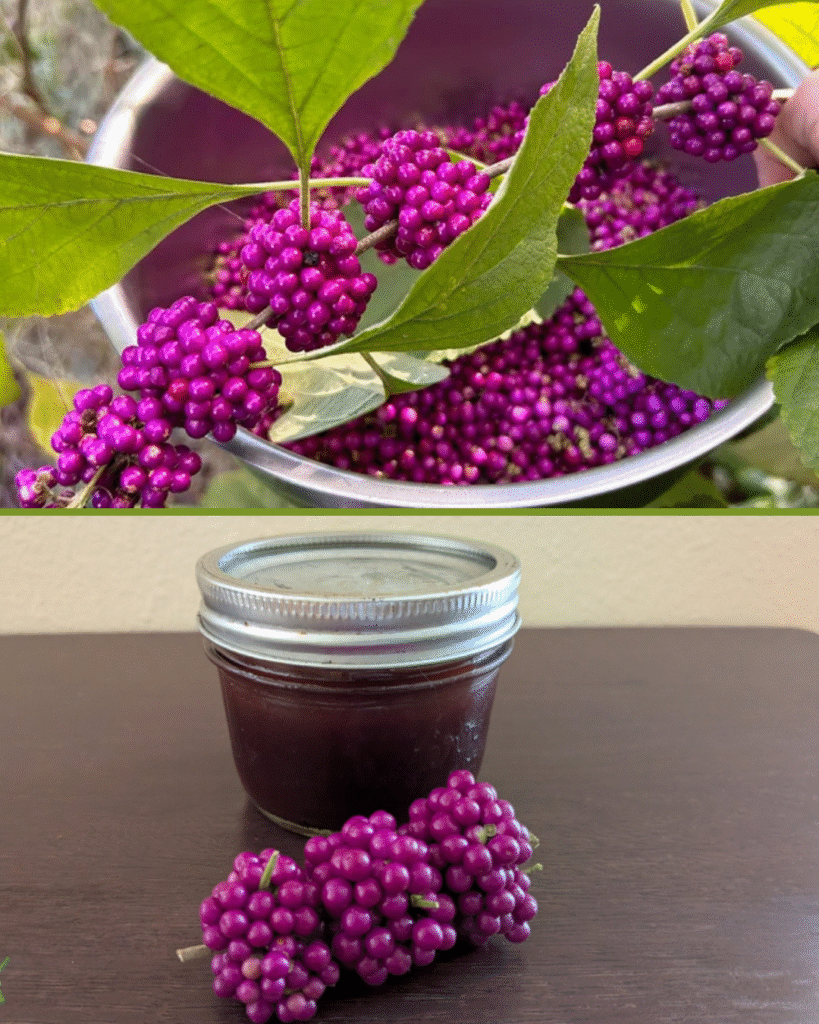
While American Beautyberry fruits attract considerable attention due to their striking appearance, their culinary applications remain limited due to astringent qualities and minimal flesh surrounding large seeds. The berries are technically edible but possess an intensely tart, slightly bitter flavor profile that most find unpalatable when consumed raw. Some foragers have experimented with incorporating small quantities into jelly or jam preparations, where high sugar content partially masks the astringency.
Traditional preparation methods sometimes included cooking berries with sweeteners and using the resulting syrup in small quantities. However, the low juice yield relative to seed volume makes large-scale processing impractical for most home applications. Birds and small mammals consume the berries readily, suggesting that human taste preferences rather than toxicity concerns limit culinary use. No documented cases of toxicity from berry consumption exist in medical literature, though the lack of extensive human consumption history suggests exercising caution with quantity.
The berries have been used historically to produce natural dyes ranging from lavender to deep purple depending on mordant selection and fabric type. Alum mordants typically yield lighter purple-pink tones, while iron mordants produce deeper blue-purple shades on protein fibers like wool.
Cultivation Considerations for Home Gardens
American Beautyberry adapts readily to cultivation in USDA hardiness zones 6 through 10, demonstrating remarkable tolerance for various growing conditions once established. The plant performs optimally in partial shade conditions mimicking its natural woodland edge habitat, though it tolerates full sun exposure in areas with adequate soil moisture. Afternoon shade becomes particularly important in regions experiencing intense summer heat above 35 degrees Celsius.
Soil preparation should emphasize organic matter incorporation and drainage improvement rather than heavy fertilization. The species demonstrates moderate drought tolerance after establishment but produces more abundant foliage and berry crops with consistent moisture availability during active growth periods. Mulching with 5 to 8 centimeters of organic material helps maintain soil moisture and suppresses competing vegetation.
Mature plants benefit from renewal pruning every three to four years, with stems cut back to 15 to 30 centimeters above ground level in late winter before spring growth initiation. This aggressive pruning stimulates vigorous new growth and prevents the development of woody, unproductive stems. Berry production occurs on current season’s growth, making this pruning approach compatible with maintaining harvest potential.
Propagation Techniques and Establishment
Sexual propagation through seed requires cold stratification to overcome dormancy mechanisms. Fresh seeds should be cleaned of fruit pulp, mixed with moistened sand or vermiculite, and refrigerated at 2 to 5 degrees Celsius for 60 to 90 days before spring sowing. Germination rates typically range from 30 to 60 percent under optimal conditions with germination occurring over extended periods.
Vegetative propagation through softwood cuttings offers more predictable results and maintains desirable characteristics from parent plants. Terminal cuttings 10 to 15 centimeters in length should be taken in early summer when new growth demonstrates some firmness but remains pliable. Removing lower leaves and treating cut ends with rooting hormone powder containing 0.3 to 0.8 percent indole-3-butyric acid significantly improves success rates.
Cuttings require high humidity environments with indirect light and temperatures maintained between 21 and 24 degrees Celsius. Root development typically occurs within four to six weeks, after which gradual acclimation to ambient conditions prevents transplant shock. First-year plants often show minimal growth as root systems establish, with substantial aboveground development occurring in subsequent growing seasons.
Ecological Role and Wildlife Value
Beyond human applications, Callicarpa americana provides significant ecological services within its native range. The prolific berry production creates important food resources during autumn and winter when many other fruit sources become depleted. At least 40 bird species consume American Beautyberry fruits, including mockingbirds, robins, and various finch species. The berries’ high fat content relative to many native fruits provides concentrated energy during migration periods.
The flowers, though small and relatively inconspicuous, attract diverse pollinator assemblages including native bee species, small butterflies, and beneficial wasps. This pollinator support occurs during mid-to-late summer when many spring-flowering species have completed their bloom cycles. The dense branching structure provides nesting sites for small birds and shelter for various small mammals.
The plant’s relatively rapid growth rate and ability to establish on disturbed sites contributes to succession processes in degraded habitats. Its moderate shade tolerance allows persistence under developing forest canopies while pioneer species naturally thin. This characteristic makes the species valuable for habitat restoration projects focusing on establishing native plant communities.
Safety Considerations and Limitations
While American Beautyberry preparations show low toxicity profiles based on historical use patterns and limited scientific investigation, certain precautions merit consideration. Skin sensitivity varies among individuals, with some experiencing mild irritation from direct leaf application or concentrated extract contact. Performing patch tests on small skin areas before widespread application helps identify potential sensitivity issues.
The lack of comprehensive toxicological studies regarding internal consumption of berry preparations suggests limiting intake to small quantities and avoiding use during pregnancy or lactation. Traditional uses included relatively small amounts of berry-derived preparations, and extrapolating to modern large-scale consumption without additional safety data remains inadvisable.
Insect repellent preparations, while generally safer than many synthetic alternatives, require reapplication every two to three hours for maintaining effectiveness. Users should not assume protection levels equivalent to commercial repellents containing higher DEET concentrations, particularly in areas with disease-carrying mosquito populations. The preparations work best as components of integrated approaches including protective clothing and avoiding peak insect activity periods.
Comparative Analysis with Commercial Repellents
American Beautyberry preparations occupy a specific niche between no protection and maximum-strength commercial formulations. Their effectiveness against common mosquito species compares favorably with 5 to 10 percent DEET concentrations for short-duration protection. However, the shorter effective period and need for frequent reapplication limits practical utility during extended outdoor activities or in areas with intense insect pressure.
The natural preparation appeals to individuals preferring plant-based options or those experiencing sensitivity to synthetic repellent formulations. The distinct aromatic profile, while strong immediately after application, dissipates more rapidly than synthetic alternatives and lacks the characteristic chemical odor many find objectionable in commercial products.
Cost considerations favor American Beautyberry for individuals with access to growing plants, as fresh leaves can be harvested as needed throughout the growing season. However, the preparation time and shorter storage stability of homemade formulations represent practical limitations compared to purchasing commercial products. Geographic location significantly affects accessibility, with the plant’s native range limiting spontaneous harvesting opportunities for many potential users.
Integration into Sustainable Landscaping
American Beautyberry exemplifies native plant species offering multiple benefits within residential and community landscapes. Its ornamental value peaks during autumn when the distinctive berry clusters provide visual interest coinciding with fall foliage transitions. The plant’s moderate size suits foundation plantings, mixed borders, or woodland garden settings without overwhelming smaller spaces.
The species requires minimal maintenance once established, with primary interventions limited to occasional pruning and mulch replenishment. Its native status eliminates concerns regarding invasive potential that affect many introduced ornamental species. The wildlife attraction capabilities enhance broader ecological garden objectives while the insect-repelling properties offer practical benefits for adjacent outdoor living spaces.
Incorporating American Beautyberry into diverse plantings alongside other native species creates layered habitats supporting complex ecological interactions. Companion species might include native azaleas, ferns, and shade-tolerant groundcovers creating naturalistic associations mimicking the plant’s natural habitat conditions. Such approaches enhance landscape resilience while reducing dependence on irrigation and chemical inputs.
The plant’s regional availability through native plant nurseries has increased substantially over the past two decades as interest in native landscaping has grown. Several cultivated selections offer enhanced berry production or more compact growth habits compared to wild-collected specimens, though these selections have not been evaluated specifically for insect-repelling compound concentrations.