
Sodium bicarbonate represents a versatile cleaning agent whose efficacy stems from fundamental physicochemical properties rather than complex synthetic formulations. This crystalline compound demonstrates remarkable utility across diverse household applications, combining mild abrasive action, pH-neutralizing capacity, and odor-elimination properties while maintaining environmental compatibility and cost-effectiveness.
Molecular Structure and Functional Chemistry
Sodium bicarbonate (NaHCO₃) exhibits a molecular architecture that directly correlates with its cleaning capabilities. The compound dissociates in aqueous solutions to release bicarbonate ions (HCO₃⁻) and sodium cations (Na⁺), establishing a buffered system with a pH ranging from 8.1 to 8.4. This mildly alkaline environment facilitates the saponification of fatty acids, converting them into water-soluble salts through base-catalyzed hydrolysis. The bicarbonate anion functions as an amphoteric species, capable of accepting protons from acidic contaminants while donating them to strongly alkaline substances, thereby neutralizing both acidic and basic odor-causing compounds.
The crystalline structure of sodium bicarbonate produces particles with Mohs hardness between 2.5 and 3, sufficient to provide mechanical abrasion against organic residues without scratching most household surfaces. The angular morphology of individual crystals enhances their scouring action when applied with mechanical pressure, dislodging adhered particulates through combined chemical and physical mechanisms. Dissolution kinetics in water remain moderate, allowing sustained release of active ions during cleaning applications rather than immediate complete solubilization.
Kitchen Applications: Surface Chemistry and Decontamination
Cookware and Food Preparation Surfaces
Carbonized organic deposits on cooking surfaces present complex mixtures of polymerized lipids, denatured proteins, and Maillard reaction products. A paste formulation combining three parts sodium bicarbonate with one part water creates a high-concentration alkaline medium that penetrates these residues. The hydroxide ions generated through bicarbonate hydrolysis cleave ester bonds in polymerized fats, gradually depolymerizing the carbonized matrix. Application time of fifteen to twenty minutes allows sufficient reaction kinetics for partial degradation of these recalcitrant deposits.
For cookware with extensively burned residues, boiling water containing sodium bicarbonate at concentrations of approximately 20 grams per liter generates elevated temperature and pH conditions that accelerate hydrolytic processes. The combination of thermal energy and alkaline catalysis disrupts the molecular networks binding burned material to metal surfaces, facilitating mechanical removal with minimal scrubbing force.
Cutting boards fabricated from wood or plastic polymers absorb volatile sulfur compounds from alliums and trimethylamine from fish products. These odor-active molecules penetrate porous matrices and persist despite conventional rinsing. Sodium bicarbonate application neutralizes these compounds through acid-base reactions for sulfur-containing acids and through adsorption mechanisms for neutral volatiles. The bicarbonate crystals provide high surface area for molecular capture while the alkaline pH converts volatile acids to non-volatile salts.
Refrigeration Units and Microwave Chambers
Refrigerator interiors require periodic decontamination to control bacterial populations and eliminate odor accumulation from food volatiles. A cleaning solution containing 60 grams of sodium bicarbonate per liter of water provides antimicrobial effects through pH elevation and osmotic stress while avoiding toxic residues in food storage areas. This concentration maintains sufficient alkalinity to disrupt bacterial cell membranes without leaving crystalline deposits upon drying.
Microwave chambers accumulate aerosolized food particles that desiccate into adherent films. Heating a sodium bicarbonate solution within the chamber generates saturated vapor that rehydrates these deposits while simultaneously elevating their pH. This dual action softens proteinaceous and carbohydrate residues, reducing adhesive forces binding them to chamber walls and facilitating subsequent mechanical removal.
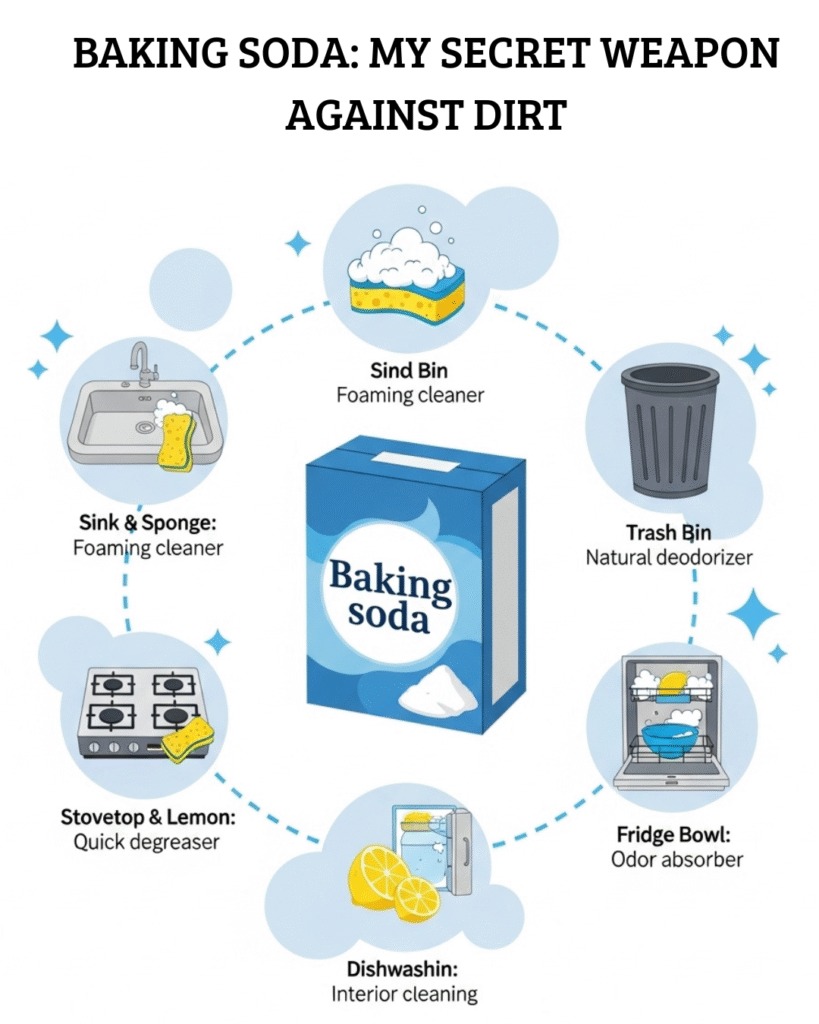
Bathroom Sanitation: Mineral Dissolution and Microbial Control
Grout and Ceramic Tile Maintenance
Tile grout, typically composed of Portland cement with silica aggregates, develops surface discoloration through multiple mechanisms including mold colonization, mineral deposition, and absorption of organic contaminants. Dense sodium bicarbonate pastes applied with mechanical agitation provide both chemical and physical restoration. The mild alkalinity mobilizes surface-bound organic matter while the crystalline structure provides abrasive action against superficial mold growth.
For persistent fungal colonization, combining sodium bicarbonate with acetic acid from vinegar initiates a neutralization reaction producing carbon dioxide gas. The effervescence generates localized pressure fluctuations and fluid turbulence within grout pores, mechanically disrupting fungal hyphae networks while flushing dissolved material from subsurface regions. This approach demonstrates greater penetration than surface-only applications, addressing colonization extending into porous substrates.
Shower enclosures develop calcium carbonate and magnesium hydroxide deposits from evaporating hard water. These mineral scales bond strongly to glass and ceramic surfaces through electrostatic attraction. Sodium bicarbonate’s mild alkalinity combined with its mechanical action gradually erodes these deposits through both chemical dissolution and physical abrasion, though complete removal of thick accumulations may require repeated applications as the alkaline medium can only slowly dissolve alkaline earth carbonates.
Toilet Bowls and Chrome Fixtures
Toilet bowl staining results primarily from iron and manganese oxide precipitation, calcium carbonate deposition, and organic matter accumulation. Extended contact with concentrated sodium bicarbonate solutions allows gradual chelation and dissolution of metal oxides while the mechanical scrubbing action removes loosely bound precipitates. Overnight application maximizes reaction time, permitting equilibration between dissolved ions and solid deposits.
Chrome-plated fixtures lose luster through microscopic surface etching from acidic water droplets and deposition of mineral films. Sodium bicarbonate paste applied with soft cloths provides sufficient abrasive action to remove surface deposits without penetrating the thin chromium plating layer. The alkaline pH also helps solubilize acidic corrosion products, restoring reflective properties.
Textile Deodorization: Adsorption Phenomena and Odor Chemistry
Carpeting and Area Rugs
Textile floor coverings accumulate volatile organic compounds from multiple sources including human perspiration, cooking aerosols, and pet-derived odors. These molecules penetrate fiber structures and resist removal through vacuuming alone. Broadcast application of sodium bicarbonate crystals across carpet surfaces allows the material to function as a molecular sieve, capturing volatile compounds through both physisorption and chemisorption mechanisms.
The high surface area to volume ratio of fine bicarbonate powder maximizes contact with odor molecules. Volatile fatty acids from biological sources react with the alkaline bicarbonate to form non-volatile sodium salts, effectively eliminating these compounds from the vapor phase. Neutral volatile molecules adsorb onto crystal surfaces through van der Waals forces. Application duration of several hours permits diffusion of deeply embedded volatiles to carpet surfaces where bicarbonate contact can occur, followed by mechanical removal through vacuum extraction.
For visible staining, moisture application before bicarbonate treatment enhances penetration into fiber cores where many chromophoric compounds reside. The aqueous medium facilitates ion transport and acid-base reactions while the sodium ions may exchange with bound contaminants through ion-exchange mechanisms in natural fiber textiles.
Upholstered Furniture and Drapery
Fabric upholstery accumulates particulate matter and absorbs volatile compounds over extended periods. Sodium bicarbonate application with mechanical brushing forces crystals between individual fibers, increasing contact surface area. The compound’s chemical stability allows safe application to delicate textiles including silk and wool that would degrade under harsher chemical treatments. Post-treatment vacuum extraction removes both the bicarbonate and the adsorbed contaminants, refreshing textiles without water-based cleaning that might cause shrinkage or dye migration.
Floor Surface Treatment: Material Compatibility Considerations
Ceramic and Vinyl Flooring
Ceramic tile and vinyl composition flooring tolerate alkaline cleaning solutions without degradation. Sodium bicarbonate dissolved at 100 grams per ten liters of water provides effective degreasing through saponification reactions while the mild alkalinity prevents damage to polymer-based adhesives securing flooring materials. This concentration maintains sufficient ionic strength for cleaning efficacy while remaining below thresholds that might leave visible residues upon evaporation.
For localized heavy soiling, direct application of bicarbonate powder to dampened areas creates high local concentrations that enhance reaction rates with adhered contaminants. Brief contact time of several minutes permits chemical action before mechanical scrubbing removes both the cleaning agent and dissolved soil.
Wood and Stone Surface Limitations
Finished wood flooring with polyurethane or wax coatings requires cautious approach to avoid surface dulling. While sodium bicarbonate’s Mohs hardness remains below that of most floor finishes, repeated abrasive action with excessive pressure may gradually compromise surface gloss through cumulative microscopic scratching. Highly dilute solutions applied with minimal mechanical force represent safer alternatives for regular maintenance.
Calcareous stone surfaces including marble, limestone, and travertine demonstrate inherent incompatibility with alkaline cleaning agents. Although sodium bicarbonate exhibits mild alkalinity compared to caustic cleaners, prolonged or repeated exposure can etch polished calcium carbonate surfaces through slow dissolution reactions. These materials require pH-neutral or slightly acidic cleaning formulations to prevent surface degradation.
Appliance Maintenance: Thermal and Chemical Decontamination
Oven Interiors and Baking Surfaces
Oven interiors develop thick deposits of thermally polymerized fats and carbohydrate-protein condensation products from high-temperature cooking processes. These materials form crosslinked networks resistant to conventional cleaning. Sodium bicarbonate paste applications at high loading densities provide sustained alkaline exposure that gradually cleaves crosslinks through hydrolytic mechanisms. Overnight contact maximizes reaction extent, allowing deep penetration of hydroxide ions into the deposit matrix.
The absence of volatile organic solvents in bicarbonate formulations eliminates indoor air quality concerns during treatment of enclosed spaces. Following the chemical degradation phase, mechanical scraping removes softened deposits, with residual bicarbonate easily rinsed away using damp cloths. Stubborn areas may benefit from repeated treatments as complete dissolution of extensive polymerized deposits may exceed the capacity of a single application.
Stainless Steel Sinks and Metallic Surfaces
Austenitic stainless steel exhibits excellent corrosion resistance through its passive chromium oxide surface layer. Sodium bicarbonate’s mild alkalinity does not compromise this protective film while providing sufficient cleaning action for removal of water spots and light tarnishing. Application along the grain direction of brushed stainless finishes prevents cross-grain scratching that would be visually apparent.
Aluminum surfaces require greater caution as this metal demonstrates amphoteric behavior, reacting with both strong acids and bases. While sodium bicarbonate’s moderate pH rarely causes immediate visible damage, extended contact or repeated applications may gradually develop surface dulling through slow oxide layer dissolution. For aluminum items, minimal contact time with thorough rinsing represents appropriate practice.
Ambient Odor Control: Equilibrium Adsorption Dynamics
Enclosed Space Applications
Sodium bicarbonate functions as a passive odor adsorbent when placed in open containers within enclosed spaces. The mechanism involves surface adsorption of volatile molecules onto the high-surface-area crystalline structure. Odor-active compounds migrate through air until contacting bicarbonate surfaces where physisorption occurs through weak intermolecular forces. Acidic volatiles undergo additional chemisorption through neutralization reactions, forming non-volatile sodium salts that permanently sequester these compounds.
Adsorption capacity diminishes over time as surface sites become occupied, necessitating periodic replacement every eight to twelve weeks depending on odor loading. Larger exposed surface areas enhance uptake rates, making shallow dishes more effective than narrow containers. Placement near odor sources maximizes concentration gradients driving molecular transport to the adsorbent.
Pet Living Areas and Litter Systems
Animal waste generates volatile ammonia and sulfur-containing compounds through bacterial decomposition processes. Sodium bicarbonate integration into pet litter systems neutralizes ammonia through acid-base chemistry, converting volatile NH₃ to non-volatile ammonium bicarbonate. The buffering action maintains more neutral pH conditions that reduce bacterial proteolysis rates, secondarily diminishing odor generation.
For pet bedding and fabric accessories, the same broadcast application and vacuum extraction method used for carpeting effectively refreshes materials without requiring water-based laundering that might be impractical for large items. The treatment eliminates odors while avoiding moisture introduction that could support microbial growth.
Synergistic Combinations: Reaction Chemistry and Enhanced Efficacy
Bicarbonate-Vinegar Interactions
The combination of sodium bicarbonate (base) with acetic acid (vinegar) produces a vigorous neutralization reaction: NaHCO₃ + CH₃COOH → CH₃COONa + H₂O + CO₂. The carbon dioxide evolution creates substantial turbulence and pressure fluctuations useful for dislodging material in confined spaces such as drain pipes. The effervescent action mechanically disrupts soft blockages composed of soap residues, hair, and organic matter.
However, for surface cleaning, simultaneous application proves counterproductive as the neutralization reaction consumes both active ingredients, yielding primarily water and sodium acetate with minimal cleaning properties. Sequential application where one agent is applied, rinsed, then followed by the other preserves the distinct chemical actions of each compound. This approach allows the alkaline bicarbonate to saponify fats, followed by acidic vinegar to dissolve mineral deposits through separate, optimized mechanisms.
Essential Oil Integration
Sodium bicarbonate serves as an effective carrier matrix for essential oil distribution in deodorizing applications. The porous crystal structure absorbs and gradually releases volatile terpenes and aromatic compounds, providing sustained fragrance delivery. Common additions include limonene-rich citrus oils, linalool-containing lavender oil, or antimicrobial tea tree oil components such as terpinen-4-ol.
This combination delivers dual functionality, with bicarbonate addressing odors through chemical neutralization and adsorption while essential oils provide pleasant fragrance and potentially mild antimicrobial effects. The approach proves particularly effective for fabric refreshing applications where both odor elimination and pleasant scent are desired outcomes.
Environmental Profile: Life Cycle Assessment Considerations
Production and Ecological Impact
Sodium bicarbonate production occurs through two primary routes: natural mineral extraction from nahcolite deposits and synthetic production via the Solvay process. Natural nahcolite mining involves lower energy inputs but generates mining-related environmental impacts. The Solvay process converts limestone and sodium chloride through ammonia-mediated reactions, producing sodium bicarbonate with calcium chloride as a byproduct. While energy-intensive, this synthesis pathway utilizes abundant raw materials.
The compound’s aquatic toxicity remains negligible, with LC₅₀ values for fish and aquatic invertebrates exceeding several grams per liter. Upon release to wastewater systems, bicarbonate ions participate in natural carbonate equilibria present in all aquatic ecosystems, undergoing assimilation without bioaccumulation or persistent environmental effects. This contrasts sharply with synthetic surfactants, chelating agents, and antimicrobial compounds found in conventional cleaners that may resist degradation or disrupt aquatic organisms.
Biodegradability assessments prove essentially meaningless for sodium bicarbonate as it exists as simple inorganic ions that participate in fundamental geochemical cycles. The absence of complex organic molecules eliminates concerns regarding recalcitrant metabolites or transformation products that characterize many synthetic cleaning compounds.
Economic Efficiency Analysis
Comparative cost analysis reveals significant economic advantages for sodium bicarbonate relative to specialized cleaning products. A single kilogram costing approximately three to six dollars replaces numerous category-specific cleaners including oven cleaners, scouring powders, fabric deodorizers, and drain maintenance products. This consolidation reduces both direct product expenditure and storage space requirements.
The compound’s indefinite shelf life when stored properly eliminates waste from product expiration, a common issue with liquid cleaners containing water that may support microbial growth over time. The concentrated dry form also reduces transportation energy compared to water-containing products, contributing to lower embedded carbon in the delivered product.
Application Limitations: Chemical and Material Constraints
Material Incompatibilities
Aluminum exhibits amphoteric reactivity, dissolving slowly in both acidic and alkaline solutions. While sodium bicarbonate’s moderate pH produces minimal short-term effects, repeated or prolonged contact gradually develops surface discoloration and oxide film alteration. Anodized aluminum, featuring a thicker engineered oxide layer, demonstrates greater resistance but may still experience gradual degradation with aggressive treatment.
Calcareous stones including marble, limestone, and travertine contain calcium carbonate that slowly dissolves even in mildly alkaline solutions through equilibrium-driven processes. Although the rate remains far slower than dissolution by acids, repeated bicarbonate treatments can gradually etch polished surfaces, creating a matte appearance. These materials require specialized pH-neutral cleaning formulations designed for calcium carbonate compatibility.
Lead crystal glass contains substantial lead oxide content that may leach under alkaline conditions, potentially both clouding the glass surface and releasing lead ions. Modern soda-lime glass proves far more resistant but antique or specialty glassware merits caution with any alkaline cleaning agent.
Efficacy Boundaries
Sodium bicarbonate’s cleaning power, while versatile, shows limitations against specific contaminant types. Heavy polymerized greases from prolonged high-temperature exposure may require multiple treatments or alternative approaches using actual detergents that provide superior grease solubilization through surfactant action. Deeply set organic stains such as anthocyanin pigments from berries or tannins from tea demonstrate resistance to bicarbonate treatment, often requiring oxidative bleaching agents for effective removal.
Biological contamination including mold penetrating porous substrates exceeds bicarbonate’s capabilities for complete remediation. While surface cleaning proves effective, subsurface hyphal networks require dedicated antimicrobial treatments or substrate removal in cases of extensive colonization. The compound functions primarily as a maintenance cleaner rather than a remediation agent for severe contamination scenarios.
Storage Protocols and Stability Considerations
Sodium bicarbonate demonstrates hygroscopic properties, gradually absorbing atmospheric moisture that causes caking and reduces effectiveness through premature dissolution. Storage in sealed containers with low headspace humidity preserves powder flowability and maintains full activity. Glass, rigid plastic, or metal containers with gasket-sealed lids provide optimal protection against moisture infiltration.
Temperature stability proves excellent across normal household ranges, with no degradation occurring until temperatures exceed 50°C where gradual decomposition to sodium carbonate begins through loss of carbon dioxide and water. Normal storage conditions pose no stability concerns, permitting indefinite storage when moisture exposure is controlled.
Food-grade and technical-grade sodium bicarbonate share identical chemical composition but differ in manufacturing quality controls and potential trace contaminants. Food-grade material undergoes more stringent purity testing and contaminant limits, justifying its use for applications involving food contact surfaces or potential dermal exposure. Technical-grade material provides equivalent performance for general cleaning applications at lower cost, making it economically preferable for non-food-contact cleaning.
Integration into Systematic Cleaning Protocols
Incorporating sodium bicarbonate into routine household maintenance requires strategic preparation of ready-to-use formulations stored in convenient containers. Pre-mixed solutions for floor cleaning, prepared pastes for surface scrubbing, and scented powders for fabric applications reduce activation energy for adoption, encouraging regular use over sporadic intensive cleaning episodes.
The single-product approach simplifies inventory management and reduces exposure to multiple chemical formulations with varying hazard profiles. This consolidation particularly benefits households with young children or chemically sensitive individuals where minimizing exposures to complex chemical mixtures provides health advantages beyond mere cleaning efficacy.
Sodium bicarbonate represents a scientifically sound cleaning agent whose efficacy derives from fundamental physicochemical principles rather than proprietary formulation complexity. Its mild alkalinity, moderate abrasiveness, high surface area, and chemical buffering capacity combine to address diverse household soiling challenges while maintaining environmental compatibility and economic accessibility. Understanding the mechanistic basis for its cleaning actions enables optimal application strategies that maximize effectiveness while respecting material compatibility limitations, establishing sodium bicarbonate as a cornerstone product in evidence-based household maintenance.