
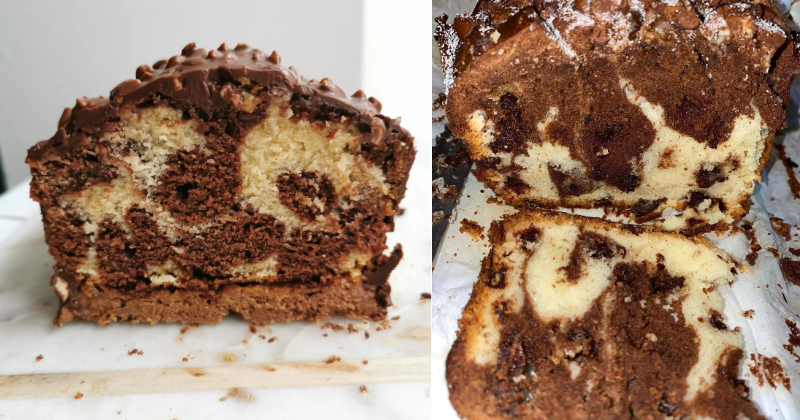
There’s something profoundly satisfying about slicing into a chocolate swirl cake and revealing its hypnotic marble pattern. This classic dessert combines the delicate crumb of vanilla cake with rich ribbons of chocolate, creating a visual masterpiece that tastes as extraordinary as it looks. Whether you’re an experienced baker seeking to perfect your technique or a novice ready to embrace a rewarding challenge, this chocolate swirl cake recipe will guide you through each crucial step toward creating a dessert worthy of any celebration.
The beauty of this cake extends beyond its striking appearance. The interplay between light vanilla batter and deep chocolate creates a complexity of flavor that evolves with each bite. Unlike simple layer cakes, the swirl technique produces an organic, unrepeatable pattern—each cake becomes a unique creation. This recipe demystifies the swirling process while sharing the subtle techniques that separate a good marble cake from an unforgettable one.
Why This Chocolate Swirl Cake Stands Apart
This recipe represents years of refinement, drawing from both classical French techniques and modern American cake-baking wisdom. What distinguishes this chocolate swirl cake is its exceptionally tender crumb—achieved through careful ingredient ratios and gentle mixing methods—paired with an intensely flavored chocolate component that doesn’t overwhelm the delicate vanilla base.
Difficulty Level: Intermediate
Prep Time: 25 minutes
Bake Time: 50-60 minutes
Cooling Time: 2 hours
Total Time: Approximately 3 hours 30 minutes
Yield: 12 generous servings
This cake suits countless occasions: birthday celebrations, afternoon tea gatherings, weekend baking projects, or those moments when you simply crave something beautiful and comforting. The recipe forgives minor imperfections while rewarding attention to detail with superior texture and flavor.
Ingredients
For the Vanilla Batter:
- 2¾ cups (345g) all-purpose flour, spooned and leveled
- 2½ teaspoons baking powder
- ¾ teaspoon fine sea salt
- 1 cup (226g) unsalted butter, at room temperature
- 2 cups (400g) granulated sugar
- 4 large eggs, at room temperature
- 2 teaspoons pure vanilla extract
- 1 cup (240ml) whole milk, at room temperature
For the Chocolate Swirl:
- ½ cup (50g) Dutch-process cocoa powder
- ¼ cup (60ml) hot water
- 2 tablespoons granulated sugar
- 1 teaspoon instant espresso powder (optional, but highly recommended)
Equipment Needed:
- 10-inch bundt pan or tube pan
- Stand mixer or hand mixer
- Medium mixing bowl
- Rubber spatula
- Whisk
- Cooling rack
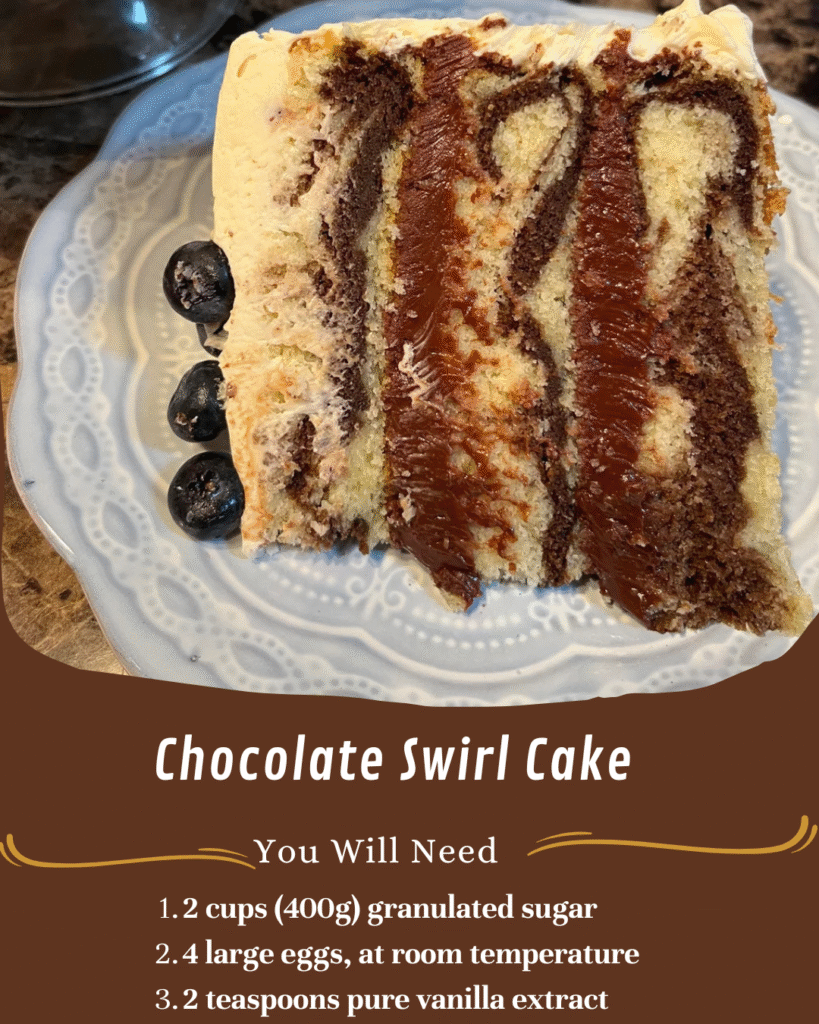
Step-by-Step Instructions
- Prepare your workspace and oven. Position a rack in the center of your oven and preheat to 350°F (175°C). Generously butter every crevice of your bundt pan, then dust with flour, tapping out excess. This meticulous greasing prevents the heartbreak of a stuck cake.
- Create the chocolate mixture. In a medium bowl, whisk together cocoa powder, hot water, sugar, and espresso powder until completely smooth—no lumps should remain. The mixture should have the consistency of thick cream. Set aside to cool slightly while you prepare the batter.
- Combine dry ingredients. Whisk flour, baking powder, and salt in a bowl. This distribution of leavening ensures even rising throughout the cake.
- Cream butter and sugar. In your stand mixer fitted with the paddle attachment, beat butter on medium speed for one minute until creamy. Add sugar and continue beating for 4-5 minutes until the mixture becomes pale, fluffy, and nearly doubles in volume. This incorporation of air creates the cake’s tender structure. Scrape down the bowl periodically.
- Add eggs with patience. Reduce mixer speed to medium-low. Add eggs one at a time, beating for 30 seconds after each addition before adding the next. This gradual incorporation prevents the batter from separating. Mix in vanilla extract.
- Alternate wet and dry ingredients. With mixer on low speed, add one-third of the flour mixture, mixing just until streaks remain. Pour in half the milk, mix briefly, then repeat: flour, milk, flour. Stop mixing when small flour streaks still visible—overmixing develops gluten and creates toughness. Finish incorporating with a rubber spatula using gentle folding motions.
- Divide and transform. Transfer approximately one-third of the vanilla batter (about 2 cups) to the bowl with your chocolate mixture. Fold together until uniformly combined and no vanilla streaks remain.
- Create the swirl with intention. Spoon half the vanilla batter into your prepared pan, spreading gently to create an even layer. Add half the chocolate batter in large dollops over the vanilla. Top with remaining vanilla batter, then finish with remaining chocolate batter. Insert a butter knife or wooden skewer into the batter and create figure-eight patterns through all layers, working around the pan. Make 8-10 swoops—resist the temptation to over-swirl, which muddies the pattern rather than enhancing it.
- Bake with attention. Place the pan in your preheated oven and bake for 50-60 minutes. The cake is ready when a wooden skewer inserted into the center emerges with just a few moist crumbs attached—not wet batter, but not completely clean either. The top should spring back when gently pressed.
- Cool properly. Let the cake rest in the pan on a cooling rack for 15 minutes—no longer, or it may stick. Invert onto the rack and lift away the pan gently. Allow the cake to cool completely before slicing, approximately 2 hours. This patience allows the structure to set properly.
Tips and Tricks for Chocolate Swirl Cake Mastery
Temperature matters profoundly. Room temperature ingredients emulsify smoothly, creating superior texture. Cold eggs and butter resist incorporation, resulting in dense, uneven crumb. Remove your eggs, butter, and milk from refrigeration 1-2 hours before beginning.
Ingredient substitutions work within limits. While whole milk produces the richest result, you can use 2% milk with slightly less luxurious texture. Greek yogurt (½ cup yogurt plus ½ cup milk) adds tang and moisture. Sour cream creates exceptional tenderness—substitute up to half the milk with sour cream. However, avoid low-fat or skim milk, which compromise texture significantly.
Storage extends enjoyment. This chocolate swirl cake stays fresh at room temperature for three days when covered tightly. The flavors actually deepen and meld beautifully on day two. Refrigerate for up to one week, but bring to room temperature before serving for optimal texture. Freeze unfrosted cake wrapped tightly in plastic, then foil, for up to three months.
Make-ahead strategies reduce stress. Prepare the batter completely, transfer to the prepared pan, and refrigerate overnight. Bring to room temperature for 30 minutes before baking, adding 5-10 minutes to baking time. Alternatively, bake completely, cool, wrap well, and store at room temperature overnight.
Common mistakes to sidestep. Opening the oven door during the first 45 minutes causes temperature fluctuations that may collapse the cake. Overbeating after adding flour develops too much gluten, creating tunnel-like holes. Under-greasing the pan leads to catastrophic sticking—be generous with butter, reaching every detail of decorative bundt pans.
Serving suggestions elevate the experience. Dust with powdered sugar for elegant simplicity. Drizzle with chocolate ganache for indulgence. Serve with barely sweetened whipped cream and fresh berries. Toast slices lightly and spread with butter for breakfast. The cake’s versatility makes it endlessly adaptable to any occasion or craving.
Dutch-process versus natural cocoa. This recipe specifically calls for Dutch-process cocoa because its mellower, darker flavor complements rather than competes with the vanilla. Natural cocoa can work but produces sharper, more acidic chocolate notes that some find overwhelming in marble cakes.
Nutritional Information
Per serving (1 slice, based on 12 servings):
- Calories: 385
- Total Fat: 18g
- Saturated Fat: 11g
- Cholesterol: 105mg
- Sodium: 240mg
- Total Carbohydrates: 52g
- Dietary Fiber: 1g
- Sugars: 35g
- Protein: 6g
Note: Nutritional values are approximate and may vary based on specific ingredients used.
Frequently Asked Questions
Can I make this chocolate swirl cake in a different pan?
Absolutely, though baking times require adjustment. Two 9-inch round pans work beautifully—divide batter evenly, create swirls in each pan, and bake for 28-35 minutes. A 9×13-inch rectangular pan accommodates the entire recipe and bakes in 35-42 minutes, creating an excellent sheet cake for gatherings. Standard loaf pans also work: divide batter among three 8×4-inch pans and bake for 40-48 minutes. Always test for doneness with a skewer regardless of pan choice, as oven variations affect timing.
Why did my swirl pattern disappear or look muddy?
The most common culprit is over-swirling. Each stroke of your knife blends the batters further—after 8-10 intentional figure-eight motions, stop. More swirling doesn’t improve the pattern; it obscures it. Additionally, if your chocolate mixture was too thin or too thick relative to the vanilla batter, the densities won’t create distinct ribbons. The chocolate component should be slightly thicker than heavy cream. Finally, batters that are too similar in color won’t show dramatic contrast—ensure you’re using enough cocoa powder.
My cake stuck to the pan despite greasing. What happened?
Pan preparation requires thoroughness that feels almost excessive—but it’s necessary. Use soft butter (not melted, not oil) to coat every ridge, corner, and detail of your bundt pan, then dust generously with flour, tapping out excess. Some bakers swear by homemade « pan release » combining equal parts butter, flour, and vegetable oil brushed on with a pastry brush. Also crucial: the 15-minute cooling period. Inverting too early means the structure hasn’t set; waiting too long allows the cake to settle and adhere. If disaster strikes, carefully extract pieces, arrange on a platter, and cover with glaze—no one will know.
Can I add other flavors to this chocolate swirl cake?
The vanilla-chocolate combination is classic for good reason, but variations delight adventurous bakers. Add ½ teaspoon almond extract to the vanilla batter for subtle nuttiness. Incorporate the zest of two oranges for chocolate-orange swirl cake. Mix 2 tablespoons of strong brewed coffee into the vanilla batter for mocha complexity. Fold ½ cup mini chocolate chips into either batter for textural interest. Just remember: each addition changes moisture and structure slightly, so observe your batter’s consistency and adjust baking time if needed.
How do I know when my cake is truly done?
Visual and tactile cues guide you. The cake should pull away slightly from pan edges and appear set across the top surface. The most reliable test remains the toothpick or skewer inserted into the thickest part—it should emerge with a few moist crumbs clinging, not wet batter. The top should spring back when gently pressed rather than leaving an indentation. Remember that carryover cooking continues even after removing from the oven, so slightly underdone is preferable to overbaked and dry.
What’s the secret to an exceptionally tender crumb?
Multiple factors conspire to create tenderness. Cream your butter and sugar thoroughly—that 4-5 minutes isn’t arbitrary; it incorporates air that creates lightness. Add eggs slowly, allowing full emulsification. Mix flour just until incorporated; those final streaks get folded in by hand to avoid overdevelopment of gluten. Room temperature ingredients blend smoothly without requiring extended mixing. Finally, precise measurement matters—too much flour creates density, so spoon it into your measuring cup and level rather than scooping, which compacts.
Conclusion
This chocolate swirl cake represents everything I cherish about baking: accessible elegance, scientific precision meeting artistic expression, and the profound satisfaction of creating something beautiful with your own hands. Each time I prepare this recipe, the anticipation builds as I swirl the batters, never quite knowing which unique pattern will emerge. The aroma that fills your kitchen as it bakes—that intoxicating blend of butter, vanilla, and chocolate—is nearly as rewarding as the first slice.
I encourage you to embrace this recipe not as rigid instruction but as a framework for your own exploration. Trust your instincts, observe how your ingredients behave, and develop the intuitive feel that transforms good bakers into confident ones. When you pull this chocolate swirl cake from your oven, take a moment to appreciate what you’ve created before sharing it with those you love. And please, share your results, your variations, and your own discoveries—the community of passionate bakers grows richer with each shared experience.