

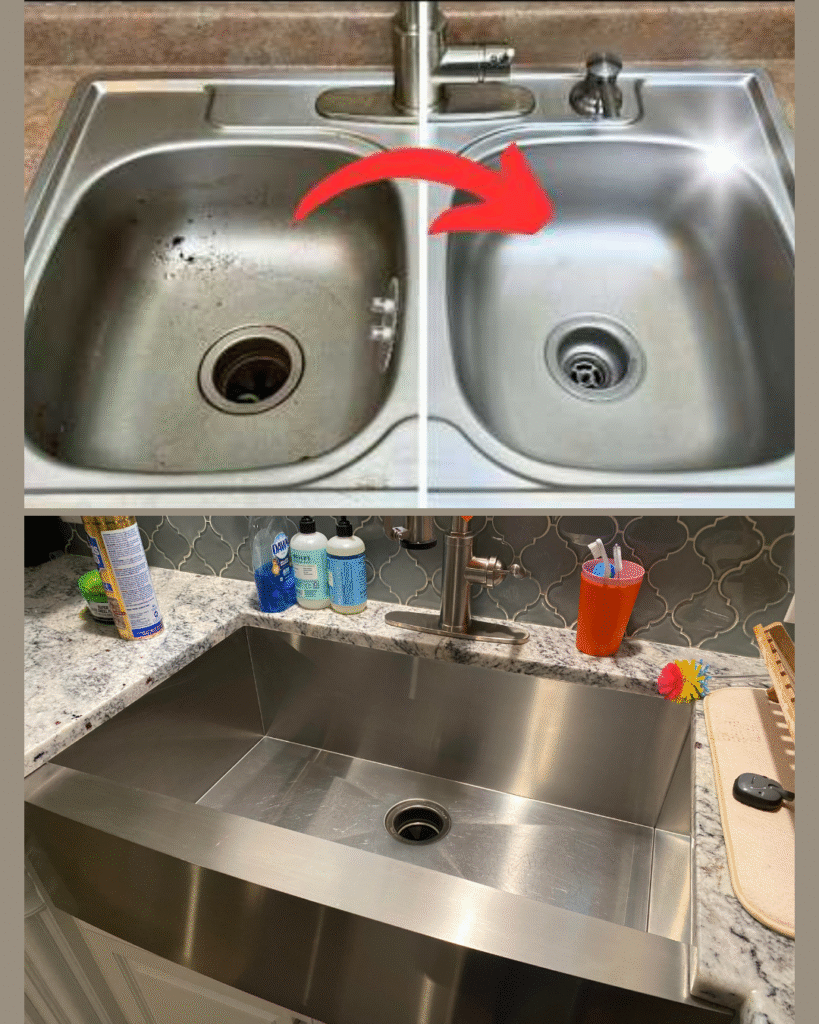
Stainless steel sinks accumulate water spots, grease films, and mineral deposits that dull their reflective surface. Understanding the chemical interactions between cleaning agents and steel oxide layers enables efficient restoration of brilliant shine using household materials available in most kitchens.
The Chemistry Behind Stainless Steel Surface Degradation
Stainless steel derives its corrosion resistance from a passive chromium oxide layer approximately 1-3 nanometers thick that forms spontaneously when chromium content exceeds 10.5% by mass. This transparent protective film continuously regenerates in oxygen-rich environments, preventing iron oxidation. However, hard water minerals—primarily calcium carbonate and magnesium sulfate—precipitate onto this surface as water evaporates, creating visible white deposits. Simultaneously, cooking oils polymerize through oxidative reactions, forming tenacious organic films that trap particulates and diminish reflectivity.
The 304-grade stainless steel used in most residential sinks contains 18% chromium and 8% nickel, providing excellent stain resistance under normal conditions. Yet acidic substances like tomato juice or vinegar temporarily compromise the passive layer if left in prolonged contact. Chloride ions from salt accelerate localized corrosion in microscopic surface irregularities, potentially initiating pitting if not promptly removed.
Baking Soda Paste Method: Mechanical and Chemical Action
Sodium bicarbonate functions as both a mild abrasive and pH buffer, making it exceptionally effective for stainless steel maintenance. Its Mohs hardness of 2.5 remains substantially below the 5.5-6.0 hardness of austenitic stainless steel, preventing scratch formation during application. Create a paste by combining three parts baking soda with one part water, adjusting consistency to achieve spreadable thickness similar to toothpaste.
Apply the paste following the grain direction—those faint parallel lines visible on brushed stainless steel surfaces. These microscopic grooves result from manufacturing processes and establish directional orientation for cleaning strokes. Circular motions create cross-hatched scratch patterns that scatter light unpredictably, while grain-aligned strokes maintain uniform light reflection. Use a soft microfiber cloth or non-scratch sponge, applying moderate pressure to dislodge adhered particles without deforming the metal surface.
The slightly alkaline pH of 8.3 in baking soda solutions helps saponify fatty acid residues through hydrolysis, converting them into water-soluble soap molecules. This chemical transformation supplements the mechanical removal action, particularly effective against cooking grease. After scrubbing for 60-90 seconds, rinse thoroughly with warm water to prevent residue accumulation. A white vinegar rinse following the baking soda treatment neutralizes any remaining alkalinity while dissolving residual mineral deposits.
Vinegar Solution: Acid-Base Dissolution of Mineral Deposits
Distilled white vinegar contains approximately 5% acetic acid, providing sufficient acidity (pH 2.4) to dissolve calcium carbonate deposits through this reaction: CaCO₃ + 2CH₃COOH → Ca(CH₃COO)² + H₂O + CO₂. The visible effervescence during application results from carbon dioxide gas evolution, confirming active mineral dissolution.
Pour undiluted vinegar directly onto problem areas displaying heavy mineral buildup, allowing 5-10 minutes contact time for complete reaction. The acetic acid molecules penetrate crystalline carbonate structures, disrupting ionic bonds and converting insoluble salts into soluble acetate complexes. For routine maintenance, spray diluted vinegar (1:1 water ratio) across the entire sink surface, wipe with a clean cloth following grain direction, then rinse immediately.
Extended vinegar exposure exceeding 30 minutes may etch the chromium oxide layer in localized areas, particularly at welded joints where heat treatment has altered the metallurgical structure. Always rinse acid treatments promptly and buff dry to restore the protective passive film. Some water sources contain dissolved iron that oxidizes into rust-colored stains on steel surfaces. These ferric oxide deposits respond well to mild acids like vinegar, though chelating agents provide superior results for stubborn iron staining.
Olive Oil Finishing: Hydrophobic Surface Protection
After cleaning and drying, apply a few drops of olive oil to a clean microfiber cloth and buff the entire sink surface in grain-aligned strokes. This creates a thin hydrophobic layer that repels water droplets, reducing mineral deposit formation between cleanings. The oleic acid triglycerides in olive oil—comprising approximately 70% of its fatty acid profile—possess molecular structures with hydrophobic hydrocarbon chains oriented away from the metal surface.
This oil layer fills microscopic surface irregularities, creating smoother topology that enhances specular reflection. The treatment also provides temporary protection against fingerprint deposition by reducing direct skin contact with the steel surface. However, cooking oils undergo oxidative polymerization over time, eventually requiring removal and reapplication. Weekly oil treatments maintain optimal appearance without excessive buildup. Some practitioners prefer mineral oil for this purpose, as its saturated hydrocarbon structure resists oxidation more effectively than unsaturated plant oils.
Cream of Tartar Treatment: Potassium-Based Stain Removal
Potassium bitartrate, sold as cream of tartar in spice sections, offers specialized stain removal capabilities through chelation mechanisms. This white crystalline powder forms mildly acidic solutions (pH 3.5) when dissolved, with tartaric acid groups capable of binding metal ions through coordination chemistry. Mix two tablespoons cream of tartar with sufficient hydrogen peroxide to form a spreadable paste.
The hydrogen peroxide oxidizes organic stains while tartaric acid chelates metallic discolorations, particularly effective against rust stains from iron-contaminated water. Apply this mixture to stubborn spots, allowing 10-15 minutes contact time before scrubbing gently. The combination produces enhanced stain removal compared to either component alone, though the mixture loses efficacy after several hours as hydrogen peroxide decomposes.
Rinse thoroughly after treatment, as residual tartrate crystals may leave white deposits upon drying. This method works particularly well on hard water stains that resist vinegar treatment alone, likely due to the chelating ability of tartrate ions binding calcium and magnesium more effectively than simple acid dissolution.
Dish Soap and Hot Water: Daily Maintenance Protocol
Regular cleaning with diluted dish soap prevents buildup requiring intensive treatments. Modern dish detergents contain anionic surfactants like sodium laureth sulfate that reduce water surface tension from 72 mN/m to approximately 30 mN/m, enabling penetration of grease films. These amphiphilic molecules orient with hydrophobic tails inserted into oil droplets and hydrophilic heads extending into the aqueous phase, forming micelle structures that suspend grease particles in water for easy rinsing.
Use hot water (55-65°C) to decrease oil viscosity and increase cleaning efficiency. At elevated temperatures, both surfactant activity and oil solubility increase substantially, reducing required scrubbing time. Apply soap with a soft sponge, working systematically across the entire surface to ensure complete coverage. The mechanical action of scrubbing combined with surfactant chemistry removes most daily soiling before it polymerizes into resistant films.
Rinse thoroughly with hot water, followed by a final cold water rinse that facilitates more complete drying. Leaving soap residue allows dust adhesion and creates streaky films upon drying. Wipe dry immediately using a clean cotton or microfiber towel, following grain direction to avoid streak formation. This daily maintenance routine consumes approximately 3-4 minutes but prevents accumulation requiring extensive restoration efforts.
Flour Polishing: Fine Particulate Absorption Method
After standard cleaning and thorough drying, sprinkle a small amount of all-purpose flour across the sink surface and buff vigorously with a dry cloth. This traditional technique employs flour’s hygroscopic properties and fine particle size to absorb residual moisture and oils missed during drying. Wheat flour particles, averaging 50-100 micrometers diameter, provide gentle mechanical polishing while the starch molecules absorb molecular water layers adhering to the metal surface.
The polishing action enhances reflectivity by creating more uniform surface microtopography, reducing diffuse reflection in favor of specular reflection. This effect proves most noticeable on brushed stainless finishes where the directional grain structure benefits from aligned polishing strokes. The flour method originated in commercial kitchens where maintaining sink appearance throughout service hours presented challenges with traditional cleaning approaches.
Buff until the flour takes on a grayish appearance, indicating saturation with absorbed materials, then brush away residue and perform a final wipe with a clean, slightly damp cloth. Some modern practitioners substitute cornstarch for wheat flour, claiming superior absorption capacity due to cornstarch’s larger amylose content and molecular structure.
Commercial Cleaner Alternative: When to Consider Specialized Products
While household methods handle most cleaning scenarios, certain situations benefit from commercial stainless steel cleaners containing proprietary surfactant blends, chelating agents like EDTA, and polymeric shine enhancers. These formulations address severe oxidation, industrial contamination, or restoration of neglected surfaces exhibiting extensive corrosion.
Commercial products typically contain builders that enhance surfactant performance in hard water, preventing calcium and magnesium ions from interfering with cleaning molecules. Some include fine abrasive particles graded specifically for stainless steel hardness, removing surface contamination while minimizing scratch risk. However, many commercial cleaners leave silicone-based residues that build up with repeated application, eventually requiring removal with isopropyl alcohol or degreasing agents.
For environmental and economic considerations, household methods provide comparable results for routine maintenance. Reserve commercial products for quarterly deep cleaning or addressing specific problems like heat discoloration from welding or manufacturing marks that resist conventional cleaning approaches.
Preventive Strategies: Surface Chemistry Management
Understanding the electrochemical processes governing stainless steel corrosion enables implementation of preventive measures. Never leave acidic foods, salt solutions, or chlorine-containing cleaners in prolonged contact with sink surfaces. These substances compromise the passive chromium oxide layer, initiating localized corrosion that manifests as pitting or rust spots.
Install a water softener if hardness exceeds 200 ppm, dramatically reducing mineral deposition. Soft water contains sodium ions substituted for calcium and magnesium through ion exchange resins, eliminating the primary source of white spotting. After each use, rinse the sink with clean water and wipe dry—this simple practice prevents 90% of water spot formation by removing minerals before evaporation occurs.
Avoid steel wool, harsh abrasive cleaners, or chlorine bleach, all capable of permanently damaging the protective oxide layer or scratching the surface. Even minor scratches create stress concentration sites where crack propagation may initiate under thermal cycling or mechanical stress. The directional grain structure in brushed finishes provides inherent scratch resistance when cleaning follows the grain orientation, but remains vulnerable to cross-grain abrasion.
Understanding these material science principles transforms sink maintenance from uncertain experimentation into predictable surface chemistry management, maintaining optimal appearance through informed technique application rather than aggressive chemical intervention.