
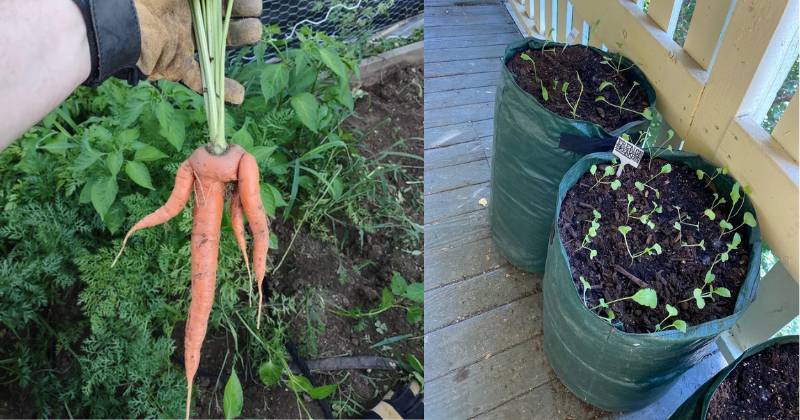
Growing carrots in bags offers an accessible solution for gardeners with limited space, poor soil conditions, or urban environments. This method provides excellent control over growing medium, drainage, and root development while producing high-quality carrots with minimal infrastructure.
Why Bag Cultivation Works for Carrots
Carrots develop optimally in loose, well-draining substrate free from rocks and compacted layers. Traditional garden beds often contain clay deposits, stones, or hardpan that causes forking and stunted growth. Growing bags eliminate these obstacles by providing uniform medium throughout the root zone.
The fabric construction of most grow bags permits superior aeration compared to rigid containers. Root systems receive continuous oxygen exchange through the permeable walls, preventing the anaerobic conditions that lead to rot. This breathability also facilitates air pruning, where root tips naturally stop elongating upon reaching the bag’s edge and redirect energy toward developing feeder roots. The result is a denser, more efficient root system rather than the circling patterns observed in plastic pots.
Bag cultivation offers thermal advantages during temperature fluctuations. The insulating properties buffer against extreme heat during summer while the dark fabric absorbs solar radiation to extend the growing season in cooler months. Mobility represents another practical benefit, as bags can be repositioned to optimize sun exposure or protect crops from harsh weather.
Selecting Appropriate Bag Size and Type
Carrot varieties dictate minimum bag dimensions. Short varieties like ‘Thumbelina’ or ‘Paris Market’ mature in 10-15 centimeters and perform adequately in bags 20-25 centimeters deep. Standard varieties such as ‘Nantes’ or ‘Danvers’ require 25-30 centimeters, while long types like ‘Imperator’ need 35-40 centimeters minimum depth to prevent root tip curling.
Width considerations depend on planting density objectives. A 30-centimeter diameter bag accommodates approximately 16 carrot plants with 5-centimeter spacing, while larger 45-centimeter bags can support 25-30 plants. Rectangular grow bags measuring 60×30 centimeters provide efficient use of balcony or patio space while maintaining adequate soil volume.
Fabric weight affects longevity and stability. Standard 200-gram-per-square-meter material offers 2-3 seasons of use, while premium 300-400 gram fabric withstands 4-5 years of cultivation. Avoid thin non-woven polypropylene bags under 150 grams, as these deteriorate rapidly when exposed to UV radiation and may not support the weight of moist growing medium.
Optimal Growing Medium Composition
Carrots require friable substrate with minimal resistance to downward root penetration. A balanced mix consists of 40% coconut coir or peat moss for moisture retention, 40% quality compost for nutrients, and 20% perlite or vermiculite for drainage and aeration. This combination maintains structure without compaction throughout the growing period.
Avoid garden soil in bag cultivation. Native soil contains weed seeds, potential pathogens, and often includes clay particles that create density incompatible with carrot development. Even sandy garden soil lacks the consistent particle size distribution needed for uniform root formation.
The medium should exhibit pH between 6.0-6.8 for optimal nutrient availability. Carrots grown in substrate outside this range may display purple pigmentation from anthocyanin accumulation or show signs of micronutrient deficiency despite adequate fertilization. Testing and adjusting pH before planting prevents these complications.
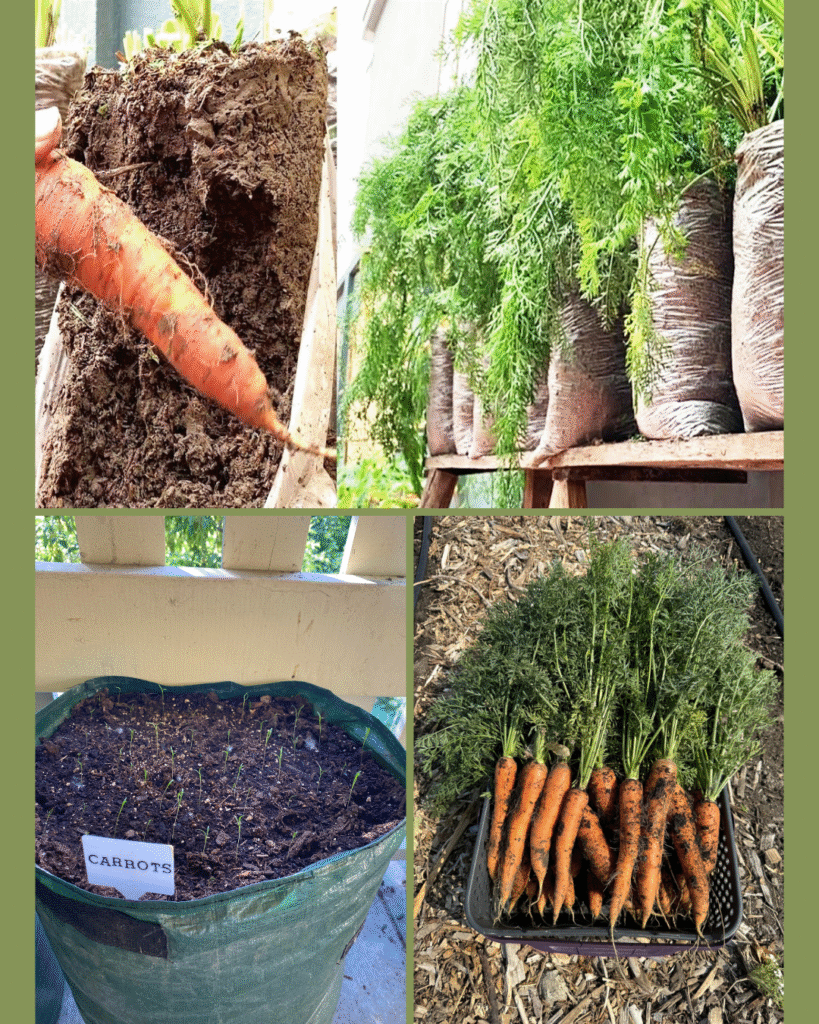
Seed Selection and Planting Technique
Choose varieties bred for container cultivation or shorter mature size. ‘Mokum’ produces sweet 15-centimeter roots in 50-55 days. ‘Caracas’ develops uniform cylindrical roots ideal for bag growing. ‘Rainbow Mix’ provides visual interest with yellow, purple, and white varieties that mature simultaneously.
Direct seeding eliminates transplant shock that inevitably occurs when moving carrots after germination. Carrot taproots are extremely sensitive to disturbance, and even careful transplanting results in forked or twisted roots. Sow seeds 1-1.5 centimeters deep in rows spaced 10 centimeters apart, placing seeds every 2-3 centimeters.
Carrot seeds contain germination inhibitors in their coating that require consistent moisture to break down. Maintain substrate moisture at field capacity during the 10-21 day germination window. Once seedlings emerge with true leaves, thin to final spacing of 5 centimeters between plants. This thinning appears wasteful but prevents competition that produces spindly, undersized roots.
Watering Requirements and Scheduling
Carrots demand consistent soil moisture without waterlogging. Irregular watering produces roots with growth cracks and uneven sweetness distribution. The growing medium should remain at 60-70% moisture capacity, equivalent to a wrung-out sponge texture.
Check moisture levels by inserting a finger 5 centimeters into the substrate. If dry at this depth, apply water until slight drainage appears from the bag’s bottom. During active root swelling—typically 30-60 days after emergence—moisture demand increases substantially. A 30-liter bag may require daily watering during hot weather.
Morning watering reduces disease pressure by allowing foliage to dry before evening. Avoid overhead irrigation that keeps crown tissue wet, as this promotes Alternaria leaf blight and bacterial soft rot. Drip irrigation or careful hand watering at soil level proves more effective.
Nutrient Management Through Growth Stages
Carrots are moderate feeders requiring balanced nutrition without excessive nitrogen. High nitrogen levels during early growth produce lush foliage at the expense of root development and can create forking through overstimulation of lateral root formation.
Initial substrate fertility provides adequate nutrition for the first 4-5 weeks. After this establishment period, apply diluted liquid fertilizer with N-P-K ratio of 5-10-10 every two weeks. The elevated phosphorus supports root expansion while potassium enhances sugar development and overall flavor.
Micronutrient availability significantly impacts carrot quality. Boron deficiency causes internal browning and corky tissue development. Ensure the compost component of your growing medium comes from diverse organic materials rather than single-source inputs. Well-decomposed compost typically contains sufficient trace elements for the entire growing cycle.
Managing Common Growing Challenges
Carrot rust fly larvae tunnel through developing roots, creating brown galleries that render crops inedible. Physical exclusion using fine mesh covers over bags provides reliable protection. The flies remain active from late spring through autumn, requiring consistent barrier use throughout the season.
Green shoulders develop when crown tissue receives direct sunlight and produces chlorophyll. This tissue tastes bitter and requires removal during preparation. Prevent greening by mounding growing medium over exposed crowns or selecting varieties like ‘Bolero’ with natural resistance to shoulder greening.
Forking occurs when roots encounter obstacles or receive inconsistent watering. The controlled environment of bag cultivation largely prevents forking, but ensure no rocks or debris contaminate the growing medium. Maintain steady moisture to prevent the growth checks that trigger fork development.
Harvest Timing and Techniques
Most carrot varieties reach maturity 60-80 days after seeding, though baby carrots can be harvested earlier. Root diameter provides a more reliable maturity indicator than days-to-harvest, which vary with temperature and growing conditions. Shoulders measuring 2-3 centimeters across typically indicate harvest readiness.
Perform a test harvest by carefully loosening medium around one plant and examining root size and color. If undersized, firm the medium back and wait another week before checking again. Carrots improve in sweetness when left in bags during cool autumn weather, as plants convert starches to sugars in response to cold temperatures.
Harvest by grasping foliage near the crown and pulling steadily upward while supporting surrounding medium with your other hand. The loose substrate in bags allows for easier extraction than garden soil, with minimal root breakage when proper technique is used. Twisted or stubborn roots benefit from gentle loosening with a hand fork inserted vertically beside the root.
Storage and Post-Harvest Handling
Remove foliage immediately after harvest by twisting off tops 1-2 centimeters above the crown. Attached leaves continue respiration and draw moisture from roots, causing shriveling within days. Brush off loose medium but avoid washing carrots intended for storage, as moisture accelerates decay.
Store unwashed carrots in perforated plastic bags within the refrigerator’s crisper drawer. Properly handled roots maintain quality for 2-3 months at 0-4°C with 95% relative humidity. For longer-term storage, layer carrots in boxes with damp sand or sawdust, ensuring roots do not touch. This traditional method preserves carrots through winter in cool basement or garage locations.
Bag-grown carrots often display superior storage characteristics compared to field-grown crops. The controlled growing environment produces roots with fewer blemishes and more uniform skin integrity, reducing entry points for storage pathogens.
Sequential Planting for Continuous Harvest
Multiple bags enable succession planting that extends harvest from early summer through late autumn. Plant new bags every 2-3 weeks from early spring through midsummer. This schedule accounts for the 60-80 day maturation period and provides regular harvests rather than a single overwhelming crop.
Temperature affects germination speed and growth rate. Spring sowings in cool substrate may require 21 days to emerge, while summer plantings in warm medium germinate within 10 days. Adjust succession intervals based on seasonal conditions and variety selection.
As early bags finish production, clean and refill them with fresh medium for autumn crops. Late summer plantings mature during cool fall weather, producing exceptionally sweet roots ideal for fresh consumption or storage. Some gardeners find autumn carrots superior to spring crops due to favorable growing conditions during root development.