
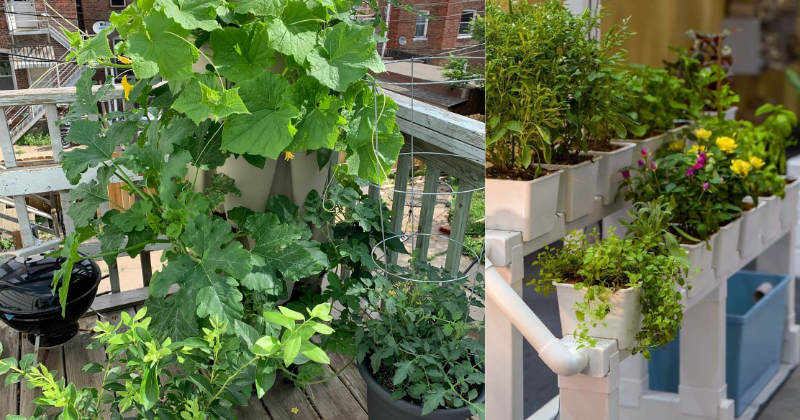
Vertical gardening represents a sophisticated horticultural approach that maximizes spatial efficiency while creating dynamic living architectures. This cultivation method transforms conventional growing paradigms by utilizing vertical surfaces—walls, trellises, and modular structures—to establish productive green spaces in environments where horizontal expansion remains limited or impractical.
Fundamental Principles of Vertical Garden Design
The architectural foundation of vertical gardens relies on understanding gravitational effects on water distribution, root system orientation, and nutrient transport mechanisms. Unlike traditional horizontal beds where capillary action and gravity work in tandem, vertical systems require engineered solutions that counteract downward water flow while maintaining adequate moisture retention across all cultivation zones.
Modern vertical installations employ substrate materials with specific porosity coefficients—typically ranging from 40% to 60%—that balance water retention with aeration requirements. Lightweight growing media incorporating coconut coir, perlite, and vermiculite reduce structural load while maintaining the 1:1 air-to-water ratio optimal for root respiration. The substrate’s vertical arrangement creates microgradients in moisture availability, with upper sections experiencing accelerated evapotranspiration rates compared to lower zones.
Structural Configurations and Support Systems
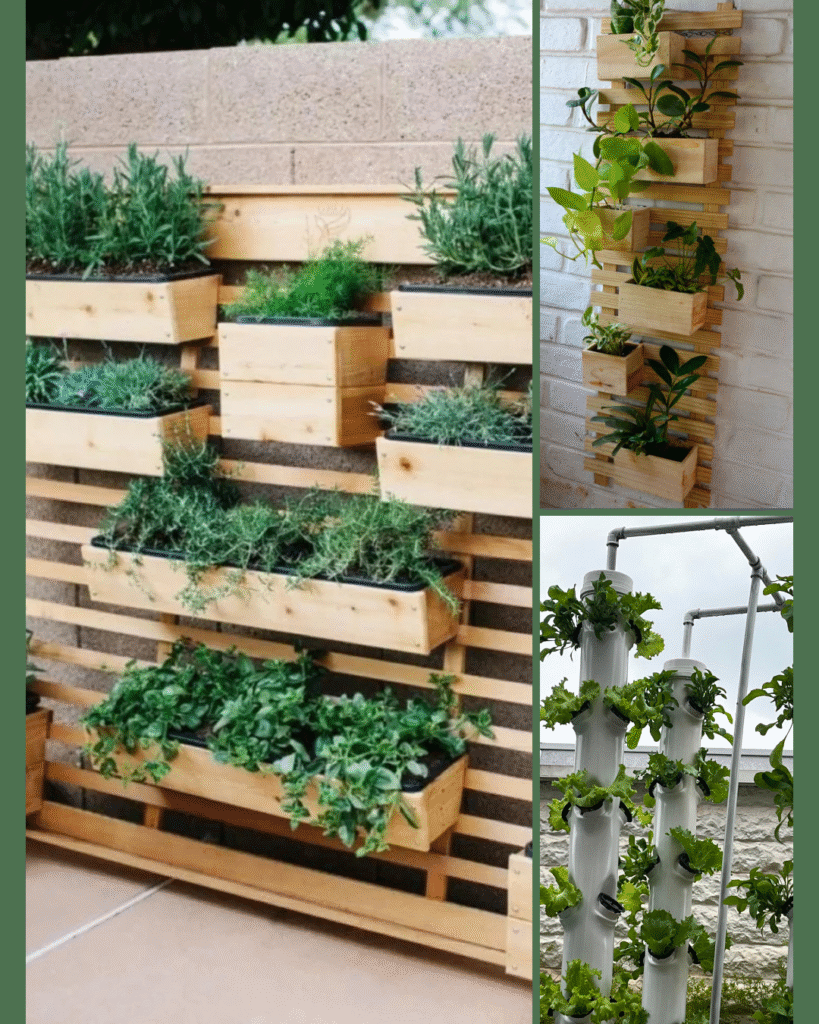
Modular panel systems dominate contemporary vertical garden implementations, utilizing interlocking units that create self-supporting frameworks. These panels typically incorporate depth dimensions between 10 and 20 centimeters, providing sufficient root zone volume for herbaceous species while maintaining manageable weight profiles. The structural integrity depends on load distribution calculations accounting for saturated media weight—approximately 1,600 kilograms per cubic meter for standard substrates.
Cable-and-trellis configurations offer alternative solutions for climbing species, establishing tensioned wire grids at 15 to 30-centimeter intervals. This approach suits Cucurbitaceae family members and indeterminate Solanaceae varieties, which employ different attachment mechanisms—tendrils versus twining stems—requiring corresponding support adaptations. The angular orientation of support elements influences phototropic responses, with 60 to 75-degree inclinations optimizing light interception while facilitating upward growth progression.
Irrigation Engineering and Hydraulic Management
Vertical gardens necessitate precision irrigation systems that address differential water requirements across vertical strata. Drip emitter placement at 20 to 30-centimeter intervals along supply lines ensures uniform distribution, though flow rate calibration must account for gravitational acceleration affecting lower-zone delivery. Pressure-compensating emitters maintain consistent output—typically 2 to 4 liters per hour—regardless of elevation differences within the system.
Recirculating hydroponic adaptations incorporate collection troughs at base levels, capturing excess nutrient solution for filtration and redistribution. This closed-loop approach reduces water consumption by 70% to 90% compared to conventional irrigation while maintaining electrical conductivity values between 1.5 and 2.5 milliSiemens per centimeter for most vegetable species. The nutrient film technique, when adapted vertically, creates thin solution layers—approximately 2 to 3 millimeters—flowing downward across root zones, though this requires careful angle management to prevent dry patches.
Species Selection and Physiological Adaptations
Plant selection for vertical systems prioritizes species exhibiting compact root architectures and moderate water demands. Shallow-rooted herbs—particularly Lamiaceae family members like basil and mint—thrive in restricted vertical substrates, developing fibrous root networks within 8 to 12 centimeter depths. Leafy greens including lettuce varieties and Asian brassicas demonstrate rapid establishment, reaching harvest maturity within 35 to 50 days under optimal conditions.
Fruiting species require volumetric considerations, with determinate tomato cultivars and compact pepper varieties producing viable yields in 15 to 20-liter root zones. The physiological stress imposed by vertical orientation occasionally triggers enhanced secondary metabolite production—anthocyanins and phenolic compounds increase by 15% to 25% in some cultivars—potentially attributable to mild water stress responses that don’t compromise overall productivity.
Microclimate Dynamics and Environmental Modulation
Vertical garden surfaces create distinct microenvironments characterized by temperature stratification and air movement patterns differing from surrounding spaces. Upper zones experience temperature elevations of 2 to 4 degrees Celsius compared to lower sections during peak solar radiation periods, influencing transpiration rates and consequently affecting irrigation scheduling. The vegetative canopy density—quantified as leaf area index—modulates these thermal gradients, with values exceeding 3.0 providing significant self-shading effects.
Evaporative cooling generated by transpiring plant surfaces reduces ambient temperatures by 3 to 7 degrees Celsius within one meter of vertical installations. This phenomenon, measurable through psychrometric analysis, increases relative humidity by 10% to 15% in immediate vicinity zones. The microclimate modification extends benefits beyond cultivation, contributing measurable improvements to building thermal performance when integrated with architectural facades.
Nutrient Management in Vertical Systems
Fertilization protocols for vertical gardens require adjusted formulations accounting for accelerated leaching potential and limited substrate buffering capacity. Controlled-release fertilizers with 90 to 120-day longevity provide baseline nutrition, supplemented by soluble applications at reduced concentrations—typically 50% to 75% of conventional recommendations—applied more frequently to prevent salt accumulation.
The nitrogen-phosphorus-potassium ratio varies by growth stage, with vegetative phases favoring 3-1-2 proportions while fruiting periods benefit from 1-2-2 configurations. Micronutrient availability becomes critical in soilless substrates, particularly iron chelates maintaining solubility across pH ranges of 5.5 to 6.5. Foliar supplementation addresses deficiency symptoms more rapidly than substrate applications, with absorption occurring within 24 to 48 hours through stomatal pathways.
Light Optimization and Photosynthetic Efficiency
Vertical orientation presents photosynthetic challenges related to self-shading and non-perpendicular solar angles. Strategic plant positioning considers heliotropic movements and diurnal light patterns, with south-facing installations (in northern hemisphere contexts) receiving 6 to 8 hours of direct sunlight during growing seasons. Species arrangement by height and canopy density prevents lower-tier shading, maintaining photosynthetically active radiation above 200 micromoles per square meter per second—the approximate light compensation point for many crop species.
Supplemental lighting integration becomes necessary for interior vertical installations, utilizing full-spectrum LED arrays delivering 300 to 600 micromoles per square meter per second. The spectral quality ratio—particularly red (630-660 nanometers) to blue (430-460 nanometers) proportions—influences morphological characteristics, with 3:1 ratios promoting balanced vegetative development in most species.
Pest Management and Disease Prevention Strategies
Vertical configurations alter pest distribution patterns and disease pressure compared to traditional gardens. Improved air circulation around foliage reduces humidity-related pathogenic conditions, decreasing foliar disease incidence by approximately 30% to 40%. However, aphid populations may concentrate in upper zones where tender growth proliferates, requiring targeted monitoring protocols focusing on these vulnerable areas.
Integrated pest management approaches emphasize biological controls, with parasitoid wasp releases and predatory mite applications providing effective regulation without disrupting vertical ecosystem balances. The enclosed or semi-enclosed nature of many vertical installations facilitates beneficial insect retention, with documented parasitism rates exceeding 60% for common pests when appropriate predator densities are maintained.
Sustainability Metrics and Resource Efficiency
Comparative analyses demonstrate vertical gardens achieving crop yields 3 to 10 times greater per square meter of occupied floor space compared to conventional cultivation. Water use efficiency improvements range from 60% to 95%, depending on system design and irrigation precision. The carbon sequestration potential, while modest at individual installation scales, accumulates significantly in urban deployments—with estimates suggesting 0.5 to 1.2 kilograms of CO2 equivalents absorbed per square meter of vegetated surface annually.
Urban heat island mitigation effects extend beyond immediate cultivation zones, with large-scale vertical garden networks demonstrating measurable impacts on neighborhood-scale temperature reduction. The evapotranspirative cooling provided by 100 square meters of vertical vegetation approximates the capacity of 2 to 3 residential air conditioning units operating continuously during peak heat periods.
Implementation Considerations and Technical Challenges
Structural load assessment remains paramount in vertical garden planning, requiring engineering analysis of weight-bearing capacities for mounting surfaces. Saturated system weights typically range from 80 to 150 kilograms per square meter, necessitating anchoring systems rated for loads exceeding calculated values by safety factors of 2.5 to 4.0. Masonry and concrete substrates generally accommodate these requirements, while wood-frame constructions may require reinforcement.
Maintenance accessibility influences long-term viability, with optimal designs incorporating ladder-free servicing for installations extending beyond 2.5 meters vertically. Modular component replacement capabilities prevent system-wide failures when individual sections experience issues. The anticipated operational lifespan for quality vertical garden infrastructure ranges from 10 to 25 years, with periodic media replacement and structural component renewal extending functional longevity.
Vertical gardening continues evolving through materials innovation and system refinement, offering scalable solutions for urban agriculture intensification and architectural greening initiatives. The intersection of horticultural science with engineering principles creates cultivation possibilities extending well beyond traditional terrestrial constraints.