
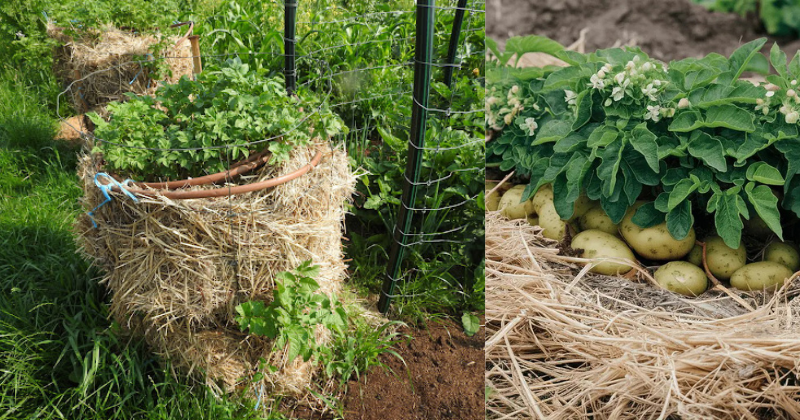
Growing potatoes vertically using straw is an innovative space-saving method that maximizes yields in small gardens while simplifying harvest. This technique layers straw around developing plants, encouraging upward tuber formation and creating cleaner, easier-to-collect crops without traditional digging.
Understanding the Vertical Straw Method
The vertical potato tower method fundamentally alters traditional cultivation by exploiting the plant’s natural tendency to produce tubers along buried stem portions. When potato plants emerge and grow, gardeners progressively add straw layers around the stems, prompting the plant to generate additional tubers at higher elevations rather than exclusively underground. This approach transforms a horizontal growing pattern into a vertical one, concentrating production in a compact footprint.
The biological mechanism relies on adventitious root formation along the potato stem. As straw covers more of the stem, the plant perceives these sections as underground and initiates tuber development along the buried portions. The loose, aerated structure of straw provides ideal conditions for tuber expansion while maintaining adequate moisture and temperature regulation.
Materials and Initial Setup Requirements
Successful vertical potato growing requires specific materials and preparation. You’ll need seed potatoes, clean straw (not hay, which contains seeds), and a containment structure. Many gardeners use wire mesh cylinders, wooden frames, or even repurposed containers like large buckets with drainage holes. The container should measure at least 60 centimeters in diameter to accommodate plant growth and provide sufficient root space.
Seed potatoes should be chitted before planting—a process where potatoes develop short, sturdy sprouts in cool, bright conditions over two to three weeks. This pre-sprouting gives plants a vigorous start. Cut larger seed potatoes into pieces containing at least two eyes, allowing cut surfaces to callous for 24 hours before planting to prevent rot.
The base layer consists of approximately 15 centimeters of quality compost or well-aged manure mixed with garden soil. This nutrient-rich foundation supports initial growth before straw layering begins. Some growers add a handful of organic potato fertilizer at this stage, though excessive nitrogen can promote foliage over tuber production.
Planting and Progressive Straw Addition
Place seed potatoes on the prepared soil layer with sprouts facing upward, spacing them approximately 25 centimeters apart if using multiple plants per container. Cover with 10 centimeters of loose straw initially, ensuring adequate coverage while maintaining air circulation. Water thoroughly but gently to avoid displacing the lightweight straw.
As potato shoots emerge and reach 15-20 centimeters above the straw surface, add another 10-15 centimeter layer of fresh straw around the stems, leaving the top foliage exposed. This progressive « hilling » with straw rather than soil is the technique’s defining characteristic. The timing varies based on variety and growing conditions, but generally occurs every 10-14 days during active growth phases.
Continue this layering process throughout the growing season until the container reaches capacity or plants begin flowering. Most vertical towers accommodate 4-6 straw additions before reaching optimal height. Some gardeners report towers exceeding one meter, though practical handling and structural stability often limit height to 70-90 centimeters.
Water and Nutrient Management
Straw towers require attentive moisture management since straw dries faster than traditional soil. Check moisture levels by inserting your hand several centimeters into the straw layers—it should feel consistently damp but not waterlogged. During hot weather, daily watering may be necessary, while cooler periods might require watering only every 2-3 days.
The vertical structure allows for efficient watering directly down the center of the tower, where moisture distributes through the straw layers and reaches developing tubers. Some growers insert perforated PVC pipes vertically through the tower center, creating a watering channel that delivers moisture throughout the structure.
Nutrient supplementation becomes important as the season progresses since straw provides primarily carbon rather than essential minerals. Apply diluted liquid seaweed or compost tea every 2-3 weeks once plants establish vigorous growth. Avoid high-nitrogen fertilizers after mid-season, as these encourage continued foliage production when energy should redirect toward tuber development.
Variety Selection and Performance Factors
Not all potato varieties perform equally in vertical straw systems. Determinate varieties, which produce tubers in a single concentrated layer, show limited advantage in towers. Indeterminate varieties continue producing tubers along the stem as it’s covered, making them ideal candidates for vertical growing.
Mid-season and late-season varieties typically outperform early varieties in vertical systems, as they have longer growing periods to capitalize on progressive straw additions. Varieties like ‘Yukon Gold,’ ‘Kennebec,’ and ‘German Butterball’ demonstrate strong performance in documented trials, though results vary with local conditions.
Some heritage varieties naturally produce tubers higher on the stem than modern cultivars bred for mechanized harvesting. Experimenting with different varieties reveals which perform best in your specific climate and growing conditions. Keep records noting variety, planting date, straw addition timing, and final yield for future reference.
Common Challenges and Practical Solutions
Temperature regulation presents a notable challenge in vertical straw towers. Dark-colored straw or containers absorb excessive heat in direct sunlight, potentially stressing plants or cooking developing tubers. Positioning towers in locations receiving morning sun and afternoon shade helps moderate temperature extremes. Some growers paint containers white or wrap them in reflective material to reduce heat absorption.
Straw compaction occurs naturally as material settles and decomposes, potentially restricting tuber expansion. Gently fluffing straw layers periodically maintains structure without disturbing plant roots. Adding fresh straw periodically compensates for compression and decomposition.
Pest issues differ from traditional cultivation. Slugs occasionally inhabit moist straw layers, though their impact on tubers remains minimal compared to foliage crops. Rodents sometimes investigate straw towers; hardware cloth lining the container base prevents burrowing access. Colorado potato beetles and other common potato pests affect vertical systems similarly to traditional plantings, requiring standard monitoring and organic control measures.
Harvest Techniques and Yield Expectations
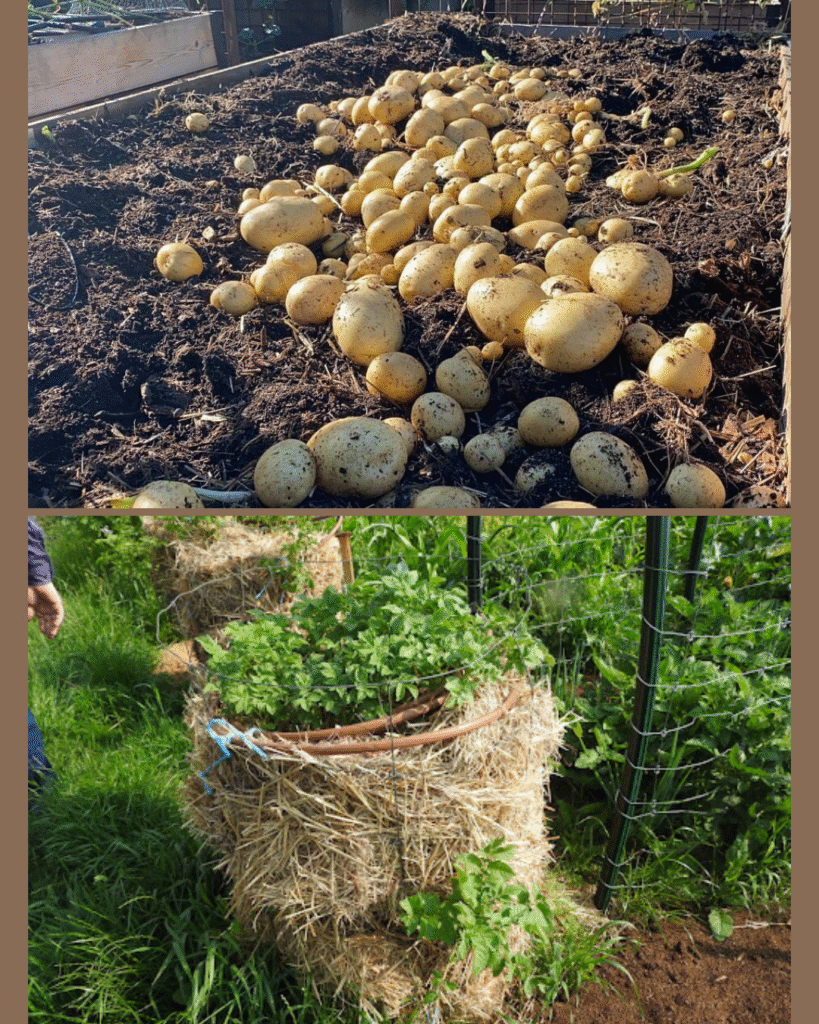
Harvesting vertical straw towers offers significant advantages over traditional digging. Once plants die back naturally, simply dismantle the straw layers from top to bottom, collecting potatoes as they’re revealed. This process takes minutes rather than the laborious digging required in conventional beds, and produces remarkably clean tubers requiring minimal washing.
Yields vary considerably based on multiple factors including variety selection, growing conditions, container size, and management practices. Realistic expectations for a 60-centimeter diameter tower range from 2-5 kilograms per tower, with exceptional results occasionally reaching 7 kilograms under optimal conditions. These yields compare favorably to traditional methods when considering the minimal space requirements.
Some tubers may exhibit slight greening if straw layers settle and expose them to light. While green portions contain solanine and shouldn’t be consumed, simply cutting away green sections salvages the remainder. Maintaining adequate straw depth throughout the season prevents this issue.
Straw Quality and Sourcing Considerations
Straw quality significantly impacts system success. Wheat, barley, or oat straw work well, providing clean, seed-free material that resists rapid decomposition. Avoid hay, which contains numerous weed seeds that germinate throughout the tower, competing with potatoes and complicating harvest. Rice straw performs acceptably though decomposes somewhat faster than cereal straws.
Chemical contamination represents a real concern when sourcing straw. Some agricultural straw contains herbicide residues that persist through baling and storage, potentially damaging sensitive crops. Aminopyralid and clopyralid herbicides particularly cause problems, as they remain active for extended periods. Source straw from organic suppliers or conventional farmers who can verify their fields haven’t received persistent herbicides for at least two growing seasons.
Testing suspected straw involves growing sensitive indicator plants like beans or tomatoes in small samples mixed with compost. Stunted growth, distorted leaves, or poor germination suggest contamination. This simple bioassay prevents wasting an entire growing season on compromised material.
Comparative Analysis with Traditional Methods
Vertical straw cultivation offers distinct advantages and limitations compared to conventional in-ground potato growing. Space efficiency represents the most compelling benefit—a single tower occupying 0.3 square meters can match or exceed yields from traditional rows requiring 2-3 times the area. This concentration makes the method particularly valuable for urban gardeners, small yards, or intensive production systems.
The elimination of digging reduces physical labor substantially while minimizing tuber damage during harvest. Traditional harvesting inevitably slices or bruises some potatoes with garden forks or spades, creating entry points for decay. Straw tower harvesting by hand virtually eliminates mechanical damage.
However, vertical systems demand more attentive management than traditional planting. Moisture monitoring, progressive straw additions, and temperature regulation require regular attention throughout the growing season. Traditional in-ground potatoes tolerate neglect better, making them more forgiving for casual gardeners or those unable to provide consistent care.
Environmental and Sustainability Considerations
Straw towers align with several sustainable gardening principles. The method requires no tillage, preserving soil structure and minimizing carbon release from disturbed earth. Used straw becomes valuable compost material or mulch after harvest, returning organic matter to garden systems rather than requiring disposal.
Water efficiency varies with management. Well-maintained towers can achieve comparable or better water use efficiency than traditional methods by concentrating irrigation in small footprints. Poorly managed towers may waste water through excessive evaporation from exposed straw surfaces. Mulching the top surface with damp burlap or additional straw reduces evaporative losses.
The carbon footprint of sourcing and transporting straw deserves consideration. Locally produced straw minimizes transportation emissions, while importing bales from distant sources negates some environmental benefits. Many gardeners successfully integrate straw towers into broader permaculture systems, using locally available materials and recycling all components within closed-loop garden ecosystems.
Seasonal Timing and Climate Adaptations
Planting timing for vertical straw potatoes follows general guidelines for your region—typically 2-4 weeks before the last expected frost for spring planting. The straw provides modest insulation against late cold snaps, though severe freezes still damage emerging foliage. Some gardeners in cold climates start towers in protected locations, moving them outdoors once conditions stabilize.
In regions with intense summer heat, the vertical method shows mixed results. Excellent drainage and aeration benefit plants, but rapid moisture loss and heat accumulation can stress them. Positioning towers in partial shade, using light-colored containers, and maintaining generous watering schedules helps compensate. Some southern growers achieve better success with fall planting for winter harvest when temperatures moderate.
Extended growing seasons in mild climates allow successive plantings throughout the year. Staggering tower starts by 3-4 weeks provides continuous harvests rather than single large yields, distributing fresh potatoes across multiple months.
Integration with Companion Planting Strategies
The vertical nature of straw towers creates opportunities for companion planting around the base perimeter. Low-growing herbs like thyme or oregano establish at ground level without competing for vertical space. These aromatics may help repel certain pests while efficiently using horizontal space around tower bases.
Legumes planted nearby fix atmospheric nitrogen, gradually enriching surrounding soil that can be used in future tower base layers. However, avoid nitrogen-fixing plants immediately adjacent to towers during active potato growth, as excessive nitrogen promotes foliage over tuber production.
Some gardeners successfully interplant fast-maturing crops like lettuce or radishes around young towers before potato foliage fully develops. These companions harvest before casting significant shade or competing intensely for resources. Such intensive spacing requires careful management to prevent resource competition from compromising potato yields.
Record Keeping and Continuous Improvement
Systematic documentation transforms vertical potato growing from experimental novelty to refined technique. Photograph towers at establishment, during progressive straw additions, and at harvest. Record variety names, planting dates, straw addition timing and depth, watering frequency, any pest or disease issues, and final harvest weights.
Over multiple seasons, patterns emerge revealing which varieties, container sizes, straw types, and management practices produce optimal results in your specific conditions. This empirical approach builds location-specific knowledge more valuable than generalized advice, as microclimates, water quality, available materials, and local varieties create unique growing environments.
Sharing documentation with local gardening communities contributes to collective knowledge while receiving feedback from others experimenting with similar methods. Online forums, local garden clubs, and social media groups focused on innovative growing techniques provide platforms for exchanging observations and troubleshooting challenges.
Growing potatoes vertically with straw represents an accessible innovation allowing gardeners to maximize production in limited spaces while simplifying harvest. The method requires modest investment in materials, thoughtful management throughout the season, and willingness to experiment with varieties and techniques. Success builds gradually as you refine approaches suited to your particular conditions, eventually producing abundant, clean potatoes from compact tower systems that transform traditional cultivation assumptions.