
Collecting rainwater offers a sustainable solution for reducing water bills, conserving municipal supplies, and maintaining gardens during dry periods. Modern rainwater harvesting systems range from simple barrel installations to sophisticated whole-house configurations that can supply significant portions of household water needs.
Understanding Rainwater Collection Fundamentals
Rainwater harvesting captures precipitation from impermeable surfaces, typically roofs, and directs it into storage containers for later use. A standard residential roof can collect approximately 600 gallons of water from just one inch of rainfall, making even modest collection systems surprisingly productive. The basic components include a catchment surface, conveyance system (gutters and downspouts), filtration mechanism, storage container, and distribution method.
The quality of collected rainwater depends largely on the catchment surface material. Metal roofing, asphalt shingles, and clay tiles all function effectively, though metal roofs generally produce cleaner water with fewer contaminants. Wood shingle roofs are less suitable due to organic matter accumulation and potential treatment chemical leaching. The first flush of rain after a dry period typically carries the highest concentration of atmospheric pollutants, bird droppings, and surface debris, making initial diversion systems valuable for water quality improvement.
Simple Barrel Systems for Beginning Collectors
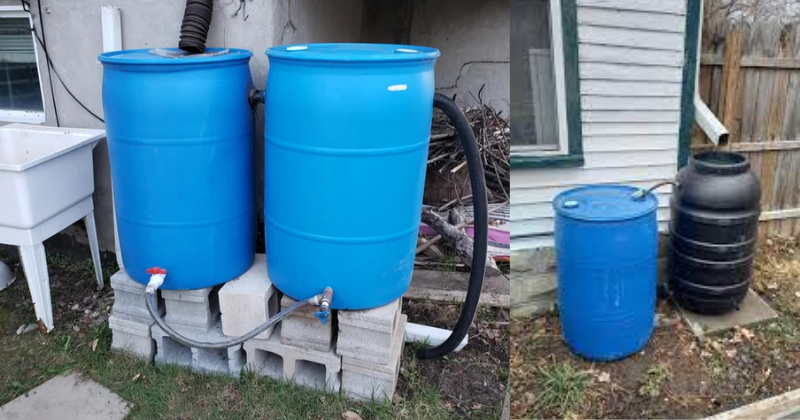
Rain barrel installations represent the most accessible entry point for rainwater collection. A 55-gallon food-grade barrel positioned beneath a downspout can capture substantial water volumes with minimal investment. The installation process requires cutting the downspout to the appropriate height, installing a diverter mechanism that redirects water into the barrel while allowing overflow to continue through the existing drainage system, and ensuring the barrel sits on a stable, level platform elevated 12-18 inches above ground.
Elevation serves multiple purposes beyond stability. The raised position creates gravitational pressure for hose attachments, typically providing 0.43 PSI per foot of elevation. This modest pressure suffices for drip irrigation systems and garden watering, though not for pressurized applications. Additionally, the elevation facilitates easier access to the spigot near the barrel’s base and allows placement of watering cans beneath the outlet.
Mosquito prevention requires careful attention in barrel systems. All openings must feature fine mesh screening with openings no larger than 1mm to prevent mosquito breeding while allowing water entry. Lids should fit securely, and overflow pipes need mesh covers. In regions with persistent mosquito problems, adding a tablespoon of vegetable oil to the water surface creates a thin film that prevents larval breathing tubes from penetrating the surface, though this approach makes the water unsuitable for edible garden use.
Scaling Up: Multiple Barrel and Tank Configurations
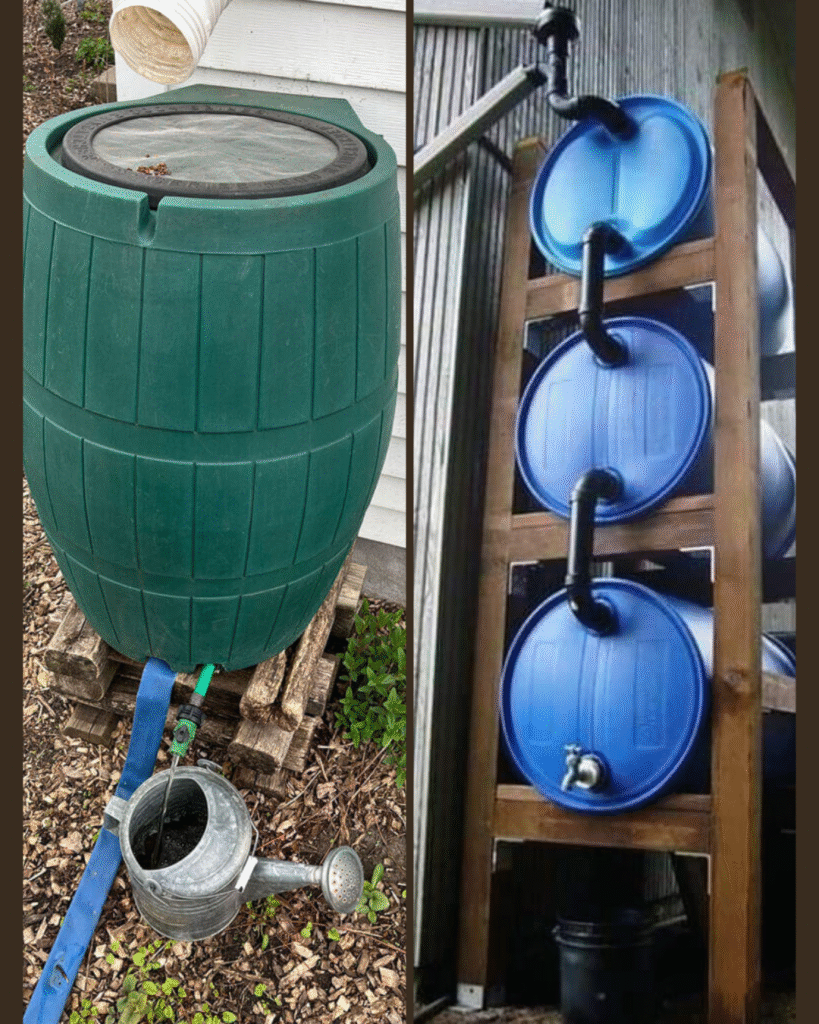
Connecting multiple barrels increases storage capacity while maintaining system simplicity. Barrels can be linked using bulkhead fittings installed near the base, allowing water to equilibrate across containers through communicating vessel principles. This configuration distributes weight across multiple footings and provides redundancy if one container develops leaks. A four-barrel system can store 220 gallons, sufficient for maintaining a 400-square-foot vegetable garden through typical dry periods between rainfall events.
For more substantial storage, intermediate bulk containers (IBCs) offer 275-330 gallon capacities in stackable configurations. These industrial containers, originally designed for transporting food-grade liquids, provide robust construction with integrated caging for structural support. When purchasing used IBCs, verification of previous contents is essential—containers that held toxic substances require professional cleaning beyond typical homeowner capabilities. IBCs designed for water storage include threaded ports for plumbing connections and ventilation, simplifying integration into collection systems.
Above-ground tanks in 500-5000 gallon capacities represent permanent installations suitable for households committed to significant water independence. These tanks require engineered foundations capable of supporting the substantial weight—water weighs 8.34 pounds per gallon, meaning a 1000-gallon tank when full exceeds 8000 pounds. Concrete pads with proper compaction and drainage prevent settling and structural damage. Tank materials include polyethylene (lightweight, UV-resistant, food-safe), fiberglass (durable, expensive), and galvanized steel (long-lasting but requiring interior liners for potable applications).
Filtration and Water Quality Management
While rainwater is relatively pure compared to surface water sources, it accumulates contaminants during atmospheric descent and roof contact. A multi-stage filtration approach addresses different contamination categories. First-flush diverters automatically waste the initial volume from each rainfall event—typically the first 10 gallons per 1000 square feet of roof area. These devices use chamber mechanisms that fill and seal, preventing contaminated initial runoff from entering storage while allowing subsequent cleaner water to flow freely.
Gutter screens and leaf catchers provide coarse filtration, removing debris larger than a few millimeters. These require regular cleaning, particularly in autumn when leaf fall peaks. Finer filtration occurs at the tank inlet, where inline mesh filters (100-200 micron) capture suspended particles, insect fragments, and pollen. These filters need periodic backflushing or replacement depending on design.
For water intended for household non-potable uses like laundry or toilet flushing, additional filtration through sediment filters (5-20 micron) improves clarity and protects plumbing fixtures. Some collectors add carbon filtration to remove dissolved organic compounds and improve taste for garden use. Complete potability treatment requires UV sterilization or chemical disinfection plus final-stage filtration, though regulations in many jurisdictions restrict or prohibit indoor potable use of rainwater without comprehensive treatment systems meeting health department standards.
Calculating Collection Potential and Storage Needs
Determining appropriate system sizing requires calculating both collection potential and water demand. Collection potential follows the formula: Roof Area (square feet) × Rainfall (inches) × 0.623 = Gallons Collected. This calculation assumes 100% capture efficiency, though real-world systems achieve 75-90% efficiency due to evaporation, spillage during heavy rain, and first-flush diversion.
A 1500 square foot roof in a region receiving 30 inches of annual rainfall could theoretically collect: 1500 × 30 × 0.623 = 28,035 gallons yearly. At 80% efficiency, actual collection would approximate 22,428 gallons. However, rainfall distribution matters more than annual totals for sizing storage. A region receiving most precipitation during several winter months requires larger storage to supply dry summer periods, while areas with distributed rainfall can function with smaller tanks that refill regularly.
Water demand calculations depend on intended uses. Garden irrigation represents the most common application, with requirements varying by climate, plant types, and soil characteristics. A rough estimate suggests 1-1.5 inches of water weekly for vegetable gardens during active growth, translating to 0.62 gallons per square foot weekly. A 400 square foot garden would therefore need approximately 250-375 gallons weekly during peak growing season. Storage capacity should ideally cover 2-3 weeks of demand to buffer between rainfall events.
Seasonal Maintenance and System Longevity
Rainwater systems require ongoing maintenance to ensure water quality and prevent component failure. Spring preparation includes cleaning gutters and downspouts of accumulated winter debris, inspecting roof surfaces for damage that could introduce contaminants, checking all seals and connections for leaks, and verifying screen integrity. First-flush diverters need emptying and cleaning, as standing water in diverter chambers can develop algae growth or become mosquito breeding sites.
Summer maintenance focuses on monitoring water levels during peak usage, cleaning pre-filters more frequently as dust and pollen accumulation increases, and inspecting tanks for algae growth near water lines. Opaque tanks minimize algae development, but any light penetration through fittings or translucent sections can trigger growth. Scrubbing tanks annually prevents biofilm accumulation on interior surfaces.
Winter preparation in freeze-prone regions requires draining systems completely or implementing heating strategies. Water expands approximately 9% when freezing, generating forces sufficient to rupture barrels, crack tanks, and burst pipes. Options include draining systems before first freeze and disconnecting from downspouts, insulating tanks and pipes with foam wrap rated for outdoor use, or installing tank heaters for permanent installations. Some collectors maintain minimal water levels with aquarium heaters, though this approach requires electrical supply and monitoring.
Legal Considerations and Water Rights
Rainwater collection legality varies significantly by jurisdiction. Some regions actively encourage harvesting through tax incentives and rebate programs, while others maintain restrictions based on prior appropriation water rights doctrines that consider even rainwater falling on private property as belonging to downstream rights holders. Before installing systems, checking municipal codes, homeowner association rules, and state water laws prevents potential legal complications.
States with favorable rainwater harvesting policies often provide technical assistance, design guidelines, and sometimes financial incentives. Texas, for example, exempts rainwater harvesting equipment from sales tax and offers property tax exemptions for collection systems. Colorado recently liberalized previously restrictive policies, now allowing residential collection under specific conditions. Oregon requires rainwater systems for new construction in certain regions, while Arizona offers substantial rebates for installation costs.
Permitting requirements typically depend on system scale and intended use. Simple rain barrel installations usually need no permits, while whole-house systems integrating with plumbing may require inspections and approvals from health departments and building authorities. Systems designed for potable use face the most stringent oversight, often requiring professional engineering design, certified treatment components, and regular water quality testing.
Integration with Existing Landscapes
Thoughtful integration of collection systems enhances rather than detracts from property aesthetics. Rain barrels can be concealed behind lattice screens, painted to match house colors, or enclosed in decorative wooden boxes that double as potting benches. Larger tanks blend into landscapes when positioned behind structures or bermed with earth and planted with appropriate vegetation. Some designers incorporate tanks into retaining walls or bury them partially, though buried tanks require different structural specifications and access considerations for maintenance.
Distribution systems using collected water can be simple gravity-fed hoses or sophisticated drip irrigation networks with timers and pressure regulation. Drip systems maximize water efficiency by delivering moisture directly to root zones with minimal evaporation loss. Installing backflow prevention devices between rainwater systems and municipal water supplies protects drinking water from contamination while allowing automatic switchover during tank depletion.
The most effective installations consider the entire water cycle on the property. Rainwater harvesting works synergistically with other conservation approaches: permeable paving reduces runoff while allowing groundwater recharge, rain gardens create temporary ponding areas that infiltrate overflow, and xeriscaping reduces irrigation demand. Together, these strategies can reduce municipal water consumption by 40-60% for typical