

Germander speedwell (Veronica chamaedrys) is a small perennial herb with remarkable medicinal properties and ecological significance that has been utilized in traditional European medicine for centuries. This modest plant, often overlooked in meadows and woodland edges, contains bioactive compounds that demonstrate anti-inflammatory, antimicrobial, and antioxidant activities worthy of scientific attention.
Botanical Characteristics and Taxonomic Classification
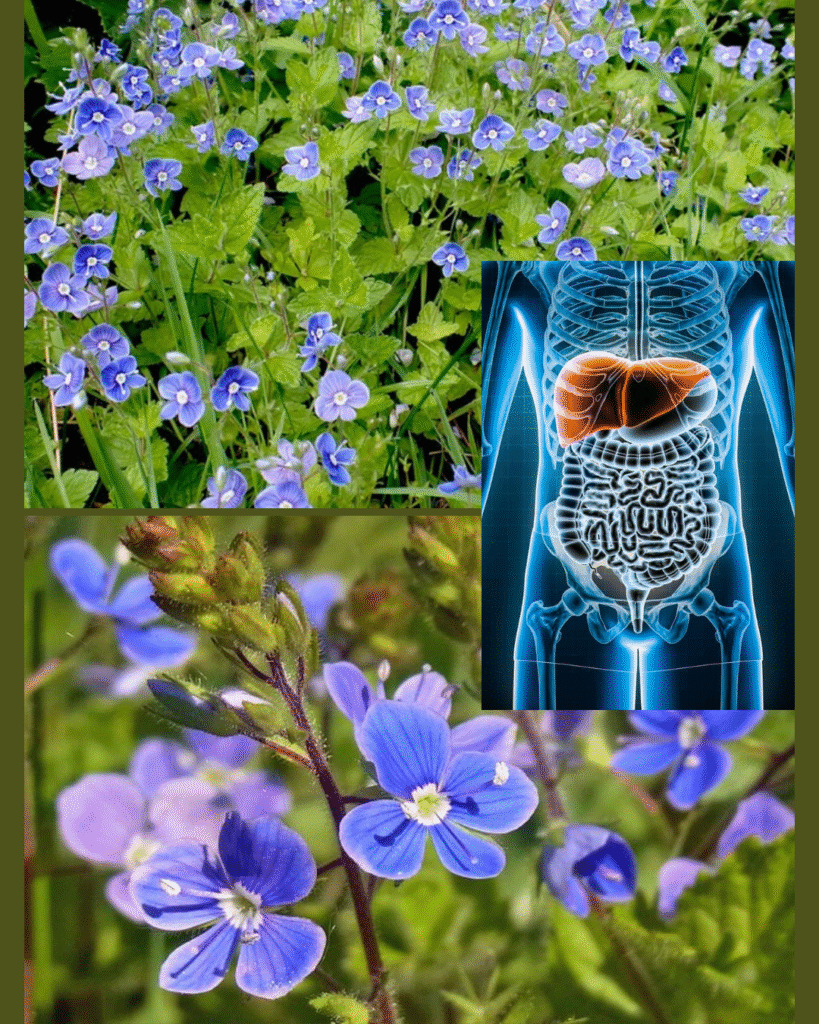
Germander speedwell belongs to the Plantaginaceae family, formerly classified within Scrophulariaceae. The species exhibits distinctive morphological features: opposite leaves with serrated margins, bilateral flower symmetry, and characteristic bright blue petals with darker veining patterns. The plant typically reaches 10-40 centimeters in height, with creeping stems that root at nodes, facilitating vegetative propagation across suitable habitats.
The species name « chamaedrys » derives from Greek, meaning « ground oak, » referencing the leaf shape’s resemblance to certain oak species. This perennial herb displays two longitudinal lines of white hairs along its square stems—a distinctive identification feature that distinguishes it from closely related Veronica species. The flowers, measuring approximately 10-12 millimeters in diameter, present four petals with the lower petal notably smaller than the lateral and upper petals.
Phytochemical Composition and Bioactive Compounds
The therapeutic potential of Germander speedwell stems from its complex phytochemical profile. Research has identified multiple classes of bioactive molecules within the plant tissue, including iridoid glycosides (aucubin and catalpol), flavonoids (apigenin, luteolin), phenolic acids (caffeic acid, chlorogenic acid), and various terpenoid compounds. These secondary metabolites serve defensive functions in the plant while providing pharmacological benefits when consumed by humans.
Aucubin, the predominant iridoid glycoside, demonstrates hepatoprotective properties through modulation of cytochrome P450 enzyme systems. Studies examining Veronica species have documented aucubin concentrations ranging from 0.5% to 2.3% dry weight, with seasonal variation affecting accumulation patterns. The compound exhibits stability during traditional preparation methods, including aqueous extraction and brief heating, making it bioavailable through conventional herbal tea preparation.
The flavonoid fraction contributes significant antioxidant capacity, with apigenin showing particular efficacy in neutralizing reactive oxygen species. Comparative analysis reveals that Germander speedwell’s total phenolic content (15-25 mg gallic acid equivalents per gram dry weight) positions it within the moderate-to-high range among medicinal herbs. The synergistic interaction between flavonoids and iridoid glycosides appears to enhance overall therapeutic efficacy beyond what individual compounds achieve in isolation.
Traditional Medicinal Applications and Ethnobotanical Context
European folk medicine traditions have employed Germander speedwell for respiratory ailments, digestive complaints, and wound healing for at least five centuries. Historical texts describe preparations as « speedwell tea » or « Ehrenpreis » (German for « honor price »), indicating cultural valuation. Practitioners traditionally harvested the aerial parts during flowering—typically May through July in temperate zones—when phytochemical concentrations reach optimal levels.
The herb functioned as an expectorant in bronchial conditions, with traditional dosing involving 2-3 grams of dried herb steeped in 150 milliliters of boiling water, consumed three times daily. Anecdotal reports from rural communities describe modest but consistent benefits for chronic coughs, though these observations lack systematic clinical validation. External applications involved crushed fresh leaves applied to minor cuts and skin irritations, a practice supported by the plant’s documented antimicrobial properties.
In certain Alpine regions, Germander speedwell was incorporated into spring tonics—herbal blends consumed after winter to « purify blood » and restore vitality. While this concept lacks modern physiological basis, the practice may have provided micronutrients and antioxidants following periods of limited dietary diversity. Regional variations existed, with some traditions combining speedwell with other Veronica species, complicating ethnobotanical attribution.
Pharmacological Properties and Mechanisms of Action
Contemporary research has begun elucidating the molecular mechanisms underlying Germander speedwell’s traditional uses. In vitro studies demonstrate that aqueous extracts inhibit pro-inflammatory mediators, including tumor necrosis factor-alpha and interleukin-6, through interference with nuclear factor-kappa B signaling pathways. This anti-inflammatory activity occurs at concentrations achievable through oral consumption, suggesting physiological relevance.
Antimicrobial assays reveal moderate activity against common bacterial pathogens, including Staphylococcus aureus and Escherichia coli, with minimum inhibitory concentrations ranging from 125 to 500 micrograms per milliliter for methanolic extracts. The antimicrobial effects appear multifactorial, involving cell membrane disruption and interference with bacterial quorum sensing. Fungal growth inhibition has been documented for Candida albicans, though efficacy remains lower than standard antifungal agents.
The hepatoprotective effects deserve particular attention given aucubin’s ability to reduce oxidative stress markers in liver tissue. Animal models exposed to hepatotoxic compounds show reduced elevation of alanine aminotransferase and aspartate aminotransferase when pre-treated with Veronica extracts. These findings suggest potential protective applications, though human clinical trials remain limited. The mechanism involves upregulation of endogenous antioxidant systems, including glutathione peroxidase and superoxide dismutase.
Ecological Role and Habitat Distribution
Germander speedwell occupies diverse ecological niches across European and Western Asian landscapes, thriving in meadows, woodland margins, hedgerows, and disturbed grasslands. The species demonstrates moderate shade tolerance while preferring partial sun exposure and well-drained soils with pH values between 6.0 and 7.5. Its presence often indicates moderate soil fertility and relatively stable moisture conditions without waterlogging.
The plant serves important ecological functions within its habitat. The early flowering period (April through June in most regions) provides nectar resources for pollinators during a critical seasonal transition. Small bees, particularly solitary species, visit the flowers frequently, though the modest nectar production prevents Germander speedwell from serving as a major pollen or nectar source. The bilateral flower symmetry facilitates precise pollinator positioning, enhancing fertilization efficiency.
Seed dispersal occurs through a combination of gravity and animal-mediated transport. The small capsules split at maturity, releasing seeds that may adhere temporarily to animal fur or human clothing. However, vegetative reproduction through creeping stems appears more significant for population expansion, with individual plants forming small patches through successive growing seasons. This growth pattern contributes to the species’ persistence in managed grasslands subjected to periodic mowing.
Cultivation Practices and Propagation Methods
Growing Germander speedwell requires minimal intervention once established, making it suitable for naturalistic garden settings and meadow restoration projects. Seeds exhibit no significant dormancy requirements, germinating reliably when surface-sown on prepared soil in autumn or early spring. Germination typically occurs within 14-21 days at temperatures between 10-18°C, though establishment remains slow during the first growing season.
Vegetative propagation offers a more reliable multiplication method. Stem cuttings taken in late spring root readily in moist potting medium, with success rates exceeding 80% under appropriate conditions. Division of established clumps during dormancy provides another straightforward propagation approach. Plants divided in autumn or very early spring re-establish quickly, resuming normal growth patterns within 4-6 weeks.
The species tolerates various garden conditions but performs optimally in locations mimicking its natural habitat. Morning sun with afternoon shade prevents excessive water stress while maintaining adequate photosynthetic activity. Soil amendments prove unnecessary in most cases, though incorporation of organic matter improves establishment in heavy clay or sandy soils. Once established, plants require minimal maintenance beyond occasional watering during extended drought periods.
Harvesting Guidelines and Post-Harvest Processing
Optimal harvest timing coincides with full flowering when both flower and leaf metabolite concentrations peak. In most temperate regions, this occurs during May and early June, though local climate variations shift timing by several weeks. Harvesting involves cutting aerial portions 2-3 centimeters above ground level, allowing the plant to regenerate from basal growth points. Properly managed plants tolerate harvesting annually without population decline.
Fresh plant material should be processed within hours of collection to minimize enzymatic degradation of thermolabile compounds. Traditional drying methods involve spreading thin layers in shaded, well-ventilated areas at temperatures not exceeding 35°C. Higher temperatures accelerate drying but may reduce volatile compound retention and alter the phytochemical profile. Properly dried material retains characteristic blue-green coloration; browning indicates excessive heat exposure or prolonged storage.
Storage in airtight containers away from direct light maintains chemical stability for 12-18 months. Glass jars with tight-fitting lids stored in cool, dark locations preserve quality better than paper or plastic containers. Humidity control proves critical, as moisture reabsorption promotes mold growth and compound degradation. Dried material should contain less than 10% moisture by weight for optimal preservation.
Safety Considerations and Contraindications
Germander speedwell demonstrates a favorable safety profile based on centuries of traditional use and limited toxicological data. No significant adverse effects appear in ethnobotanical literature, and the species lacks the toxic compounds present in some Veronica relatives. However, comprehensive human safety studies remain absent, preventing definitive statements about use during pregnancy, lactation, or in pediatric populations.
Individuals with known allergies to Plantaginaceae family members should exercise caution, as cross-reactivity remains theoretically possible. The documented antimicrobial and anti-inflammatory activities suggest potential interactions with pharmaceutical agents affecting similar pathways, though specific interactions have not been characterized clinically. Conservative approaches recommend avoiding concurrent use with immunosuppressant medications or anticoagulants without professional guidance.
The absence of standardized preparations complicates dosing recommendations. Traditional use patterns suggest modest consumption levels—typically 2-4 grams of dried herb daily—appear well-tolerated. However, concentrated extracts or prolonged high-dose consumption lack safety evaluation. As with any botanical preparation, quality varies based on growing conditions, harvest timing, and processing methods, creating inherent inconsistency in active compound content.
Contemporary Research Directions and Future Potential
Modern scientific investigation of Germander speedwell remains limited compared to more commercially prominent medicinal plants. However, emerging interest in European traditional medicine and native plant pharmacology has stimulated renewed research attention. Current investigations focus on detailed phytochemical characterization using advanced analytical techniques, including high-performance liquid chromatography coupled with mass spectrometry.
Several research groups are examining potential applications in respiratory health, building upon traditional expectorant uses. Preliminary studies suggest that certain compounds may influence mucus viscosity and ciliary beat frequency in respiratory epithelium, though mechanisms require further elucidation. Additional work explores antioxidant applications in age-related conditions, given the substantial free radical scavenging capacity demonstrated in cell culture systems.
The plant’s relatively modest commercial profile may paradoxically benefit conservation, as it faces minimal harvest pressure compared to overly exploited medicinal species. However, habitat loss through agricultural intensification and meadow conversion poses indirect threats to wild populations. Cultivation for commercial or research purposes could provide sustainable sourcing while reducing wild collection impacts, though market demand remains insufficient to drive substantial cultivation efforts.
The integration of traditional knowledge with contemporary analytical methods continues revealing the sophisticated phytochemistry underlying folk medicine practices. Germander speedwell exemplifies how common plants harbor complex chemistry deserving systematic investigation. As analytical capabilities advance and interest in traditional European botanicals grows, this modest meadow herb may yield additional therapeutic insights.
Disclaimer: This article is for informational purposes only and is not a substitute for professional advice.
Source: European Medicines Agency (EMA) – Committee on Herbal Medicinal Products, monographs on traditional herbal medicines and pharmacological assessment of Veronica species compounds.