
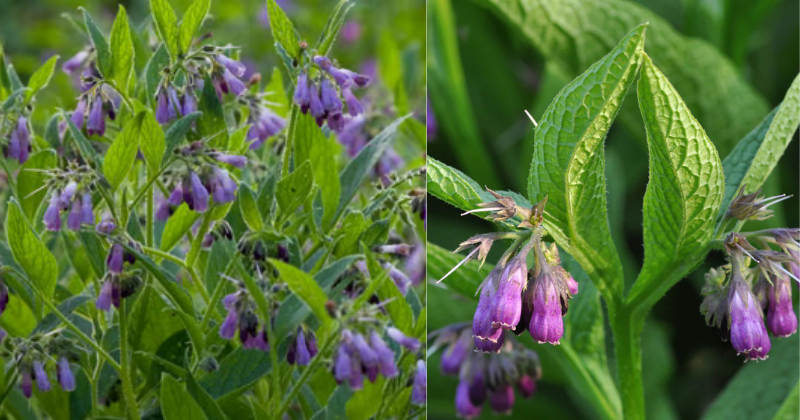
Comfrey (Symphytum officinale) stands as one of herbalism’s most celebrated yet controversial plants, offering remarkable therapeutic properties that have captivated healers for over two millennia. This perennial herb, characterized by its bell-shaped purple flowers and broad, hairy leaves, contains a unique biochemical profile that makes it extraordinarily effective for tissue repair and inflammation management, though modern scientific scrutiny has revealed important considerations for its safe application.
Botanical Characteristics and Bioactive Compounds
Comfrey belongs to the Boraginaceae family and thrives in moist, temperate environments across Europe, Asia, and North America. The plant’s therapeutic potency originates from its root system and leaves, which concentrate several pharmacologically active constituents. The most notable compound is allantoin, a cell-proliferant that accelerates cell division and tissue regeneration at wound sites. Comfrey contains allantoin concentrations ranging from 0.6% to 0.8% in roots, significantly higher than most medicinal plants.
Beyond allantoin, comfrey synthesizes rosmarinic acid, a polyphenolic compound with documented anti-inflammatory and antioxidant properties. The plant also produces mucilage polysaccharides that create protective barriers on damaged tissue, along with tannins that provide astringent effects. However, comfrey simultaneously contains pyrrolizidine alkaloids (PAs), hepatotoxic compounds that have fundamentally altered how modern herbalists approach this traditional remedy.
Mechanisms of Tissue Repair and Wound Healing
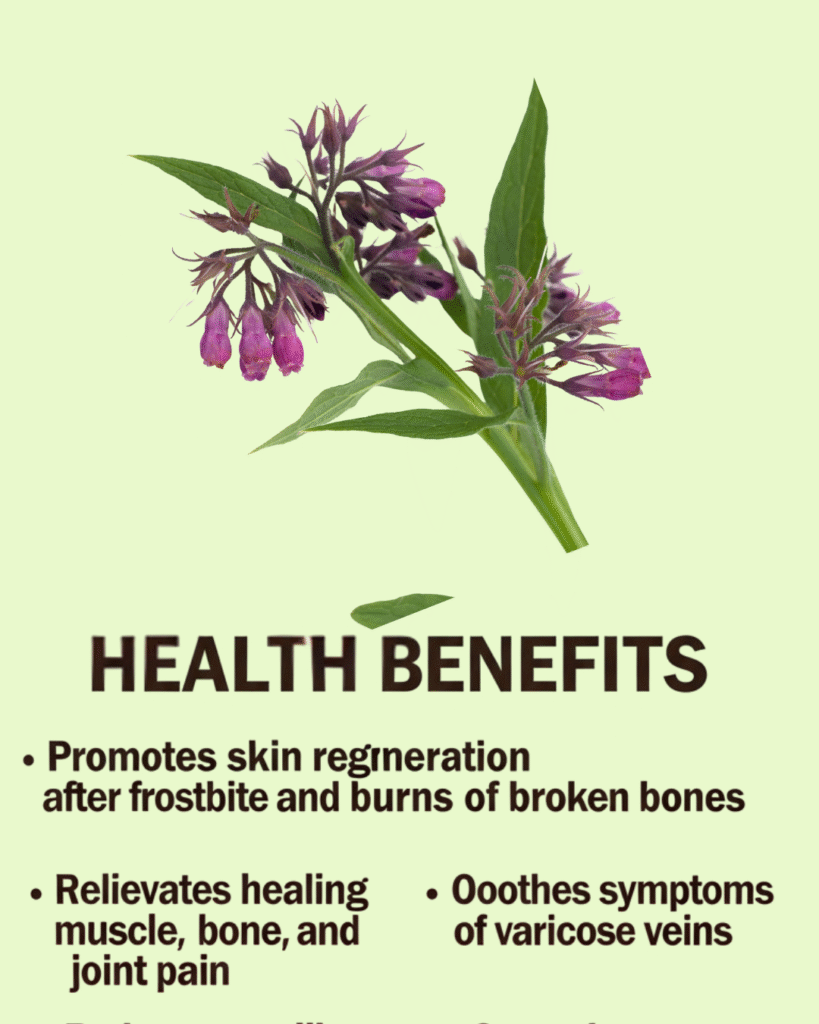
Comfrey’s reputation as « knitbone » derives from its exceptional ability to accelerate musculoskeletal healing. Allantoin functions by stimulating fibroblast proliferation, the cells responsible for collagen synthesis and extracellular matrix production. This biochemical action directly enhances granulation tissue formation during the proliferative phase of wound healing.
Clinical research has validated these traditional applications with measurable outcomes. A randomized controlled trial published in Phytotherapy Research demonstrated that topical comfrey extract significantly reduced pain and improved mobility in patients with acute ankle sprains compared to placebo, with effects observable within 24 hours of application. The treatment group showed a 33% greater reduction in pain scores after three days.
For bone healing, comfrey appears to influence osteoblast activity and mineralization processes, though the exact molecular pathways remain incompletely understood. Historical use for fracture healing has been partially supported by animal studies showing accelerated callus formation, though human clinical trials specifically examining bone repair remain limited.
Anti-Inflammatory Properties and Pain Management
The rosmarinic acid content in comfrey contributes substantial anti-inflammatory effects through multiple pathways. This compound inhibits cyclooxygenase-2 (COX-2) and 5-lipoxygenase enzymes, both central to prostaglandin and leukotriene synthesis in inflammatory cascades. By modulating these pathways, comfrey reduces localized inflammation without the gastrointestinal complications associated with oral NSAIDs.
Clinical applications have proven particularly effective for osteoarthritis management. A multi-center study involving 220 patients with knee osteoarthritis found that topical comfrey root extract produced pain reduction comparable to diclofenac gel, a pharmaceutical standard treatment. Patients applying comfrey cream three times daily reported improved joint function and reduced stiffness, with benefits maintained throughout the three-week study period.
The mucilage content provides additional therapeutic value by forming a protective hydrocolloid layer over inflamed tissue. This mechanical barrier reduces friction and irritation while maintaining moisture balance, creating an optimal microenvironment for tissue recovery. For conditions like tendinitis or muscle strains, this dual action of biochemical anti-inflammation and physical protection produces synergistic healing effects.
Topical Applications and Formulation Considerations
Modern comfrey preparations exclusively focus on external application due to hepatotoxicity concerns associated with internal use. Topical formulations allow therapeutic benefits while minimizing systemic PA absorption, though some transdermal penetration does occur. Commercial products typically use comfrey extracts standardized for allantoin content while employing PA-reduced cultivars or extraction methods that minimize alkaloid concentration.
Ointments and creams represent the most common delivery systems, incorporating comfrey extract at concentrations ranging from 5% to 35%. Higher concentrations show dose-dependent efficacy for acute injuries, though prolonged use on the same site should be limited to four to six weeks according to regulatory guidelines in several countries. The German Commission E, a respected authority on herbal medicine, recommends restricting application to intact skin and avoiding use on open wounds, which could allow greater PA absorption.
Poultices made from fresh or dried comfrey leaves offer an alternative traditional application. The crushed plant material is applied directly to sprains, bruises, or closed fractures, often wrapped with cloth to maintain contact. While this method maximizes allantoin delivery, it also presents higher PA exposure risk compared to processed extracts. Some practitioners compromise by using leaves from Symphytum × uplandicum ‘Bocking 14’, a Russian comfrey cultivar bred for negligible PA content.
Safety Profile and Hepatotoxic Concerns
The pyrrolizidine alkaloid content in comfrey has generated substantial medical concern and regulatory action worldwide. PAs undergo hepatic metabolism to form reactive pyrroles that bind to DNA and proteins, causing hepatocellular damage and potentially triggering veno-occlusive disease. This condition involves progressive obstruction of hepatic venules, leading to liver failure in severe cases.
Internal consumption of comfrey has been documented in cases of fatal hepatotoxicity, particularly with prolonged use or high doses. A 47-year-old woman developed irreversible liver damage after consuming comfrey tea and tablets for chronic constipation, requiring liver transplantation. Such cases prompted regulatory agencies in Canada, the United Kingdom, Germany, and Australia to prohibit oral comfrey products, while the United States FDA issued warnings against internal use.
Topical application presents substantially lower risk, though not zero. Dermal absorption studies indicate that intact skin permits minimal PA penetration, but application to broken skin or mucous membranes increases systemic exposure. The European Medicines Agency recommends limiting topical comfrey use to four to six weeks per year and avoiding application on abraded skin. Pregnant and breastfeeding women should avoid comfrey entirely due to potential fetal or infant exposure to PAs.
Contemporary Clinical Applications
Despite safety restrictions, comfrey maintains therapeutic relevance in evidence-based integrative medicine when properly applied. Sports medicine practitioners increasingly incorporate topical comfrey for managing acute soft tissue injuries, viewing it as an adjunct to conventional treatment protocols. The rapid onset of action makes it particularly valuable for athletes requiring expedited recovery between competitions.
Chronic musculoskeletal conditions also benefit from topical comfrey application. Patients with persistent back pain showed significant improvement in a randomized trial using comfrey root extract ointment, with pain reduction of approximately 95% compared to 38% in the placebo group after five days. The treatment proved effective for both acute exacerbations and chronic mechanical pain, suggesting broad applicability across pain etiologies.
Emerging research explores comfrey’s potential in post-surgical recovery. Preliminary studies suggest that topical application around surgical sites (not directly on incisions) may reduce inflammation and accelerate soft tissue healing, though this remains an investigational application requiring additional clinical validation.
Cultivation and Sustainable Harvesting
Comfrey grows vigorously in temperate climates with adequate moisture, often becoming invasive if not managed carefully. The plant prefers nitrogen-rich soil and partial shade, though it tolerates full sun with sufficient watering. Root division in spring or fall provides the most reliable propagation method, as the plant readily establishes from root fragments.
For medicinal harvest, roots are typically collected in autumn after two years of growth, when allantoin concentration peaks. Leaves can be harvested multiple times throughout the growing season, though early-season leaves contain higher bioactive compound levels. Sustainable harvesting involves taking no more than one-third of leaf mass at each harvest, allowing the plant to recover and maintain vigor.
Drying should occur rapidly in shade to preserve allantoin content, as excessive heat or prolonged drying degrades therapeutic compounds. Properly dried comfrey material maintains potency for approximately one year when stored in airtight containers away from light and moisture.
Integration with Conventional Treatment
Comfrey functions most effectively as a complementary therapy rather than a standalone treatment for serious injuries. For acute sprains or strains, combining topical comfrey with rest, ice, compression, and elevation (RICE protocol) produces superior outcomes compared to either approach alone. The anti-inflammatory effects of comfrey can reduce reliance on oral analgesics, potentially decreasing medication-related side effects.
Healthcare providers should be informed of comfrey use, particularly for patients with pre-existing liver conditions or those taking hepatotoxic medications. Drug interactions remain poorly characterized, though the topical route minimizes interference with most systemic medications. Patients using anticoagulants should exercise caution, as theoretical concerns exist regarding comfrey’s tannin content affecting clotting factors, though clinical evidence of such interactions is lacking.
Physical therapy often pairs well with topical comfrey application, as reduced inflammation and pain can improve exercise tolerance and rehabilitation adherence. Applying comfrey cream before therapy sessions may enhance patient comfort and allow more effective mobilization of injured tissues.
Disclaimer: This article is for informational purposes only and is not a substitute for professional advice.
Source: European Medicines Agency Committee on Herbal Medicinal Products (HMPC) – Assessment report on Symphytum officinale L., radix (EMA/HMPC/572844/2009)Réessayer